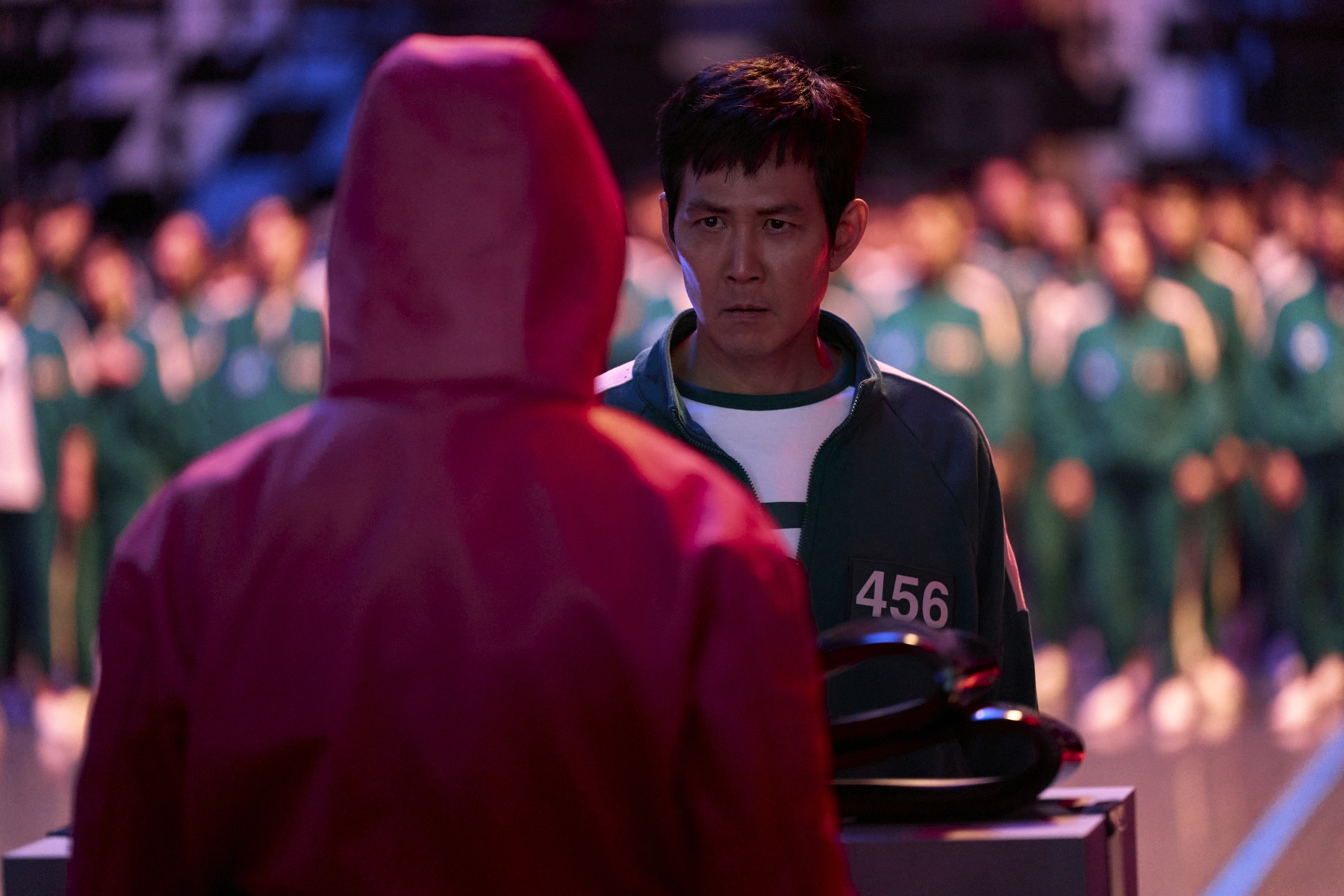
Squid Game, streaming’s most popular show, might be over but that doesn’t mean the South Korean survival thriller is finished making waves just yet.
Netflix reports that the show’s third and final season (all 6 episodes dropped on Friday, June 27) has racked up over 60 million views in its first three days of viewing.
Per Netflix, the show ranked #1 in every one of the 93 countries where the streamer has top 10 lists — a first for any show in its debut week — in addition to breaking the record for most views for a show in its first three days.
However, Squid Game’s popularity can also be measured beyond viewership stats, with both cultural impact and critical reception playing a critical role in how the show first entered our cultural zeitgeist and managed to stay there.
The show inspired a loyal wave of TikTok content from the outset, with millions of videos recreating iconic games like “Red Light, Green Light” and the “Dalgona candy” challenge. In fact that “The Red-Light, Green-Light” clip on TikTok is Netflix’s top-performing video of all time on the platform with 128.6M organic views.
And then there were the show’s green and white player tracksuits and pink guard uniforms which became iconic costumes, topping the charts just in time for Halloween in 2021. Retailers reported skyrocketing sales, with costumes ranging from player outfits to Front Man designs, with even baby versions of the pink jumpsuits trending.
Netflix also capitalized on the show’s popularity with Squid Game: The Challenge, a reality series where 456 contestants competed for a $4.56 million prize in obviously tamer versions of the show’s games. (Despite mixed reactions for diluting the original’s anti-capitalist message, it still managed to draw significant viewership.)
Merchandise and branding, cultural and philosophical conversations, the show’s ‘memeability’ and a series of global events and reenactments all played a part in elevating Squid Game into ‘global phenomenon’ territory. However, the central premise was also a huge hook for viewers.
RELATED | Life After Squid Game: How Asian TV is Redefining Survival Drama
The series centered around an illegal contest where 456 players, all of whom in deep financial hardship, risked their lives to play a series of children’s games with deadly outcomes for the losers. As the player count dwindles their share of the prize money increases, with the sole winner standing to walk away with ₩45.6 billion (or 39.86 million dollars), enough to wipe away even the largest of debts, and enough of a lure to keep the game’s hapless contestants playing.
Written and directed by Hwang Dong-hyuk for Netflix, Squid Game starred Lee Jung-jae (Star Wars: The Acolyte, Hunt) as the lead protagonist Seong Gi-hun. Each season featured a new ensemble cast of diverse, endearing, hateful, mysterious, colorful, and otherwise deeply engaging players, with viewers rooting for their favorites (improbably) to survive the games and escape to freedom.
As I write, Netflix reports that the show received almost 600 million views across the first two seasons ahead of Season 3’s airing. Season 1 currently ranks as Netflix’s most popular show ever, while Season 2 is the streamer’s third most popular show of all time. Season 3 has already generated 4.56B impressions across Netflix’s global social channels, marking the highest engagement ever for a Netflix social campaign.
And while Season 3 hinted at a US version of the show on the horizon, for now the conversation around this South Korean juggernaut shows no signs of stopping.
Follow @TVPulseMag on Twitter and TVPulseMag.com on Bluesky for more TV scoop.