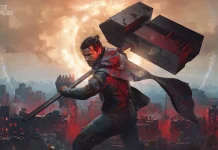
Remedy’s long-awaited sequel has finally stepped into the light, and it’s far stranger, bolder, and more emotionally complex than many fans were expecting. Here’s everything we know about Control Resonant, from its origins and story to the hands-on impressions from the Summer Game Fest press preview this weekend.
Control Resonant is the direct sequel to Remedy Entertainment’s critically acclaimed 2019 action-adventure Control. Developed and self-published by Remedy (a significant milestone for the Finnish studio) the game is set to launch on September 24, 2026, for PlayStation 5, Xbox Series X|S, PC (via Steam and the Epic Games Store), and shortly thereafter, Mac.
A Standard Edition is priced at $59.99, and a Digital Deluxe Edition is available at $69.99, with the Deluxe offering 48 hours of early access ahead of launch for PlayStation owners. The game shifts the franchise into action-RPG territory, swapping Jesse Faden’s supernatural Service Weapon for the reality-bending melee combat of her younger brother, Dylan.
It is a significant evolution, not only of tone and character, but genre too, and the early hands-on reactions from press suggest Remedy has pulled it off.
How Did We All Get Here?
The road to Control Resonant has been a long one. Remedy initially announced a co-development and co-publishing deal with 505 Games for a Control sequel, but in February 2024, the studio acquired full ownership of the Control franchise from the publisher for €17 million in a significant move that finally allowed them to chart their own creative course.
Later in 2024, Remedy entered a strategic partnership with Annapurna Pictures, who came on board to co-finance and co-produce the sequel, covering approximately half of its development costs in return for Remedy IP film and TV rights. Full production on the game began in February 2025, and eager fans got their first proper tease in October 2024, when a closing scene in the Alan Wake 2 expansion The Lake House cryptically alluded to what was coming next.
The full reveal arrived at The Game Awards in December 2025, complete with a debut trailer that left many fans surprised by the scope of the changes. A gameplay reveal followed during PlayStation’s State of Play in February 2026, and a new story trailer dropped during Sony’s June 2, 2026 State of Play, confirming the September release date and offering a deeper look at Dylan’s journey, including a
tantalising glimpse of Jesse Faden herself.
Dylan Faden Is Up
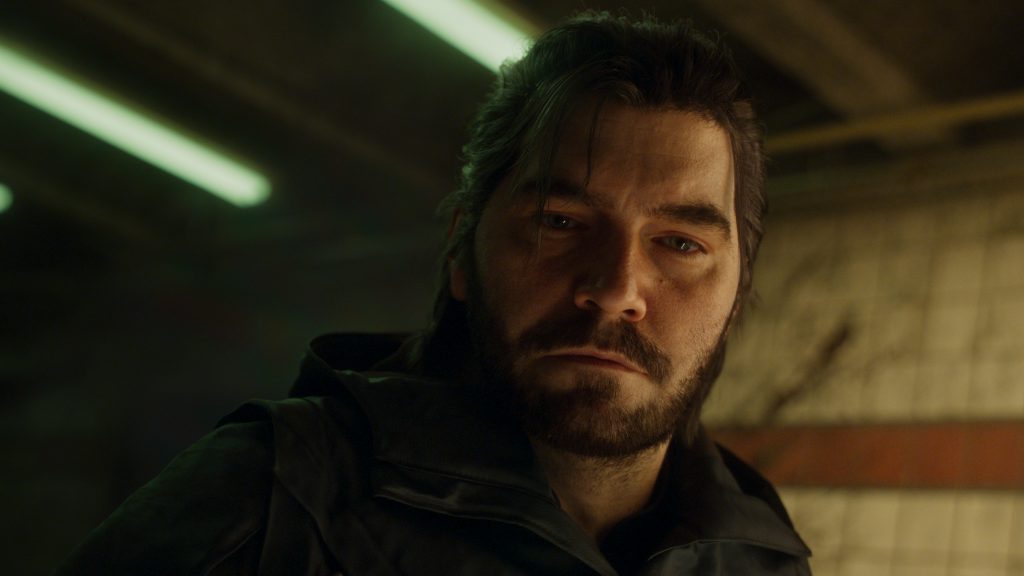
Control Resonant begins in the blood-soaked ruins of the Oldest house, aka the Federal Bureau of Control Headquarters, which players will remember as the labyrinthine brutalist setting of the first game. But the chaos is no longer contained. A new, uncategorised form of resonance has surfaced in Manhattan, and a mysterious cosmic force is actively reshaping the city. Streets twist in on themselves, buildings defy physics, and gravity itself becomes negotiable. At the center of this crisis is Dylan Faden, Jesse’s younger brother, long confined as a
test subject within the Oldest House under the FBC’s Prime Candidate programme.
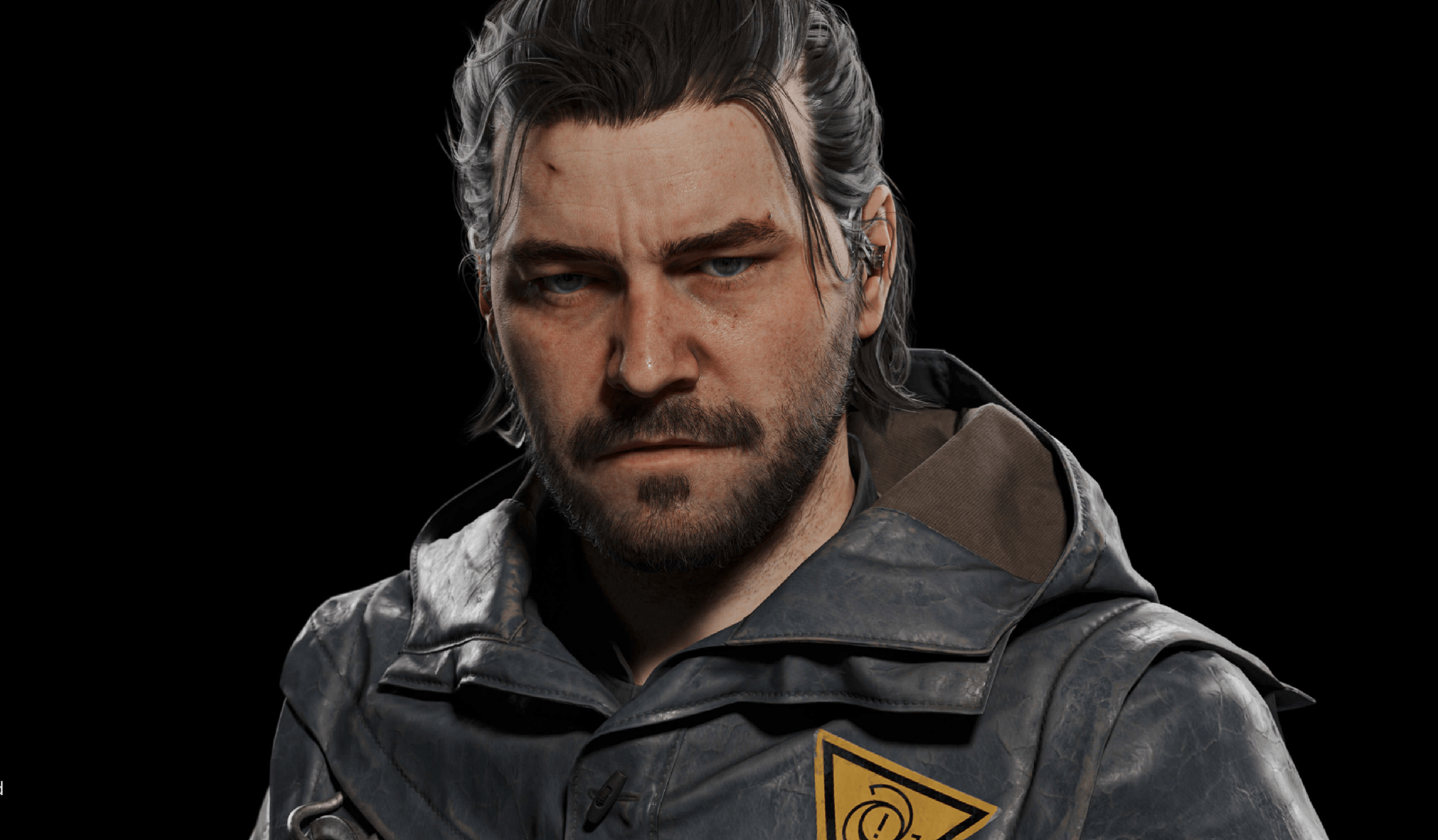
For years, Dylan was kept captive, his extraordinary parautilitarian abilities studied and weaponised. Now, with the Hiss and a secondary invasive organism called the Mold both running rampant in Manhattan, the FBC deploys their most dangerous asset as humanity’s best hope. His mission? Combat the spreading paranatural threat, contain the crisis, and find his missing sister. Jesse Faden, now Director of the FBC is confirmed to appear in the sequel, and early previews suggest she is woven meaningfully into the narrative rather than sidelined. However Jesse will not be a playable character this time around. Returning supporting characters Emily Pope and Simon Arish also make appearances.
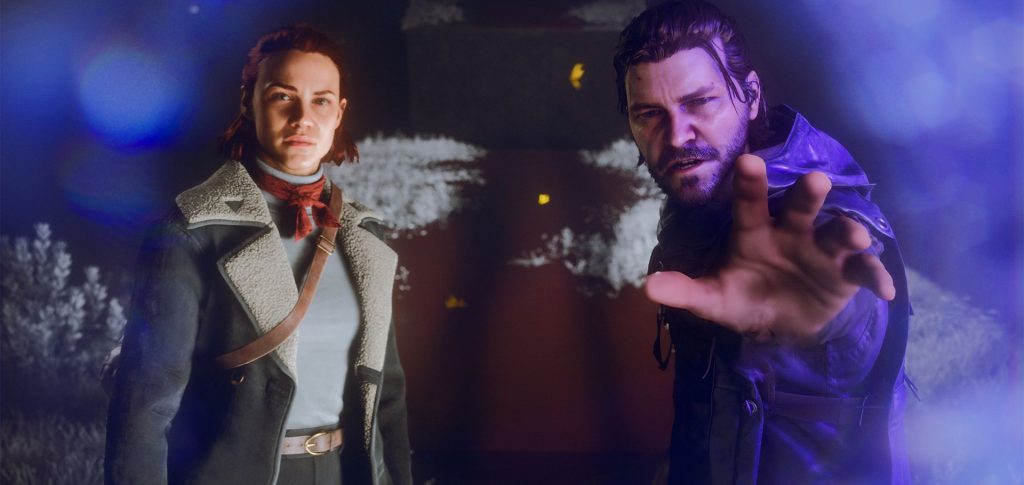
Dylan’s new handler is Zoe De Vera, an FBC field agent with whom Dylan must navigate the chaos together. Thematically, the story explores identity, trauma, and redemption. Dylan is, by any reasonable measure, one of the most unusual protagonists Remedy has ever written. His backstory — stolen from the world as a child, imprisoned, experimented on — is narratively the origin story of a villain. Those who played Control knew Dylan as a powerful antagonist, intent on destroying the FBC, the mysterious and enigmatic Board of the Astral Plane, and perhaps even all of humanity. Dylan colluded with the Hiss in order to win his freedom, yet the malign entity was unable to control him in the same way as employees of the FBC, and Dylan held on to his humanity and his mind. Now for the first time in Control Resonant, the studio asks what happens when that person chooses to become something else entirely?
As Mikael Kasurinen, the game’s Creative Director, articulated in the official story description: “As he navigates a distorted Manhattan shaped by paranatural forces andshifting realities, the story explores themes of identity, power, and sacrifice. Once a test subject of the FBC, Dylan must now harness his evolving abilities, confront his past, and learn to trust others in a world he was never meant to be part of. In doing so, he must rediscover his humanity — and decide what he’s willing to lose to save what remains.”
Kasurinen has also been clear that the game works as an entry point for newcomers: “You don’t have to know the first game to jump into the sequel, we’ve made this one easy to pick up and hard to put down.” He frames the two games as siblings, each standing independently, but connected by a shared world and the Faden family at its heart.
Sean Durrie on Dylan: A Character Rebuilt from the Ground Up
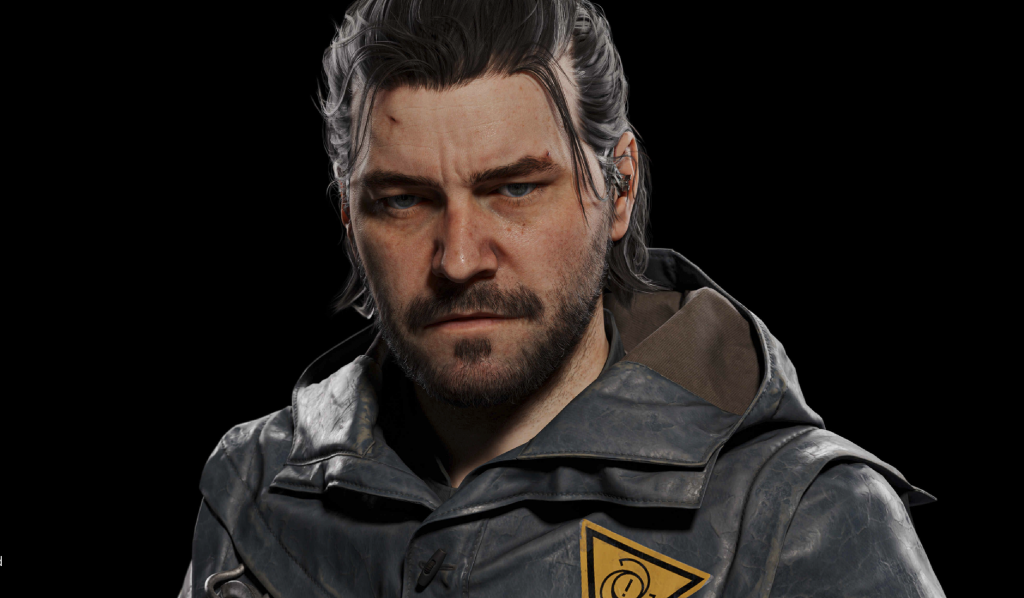
Sean Durrie, who voiced and performed Dylan Faden in the original Control and its DLC, returns for Resonant in an expanded, deeply collaborative role. Speaking to Video Games Chronicle ahead of Summer Game Fest, Durrie explained that the development process was
unlike anything he had experienced in his career:
“I got the immense privilege to go out to Finland and work with Mikael and the writers, developing the character from the ground up,” he said. “They didn’t just hand the script over and say, ‘Learn this.’ They were like, ‘You’re playing it. He’s completely different from the
last game. What are some of your ideas that we can bring to this as well?’ So the amount of collaboration that happened was incredible from my perspective. It’s just something that typically isn’t afforded to you as an actor, quite frankly.”
That sense of rediscovery is central to how Durrie approaches the character. In the first Control, Dylan was defined by the Hiss infection, intent on destroying the FBC, the Board, and humanity. He was compromised, sinister, confined. As the game’s antagonist, we considered him a monster.
Resonant strips that notion away entirely.
“Dylan in the first game was the infected version, and now we’ve moved here, and that’s gone,” Durrie told VGC. “So it was, in a sense, almost a rediscovery — and that’s kind of the essence of the story of him discovering not only himself but his humanity and his strength.
But the biggest things we carried from the first to the second was the love for his sister, his yearning for family, his yearning to have a purpose. It’s a very human story. When you get to be the center of it, because I think all of us want to have a purpose in life, and we want to get up every day and have something that we know we can go do, be a part of, or help. And that’s exactly what Dylan is trying to find now.”
Speaking to GameSpot, Durrie reflected on what made Dylan’s arc compelling to portray:
“That idea of discovering what his humanity is was really appealing to me because Jesse was strong and then had to figure out her purpose. He thought he had a purpose but needs to find his strength. And so that journey of becoming someone who was trying to atone for his past to become helpful, to become a hero in a way, was a thrilling kind of thing to tackle.”
As fans may aleady know, Durrie has previously worked with Remedy on Quantum Break, where he played Nick Masters, giving him a unique long-term familiarity with the studio’s distinctive creative approach.
An Atypical Hero: Mikael Kasurinen on Dylan
Director Mikael Kasurinen has been forthcoming in interviews about why Dylan makes for such a fascinating lead, even (and especially) given the weight of his past. Speaking to GameSpot, he drew a deliberate contrast between the two Faden siblings as protagonists:
“Jesse comes from this world. She’s like us — she steps into the paranatural strange reality and learns about it together with the player. We never really saw New York in the first game. We leave it behind right away; it’s behind the glass wall. In this game we go towards it, we
step onto those streets, and Dylan being an outsider to Manhattan is like Jesse being an outsider to the Oldest House. What’s normal to us is strange to him, and we use that a lot. He might be totally unafraid of certain things that are horrific to us, but then when he finds
a detail that is somewhat interesting to him — he can be mesmerised by that and excited about that while others are like, ‘Well, that’s graffiti, man.’”
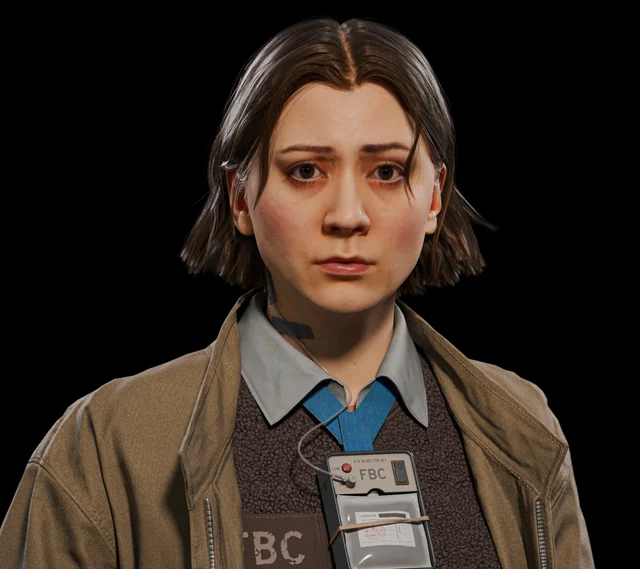
On Dylan’s lack of the classic hero archetype, Kasurinen said: “I think it makes him more interesting because he’s not that typical confident hero who knows exactly what to do and how to do it and just starts doing it. He hesitates. There’s a lot of things coming at him. He’s trying to figure out what’s the right part for him. What he does know is he wants to help. That’s his core belief. But then how to navigate that strange situation they’ve been thrown into is what defines him.”
Speaking separately to the Xbox Wire blog, Kasurinen elaborated on how the sequel is designed to stand alongside, rather than simply beneath, the original.
“I look at these two games as siblings, each standing on their own feet, with their own attitude and approach to the world. But it’s still the same shared world, in the middle of a new crisis. The stories in both games have the Faden siblings at the center. We just shift the perspective depending on which game you play.”
Cinematic Influences: Kurosawa, Evangelion, and Attack on Titan

Remedy games wears its cinematic influences openly, and Control Resonant is no exception. At the VGC preview, Kasurinen spoke about the visual and tonal references that shaped the game’s aesthetic and sense of perpetual motion.
“We were thinking about this kind of continuous sense of motion, like in Akira Kurosawa films,” he said. “Every single shot feels like there’s something kind of going on, and there’s this kind of a dynamic feel to it. So it’s not an accident that when you see Dylan, he always seems to be in motion. When you step into the world, there’s always something kind of happening — leaves blowing in the wind, and so on. It feels like this active world that exists outside of your presence.”
Kasurinen also cited the beloved mid-1990s anime Neon Genesis Evangelion as a touchstone:
“Also, an older anime called Neon Genesis Evangelion, which I was blown away by in the nineties and still am. I think it’s one of the most amazing things ever created. Totally going against convention.”
He went on to note that Attack on Titan was a significant inspiration for Control Resonant, joking that Dylan’s new hairstyle is a direct nod to that show’s conflicted protagonist, Eren Yeager.
About That Genre Change

Perhaps the single biggest change from Control to Control Resonant is the complete overhaul of the combat system. Where Jesse fought primarily with her supernatural Service Weapon (a shape-shifting gun) Dylan wields a shape-shifting melee weapon known as the Aberrant. There are no firearms in Resonant. The game pivots into stylish character action territory, drawing comparisons from multiple press outlets to Devil May Cry and Bayonetta.
The Aberrant takes on at least three primary forms at launch:
- Dual blades — fast attacks with a high critical hit chance, suited to aggressive play.
- A one-handed axe — medium speed, robust combo potential, and well-rounded damage.
- A scythe — slower but with wide-sweeping arc attacks capable of hitting multiple targets.
Beyond the primary forms, Dylan also has access to secondary weapon forms including:
- A Hammer — for heavier single-target punishment.
- A whip — for ranged strikes, which can be woven into combos using a dedicated button.
A third layer of weapon expression comes through Combo Enders. These are special weapon shapes the Aberrant morphs into at the conclusion of a combo string and include:
- Gauntlets — for rapid fire.
- A rotating glaive-like projectile — strikes multiple enemies simultaneously.
According to multiple previews, mixing and matching these weapon forms, secondary attacks, and Combo Enders creates a sense of genuine build depth. Some enemies are also vulnerable to specific damage types, encouraging players to adapt their loadout rather than committing to a single approach.
Some previews describe the system as making build variety: “The key pillar of Control Resonant, offering players the ability to dial in their version of Dylan Faden to fit their play style” with Game Informer’s Marcus Stewart noting: “I slipped right into the familiar rhythm of hacking apart foes using simple melee combos, popping them skyward for air-juggles, and dodging attacks mid-offense before zipping back into the fray. I’m impressed with how swift yet impactful the action feels.”
Paranatural Abilities and Combat Powers
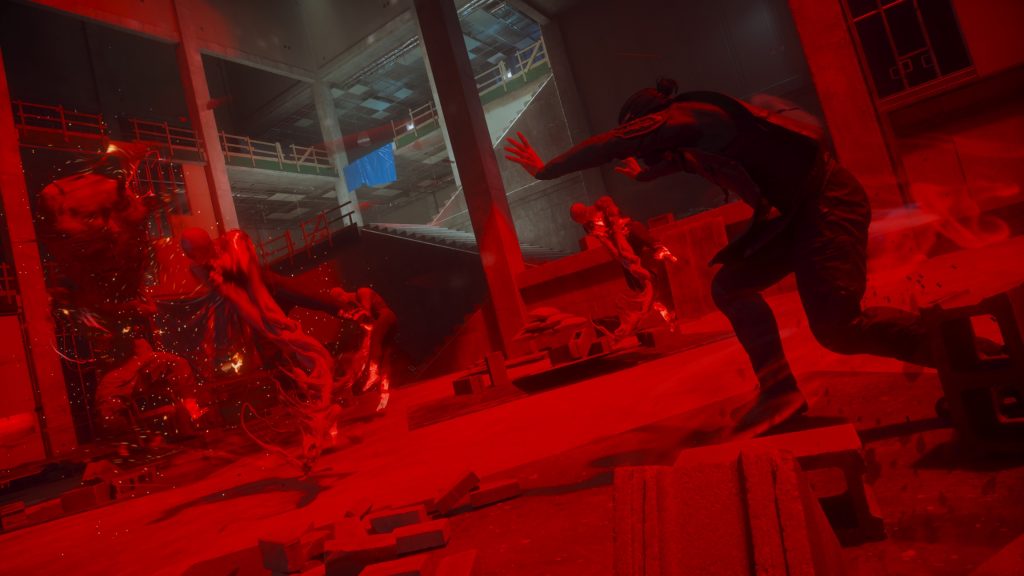
Alongside the Aberrant, Dylan has access to a range of supernatural Combat Abilities, unlocked by defeating bosses and progressing through the game. Each ability appears to offer branching choices. For example, between a heat modifier that buffs melee attacks or
one that releases a wide heat wave, or between a force push and a grounded force slam. These choices are meaningful, though players can re-spec freely by spending in-game resources. Other abilities seen in previews include summoning a rubble shield for defence and telekinetically launching rocks, and calling on smaller paranatural entities as attack support. These abilities mirror Jesse’s from Control. A rechargeable meter also prevents ability spam and keeps combat grounded in skill-based play.
The Falter System and Executions
One of the most praised new additions in early previews is the Falter system. As players deal damage (particularly through abilities and charged attacks) they build up a Falter bar on individual enemies. When that bar fills, a prompt appears and Dylan launches across
the arena to deliver a cinematic execution.
Traversal and Verticality
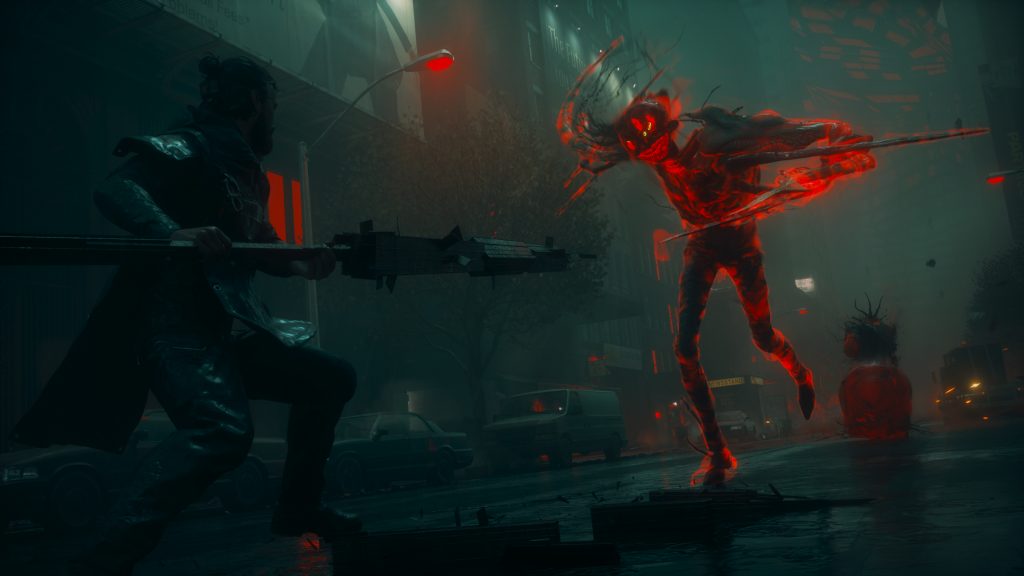
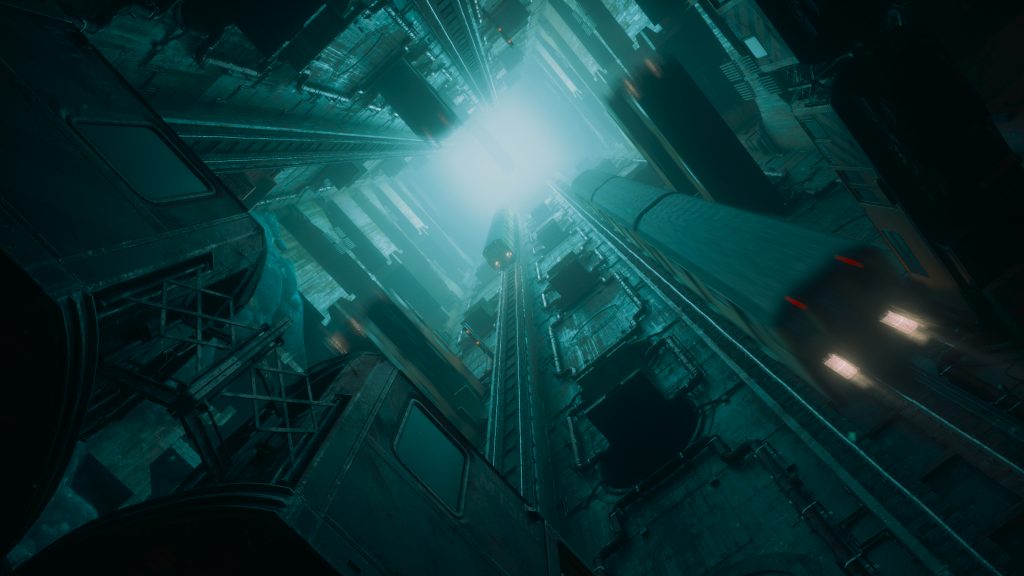
Dylan’s movement toolkit grants him access to a double jump, an air dash, and a boost jump that allows him to briefly float, all handy abilities given that Resonant plays across the Inception-like contorted streets and structures of a Manhattan torn apart by paranatural forces. A key ability called Shift allows Dylan to alter his centre of gravity entirely, walking on walls and ceilings to open up otherwise impossible angles of traversal and combat. Early previews note this dramaticallyincreases vertical exploration opportunities and makes combat in multi-storey environments genuinely novel.
The Gap: Dylan’s Personal Chill Out Space
A new in-game space called The Gap functions as Dylan’s personal hub, accessible at any time outside of combat. This is where players upgrade abilities, switch Aberrant forms, craft passive buff accessories called Artifacts, and adjust their build. A training area within The Gap allows players to test any new changes before heading back into the world. It is the game’s equivalent of Alan Wake 2’s Mind Place, a space that exists within the fiction while serving a practical mechanical purpose. Multiple previews noted that Remedy has given it its own distinct art direction, making it feel like an environment rather than simply a menu screen.
An Open-Ended Manhattan

Control Resonant is emphatically not an open-world game, a decision that Remedy has been deliberate about communicating. The game uses what the studio calls an “open-ended” structure. Interconnected zones within a distorted Manhattan offer exploration, side quests, and optional encounters without collapsing into the sprawl of a fully open world.
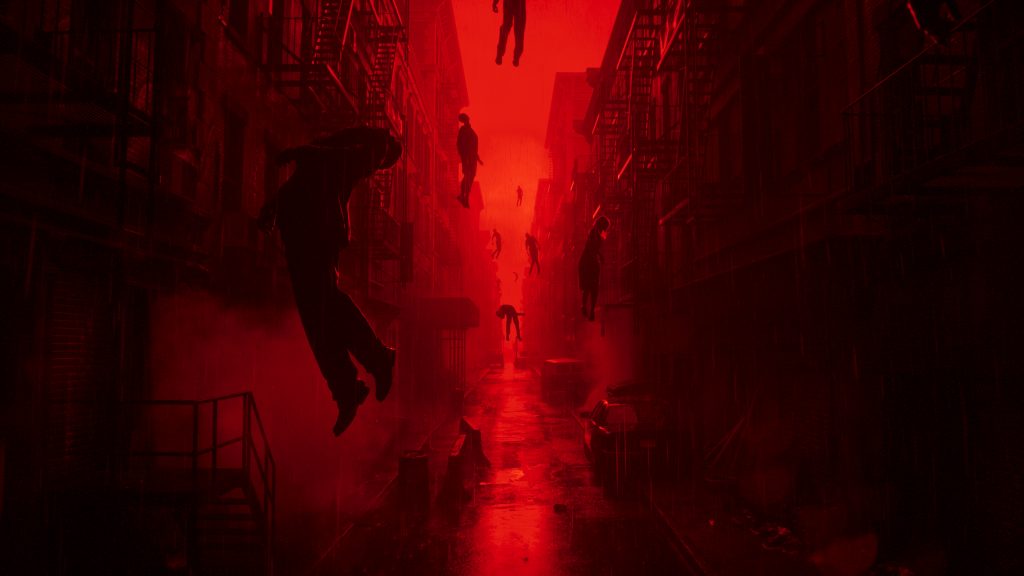
The Manhattan players explore is deeply unsettling. Buildings warp at impossible angles. Flocks of pigeons are frozen in mid-air, flickering in and out of existence. Civilians hover suspended above the streets. In one area, a street simply drops ninety degrees. It is a world shaped by converging Altered World Events — AWEs — and the result is a level design playground that feeds into the game’s expanded platforming and traversal. The Hiss, the primary antagonist force from the first game, have escaped the Oldest House and are now spreading through the city. They are joined by the Mold, a secondary invasive organism, and the new unnamed resonance entity that appears to be the game’s central, cosmic threat. Together they represent an unprecedented convergence of paranatural danger.
Sinkhole Apartments and Infinite Bedrooms
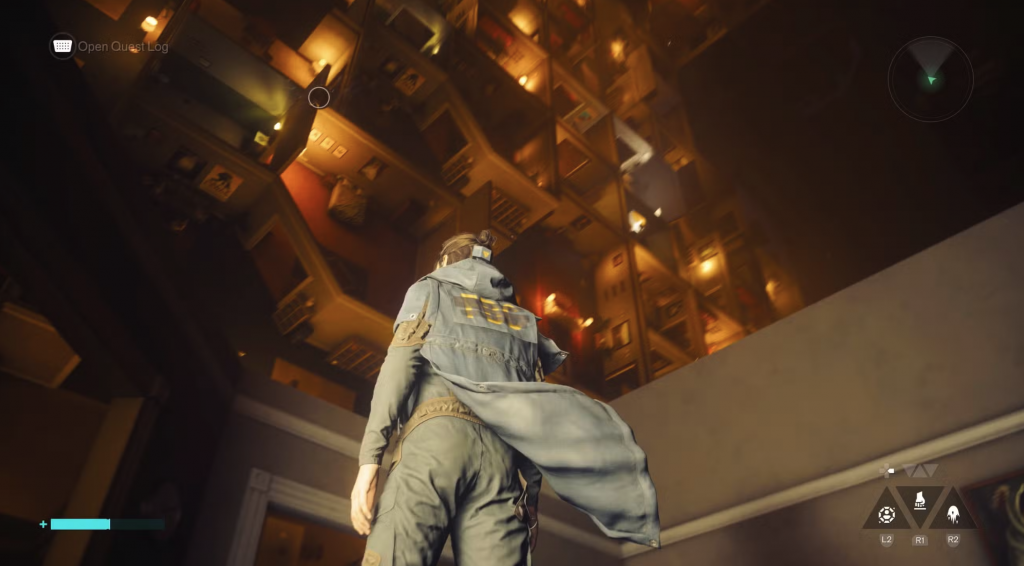
If the hands-on previews confirm one thing above all else, it is that Remedy’s gift for mind-bending, logic-defying level design is as sharp as it has ever been. Several outlets were given access to a mission called The Sinking Hole, set in the depths of a sinkhole the Hiss
have transformed into a kaleidoscopic stack of repeating apartment spaces. Players traverse walls and ceilings in multi-angled combat sequences that drew comparisons to the hotel battle in Christopher Nolan’s Inception. Game Informer described another sequence in which Dylan must follow the sound of a song jumping from television set to television set in order to escape a dollhouse-like maze of shifting rooms. “It’s weird as hell,” wrote Marcus Stewart, “which is all I really want as a big fan of Control.”
PC Gamer’s Morgan Park described getting “lost in an infinite bedroom dimension.”
Jesse, Emily Pope, Simon Arish, and Darling Doctor Casper Darling

Fans who were worried about Control Resonant leaving the cast of the original game behind can largely breathe easy. The June 2026 story trailer confirmed the return of several beloved characters. Jesse Faden is seen briefly, confirming she has a meaningful role, not
merely a cameo. Make note not an actual playable character. Emily Pope, fan favourite and Jesse’s former research ally within the FBC, also appears, now in the role of acting co-director, following Jesse’s disappearance. Simon Arish returns, as does Doctor Casper Darling, the FBC’s former Head of Research, in characteristically eccentric fashion.
The game looks likely to weave in opportunities to further explore Dylan’s backstory, offering fans a richer understanding of the Faden siblings’ shared history and divergent paths.
The Kasurinen Vision: Learning from Past Mistakes
In his interview with VGC, Kasurinen reflected on the evolution from the original Control to Resonant, and how the first game’s development informed what the studio wanted to do next:
“So when we started to work on the first game, we wanted to take what it was we were known for and add that to an action-adventure recipe. But then we started to layer on top of that different RPG elements — you can customise your character to a degree, you have
things like side quests, you can actually make choices in conversations with other characters. Things that we haven’t really done before. So it was a step towards that direction already. We learned a lot, made a bunch of mistakes.”
Control Resonant is the product of that learning, a game that builds on the first title’s RPG scaffolding and pushes it into genuinely new mechanical territory, while retaining the dense, strange, emotionally resonant storytelling Remedy has become known for.
Early Access and Pre-Order Details
Pre-orders are open now across all platforms. The Digital Deluxe Edition, priced at $69.99, includes a PlayStation-exclusive early access bonus of 48 hours ahead of the September 24 launch date. A Standard Edition is available at $59.99, with physical editions also available
at retail.
Press Reaction
The Summer Game Fest preview sessions last week (held at Annapurna Pictures’ West Hollywood headquarters) gave select media outlets access to approximately three hours of gameplay across the game’s opening and at least one later mission. Although we were disappointed to learn there were no female games journalists with access to the Annapurna HQ play session (we’re open to correction if wrong on this?), the response from an exclusively male press corps has been overwhelmingly positive, with several strong caveats about how different the game is from its predecessor.
GamesRadar+’s Josh West called it “an exceptionally solid change of pace” and admitted he was “desperate to delve deeper into this world come September.” Anthony Taormina said it left him “very eager to see the finished product,” noting that while Resonant may not be “as revolutionary as its predecessor, it brings a lot of interesting elements to the table.” Game Informer’s Marcus Stewart described being “ready to embrace these changes with open arms.” VGC’s Jordan Middler meanwhile declared the gravity-shifting combat “sold me after just one hands-on session.” And Engadget’s Alessandro Fillari framed the New York setting as feeling “like the Backrooms” which is high praise in the context of the series’ tradition of architectural unreality.
Across outlets, previews highlighted the combat system’s depth and satisfaction, the quality of the level design, the strong emotional grounding of Dylan’s character, and the game’s confident willingness to take risks. Concerns, where they existed, centred primarily on whether the broader RPG systems hold up at launch, and whether the experience maintains momentum across its full runtime. These questions will only be answered when the full game arrives.
Release Date and Platforms
Release Date: September 24, 2026
Platforms: PlayStation 5, Xbox Series X|S, PC (Steam & Epic Games Store), Mac*
Developer: Remedy Entertainment
Publisher: Remedy Entertainment
Creative Director: Mikael Kasurinen
Engine: Northlight Engine
Standard Edition: $59.99 | Digital Deluxe Edition: $69.99
*Mac via Steam and the App Store will follow later in 2026. The game’s initial launch on September 24, 2026 is for PS5, Xbox Series X|S, and PC only.
Control Resonant launches September 24, 2026. TV Pulse Magazine will have full coverage, including our review, written by a non-AI human female, post launch.