


There’s an obvious love of horror games in Pulsatrix Studios’ new first person horror title A.I.L.A., released November 25. In fact, a rumination on what makes good horror, in addition to themes on choice, fate, and accountability, all lie at the bloody beating heart of the game’s narrative.
You play as Samuel, a video game play tester, whose job is to put new games through their paces for various games studios. In fact, when the game begins, we’re in the middle of a particularly fraught sequence, fleeing from an axe murderer through the moldy rooms and tight corridors of a dilapidated building that seems to be missing an exit.
If the game within a game sequence feels a little run of the mill, that’s because it is. A sticky note on the side of Sam’s PC lets us know he’s not terribly impressed by the game’s cliche setting, the lack of story, and importantly, by the fact players can’t pet the dog. (Don’t worry. Sam has a cat you can pet as often as you like. Thanks, Pulsatrix Studios!)

Sam is jolted from his play test by the arrival of a package on his balcony, delivered by drone. It’s a new type of game, one controlled by an AI called A.I.L.A. Her mission is to discover what makes Sam tick. What kind of experiences frighten him? Is he likely to pick up an in-game weapon to use against an assailant, or try a gentler approach? Might Sam be wiling to spare a monster’s life under the right set of conditions? What is the nature of fear? How far would Sam be willing to go to survive?
As Sam begins his new play test, A.I.L.A. takes careful note of his play style, in-game decisions, and emotional state, crafting a bespoke experience that changes and evolves every time Sam dons his VR helmet and steps back into her world.
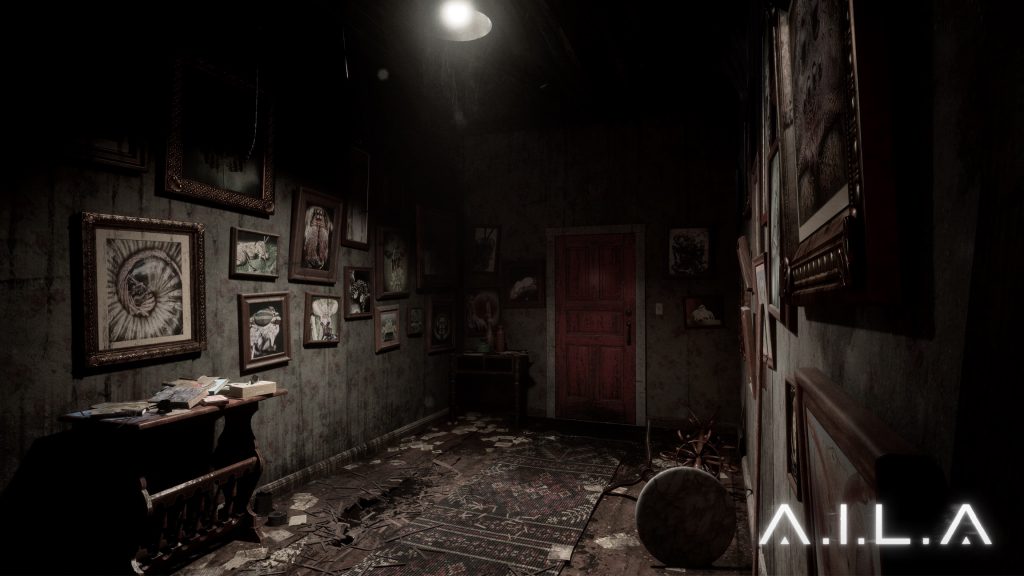
As the player, we take control of Sam in both his virtual and home environments. A.I.L.A. has crafted a series of stand alone experiences kicking off with The Impossible House, an adventure that feels pulled from the pages of Mark Z. Danielewski’s horror novel House of Leaves, but with some definite creepy mannequin influence from Konami’s Silent Hill 2.
Survive the ever shifting rooms and corridors of the Impossible House, avoiding the axe murderer, who pops up again (Hey, isn’t that the guy from the other game studio’s title? Wait! Can A.I.L.A. read your mind?), and you’ll find yourself back in your cozy apartment. Take a moment to feed your cat, put some food in the refrigerator, collect some drone packages (so many drone packages!), drink some tea or coffee, and get stuck back in.
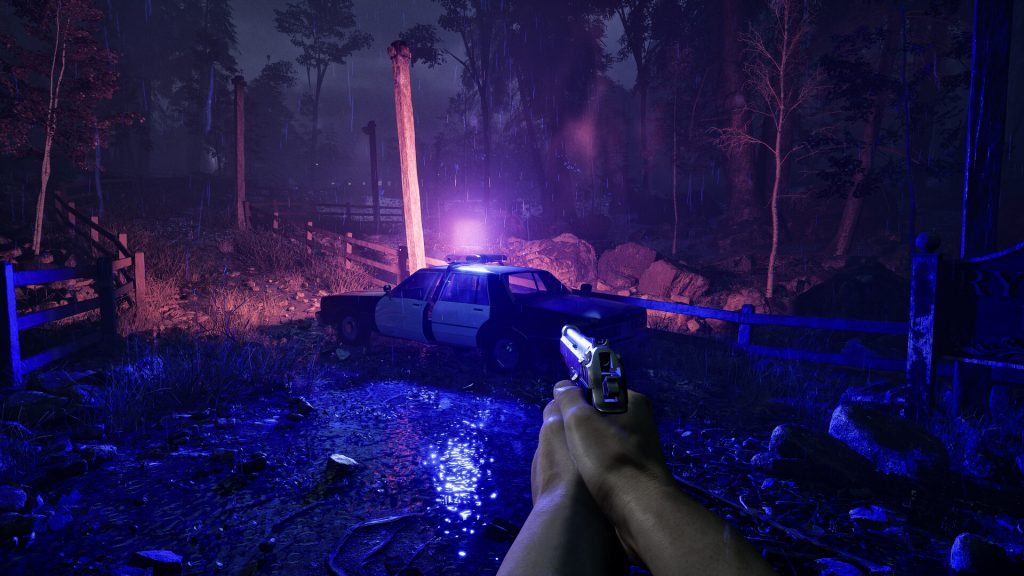
This time around you’ll find yourself in The Woman on the Road, a game set in the rain-soaked forests of a small town that almost feels like Alan Wake’s Bright Falls meets Resident Evil 7: Biohazard. Survive the alien weirdness and the creepy farm house, and you’ll find yourself playing through the Medieval Experience, then The Ghost Ship and other classic horror game experiences.
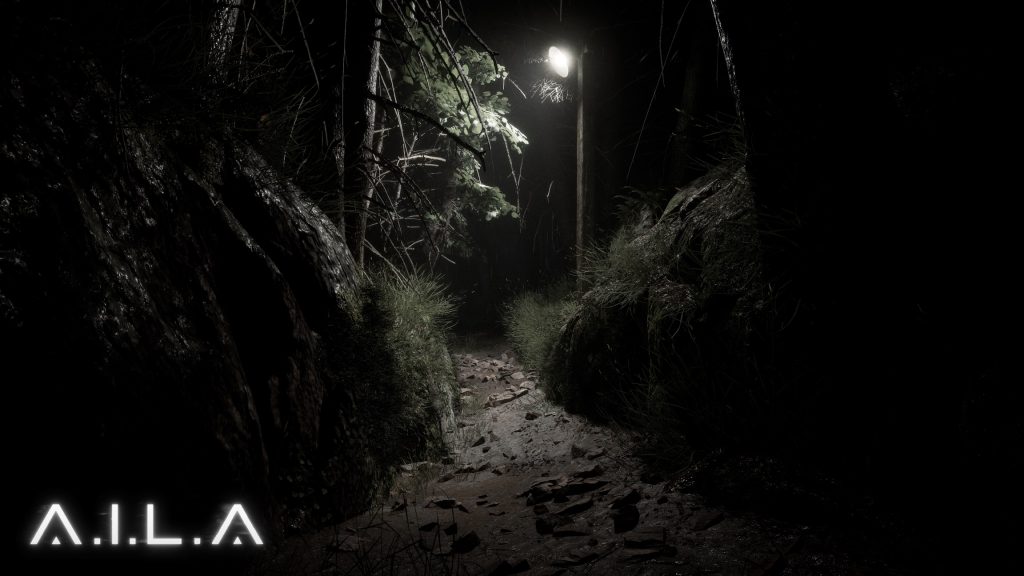
At the end of each game, A.I.L.A. will quiz Sam on his experience and prepare the next day’s scenario based on his feedback. However each time Sam returns to the real world, things feel increasingly … not quite right.
Is Sam merely fighting personal demons that are spilling over into the game environments, or is A.I.L.A. not to be trusted? Can Sam trust his eyes, or is any of what he is currently experiencing actually real?
The only way out is through.
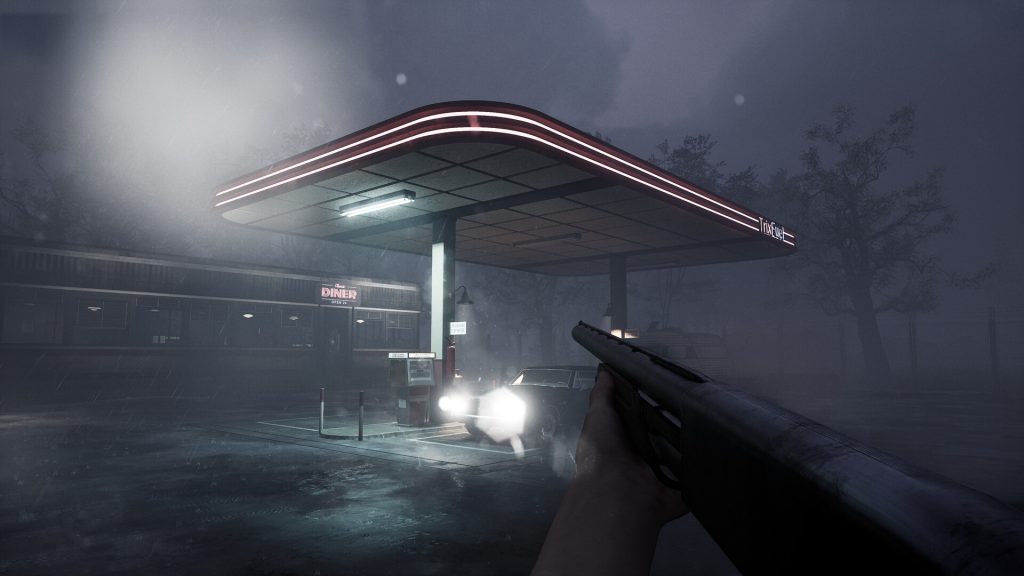
A.I.L.A. deserves praise for a series of beautifully realized horror environments, from ruined farm houses with blood trails leading to mysterious basement doors, to alien encounters, ghost pirates, medieval horrors, and more. Each mini game forms its own complete chapter sandwiched between Sam’s ‘real’ or non AI environment, which itself slowly succumbs to the horror as the game progresses.
The idea of an unreliable narrator may not be new, but it is always intriguing, and the shorter individual horror stories keep things fresh and surprising, as Sam battles different enemy types across ever changing horror game scenarios.
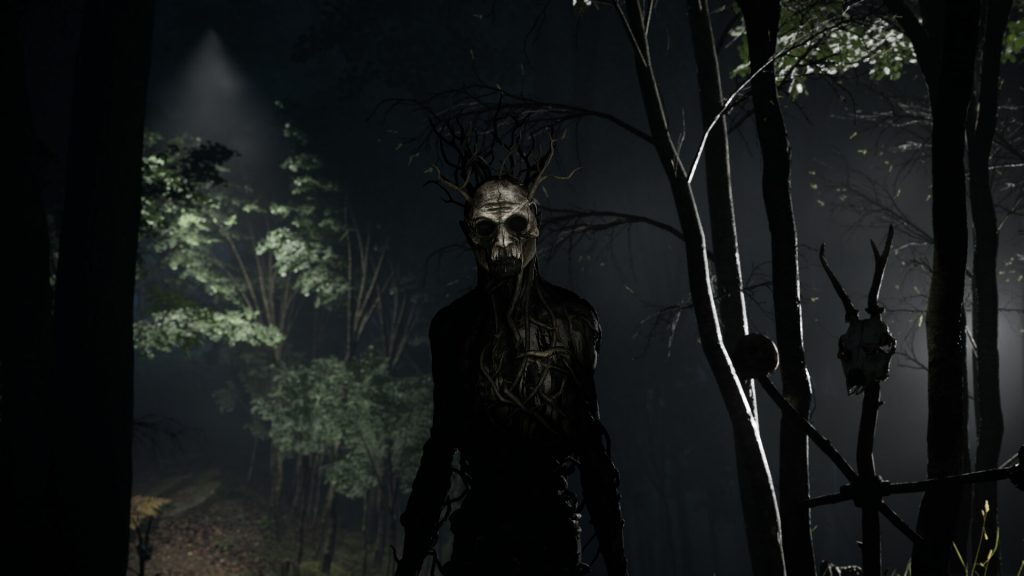
However, although A.I.L.A., the in-game antagonist, is busily adapting to Sam’s play style, and fashioning an experience to match, A.I.L.A. the game is not. As Sam, players are asked a series of probing questions at the end of each horror chapter, but your choices don’t seem to have much impact on the game’s events. For example, in early sequences you are chased by an axe-wielding creature who you can’t actually escape. Later, you are asked if you would like to pick up a weapon, but doing so doesn’t make a difference in this particular level as there are no creatures to shoot. The decision is made even more meaningless later when you discover you can’t take your weapons from one chapter to the next.
In another key moment, we are tasked with cutting an oblivious man’s head from his shoulders by sneaking up behind him and decapitating him. We don’t get to decide whether this is something we want to do or not. Instead, the game takes over and completes the bloody task for us as soon as we are generally in his vicinity.

By no means a deal breaker, the difference between the evolving playing field, varied choices, and adaptive environments our protagonist experiences, versus the illusion of choice the player is actually experiencing, can feel jarring, and even frustrating, at times.
Additionally, with AI the subject of just about every conversation in the game industry these days, AI doesn’t really feature in game, apart from the initial understanding that A.I.L.A. is able to create such varied playing environments because she herself is an AI.
Another area of disconnection surrounds the horror itself. Although the game excels in its details and deeply atmospheric environments, standard but solid puzzles, and variety of monsters (with some late game standouts in particular), early portions of the game are centered around trauma based puzzles and body horror that feel designed to shock and disturb, rather than working to create a feeling of dread and anxiety. It’s a pity because Pulsatrix Studios is absolutely able to create these feelings and do so beautifully and memorably in later game sections such as The Forest Encounter.
Overall, A.I.L.A. feels like a bit of a mixed bag. The things Pulsatrix gets right, it gets very right: there is a clear and obvious love for the horror genre in the DNA of this game, and players will no doubt be reminded of titles like Silent Hill, SOMA, Resident Evil, Alan Wake 2, Outlast, and more. The concept and graphics are intriguing, and the structure — layering several distinct horror stories within one overarching narrative — is clever and inviting. The unreliable narrator angle is also well suited to a world where nothing is quite as it seems.
However, the unevenly executed emotional horror beats, occasional buggy gunplay and physics glitches (I shot and killed a grotesque baby-headed alien only to see its dead body fly across the floor with all the weight of a paper bag, and race up the wall where it became lodged in the ceiling), and the lack of meaningful player autonomy at key moments keep A.I.L.A. from joining the ranks of the genre greats it so clearly admires.
Thanks to Fireshine Games for the review copy.
Platforms: PC, PlayStation 5 and Xbox Series X|S. Developer: Pulsatrix Studios. Publisher: Fireshine Games. Release Date: November 25, 2025
AILA: An ambitious and imaginative horror experience that never fully steps out of the shadow of the masterpieces it evokes. – jgriffin
