
Capcom has gone back to its roots with Resident Evil Requiem.
For a while there it was all mold monsters, and cannibalism, and protagonists who were unreliable witnesses to their own horrors, but this latest game proves the Japanese video game company knows what its audience really wants: solid heroes in tight corridors, and tighter outfits. Scanty ammo. Hordes of undead roaming the halls and tastefully appointed rooms of a mansion/hospital/evil laboratory. Flickering lights. A campy, monologuing baddie or two, and a theatrical ending that may or may not involve said mansion, or even an entire city, getting blown up.
Requiem does little to deviate from this late 90’s approach. In fact, this latest entry embraces its classic gaming roots like an old friend. There are call-backs, easter eggs, familiar faces, and a solid sense of the franchise’s most iconic elements here. Everything feels crafted with care and generosity and a love of the franchise’s storied past.

This attention to detail can even be found in throw-away moments that don’t particularly add anything to the story. In one scene Leon Kennedy — now older, grumpier, and sporting an ominous rash on his neck — surveys a massive sinkhole on the street and mutters “Road’s blocked. Gonna have to find another way around” in a direct callback to Ada Wong in Resident Evil 2, who stood in exactly the same place and uttered the same lines all the way back in 1998.
Like Resident Evil 2, Requiem’s story is told from a dual perspective, but unlike Resident Evil 2, it switches focus between our protagonists throughout the game, instead of asking the player to choose a hero at the outset. We kick things off with FBI desk jockey Grace Ashford (Angela Sant’Albano), the daughter of Resident Evil Outbreak’s Alyssa Ashcroft. At the start of the game Grace is sent to investigate a recent spate of deaths of Raccoon City survivors caused by late onset T-virus infection. Haven’t those poor folks suffered enough?
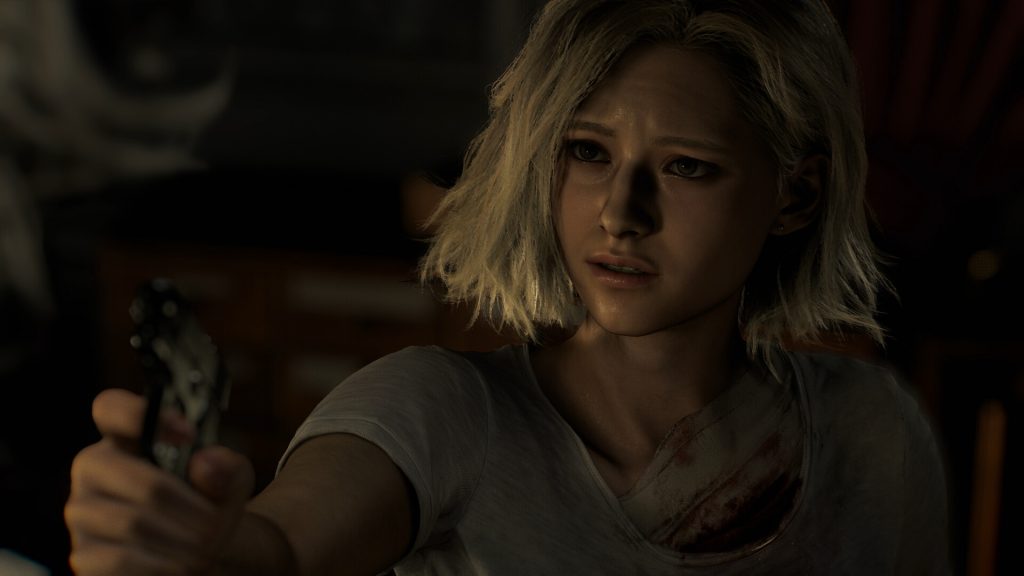
While Grace checks out the abandoned Wrenwood Hotel, the same spot her mother was horrifically murdered eight years prior, fyi (No problem, Grace. You got this!), DSO agent Leon S. Kennedy (*cheering crowd noises*), crosses paths with her during his own investigation into the same infection.
Although Grace and Leon (Nick Apostolides) soon find themselves in the same location — Rhodes Hill Chronic Care Center/Fortress of Death/Amoral Experimental Laboratory — their experience of the environment differs wildly. Terrified and under-equipped Grace is no match for the hordes of undead that roam the corridors of the facility, initially at least. Instead, in these earlier sections she must use her wits to sneak around, distract, and evade in order to progress, solve puzzles, and survive.
Players can choose to play Grace in first or third perspective depending on how in-your-face you want the horrors to be. As she progresses, Grace will gain weapons that allow her to dispatch enemies by herself. And although she never quite loses the tremor in her voice, or the shaking in her hands, her ascent to Badass status feels truly earned. However by now, those early game sections have cemented a permanent tone of vulnerability, dread, and terror in our collective psyches that has the effect of lingering long after Grace sources a full clip, some green herbs, and a big gun.
Leon’s action sequences default to third person perspective (à la Resident Evil 4‘s run and gun style), which tells us a lot about how Capcom intends for us to play through his sections. Yes, you can change that perspective setting, but why would you want to? This game wants us to notice Leon. Whether he’s parrying a chainsaw attack, round-housing an undead patient across the room, or just nonchalantly sharpening his axe, Leon is there to be looked at. Capcom has clearly had a lot of fun in updating and refining this character for 2026, quips and all, and the juxtaposition between Grace’s terrifying stealth sections, and Leon’s gung-ho action sequences where players are given the opportunity to just let rip, are enormously satisfying, endlessly fun, and serve to offset the claustrophobia and dread in key moments.
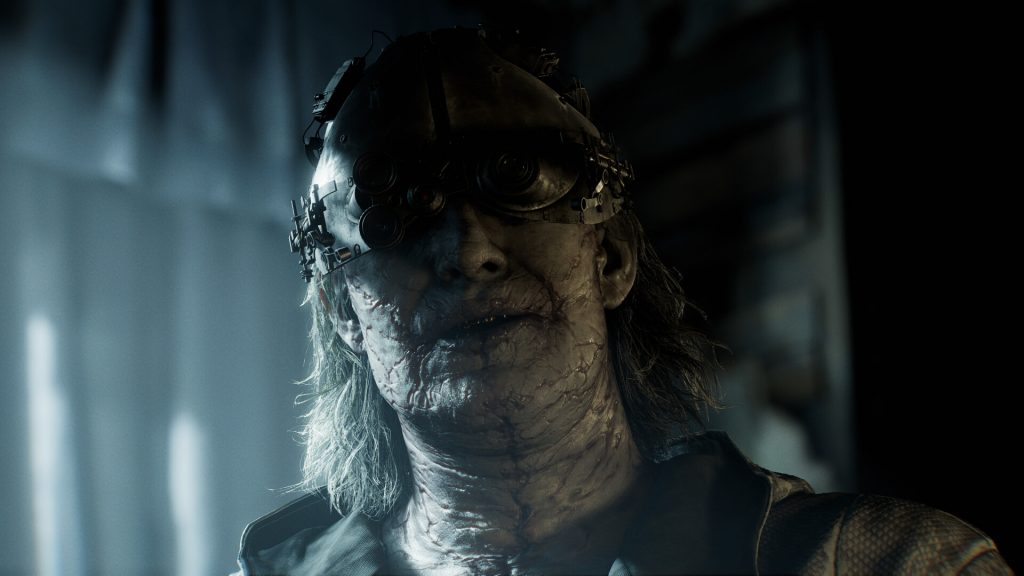
But it’s not all shuffling staff and patients. Rhodes Hill is also home to a series of mini bosses which you can choose to tackle as Grace or as Leon. Some more colorful inhabitants include a machete wielding chef who needs more ingredients (you are the ingredients, fyi), a sound-sensitive blind patient who swings a killer IV-drip, a grotesque Chunk who can barely manage to squeeze his enormous girth down the mansion’s tighter corridors, a singing diva with an ear-splitting operatic range, and a monstrous child who hides from the light by navigating through the building’s crawl spaces. Then there’s the grandstanding Doctor Victor Gideon (Antony Byrne), a man who looks like he’s spent too many years sniffing experimental T-virus variants. Have at it!
Gameplay is a satisfying blend of exploration, puzzles, and combat. However, the weakest of that trio of elements are the puzzles. In true (and ever baffling) Resident Evil style, you’ll often need to find 3 objects to fit into a door, or a mechanism in order to unlock/open/use it. Clues are scattered on hastily written notes, and in journal entries, and old photos on desks etc. and present no real mental challenge, other than the task of paying attention to your environment, and often having to backtrack with your newly gained item through hazardous terrain.

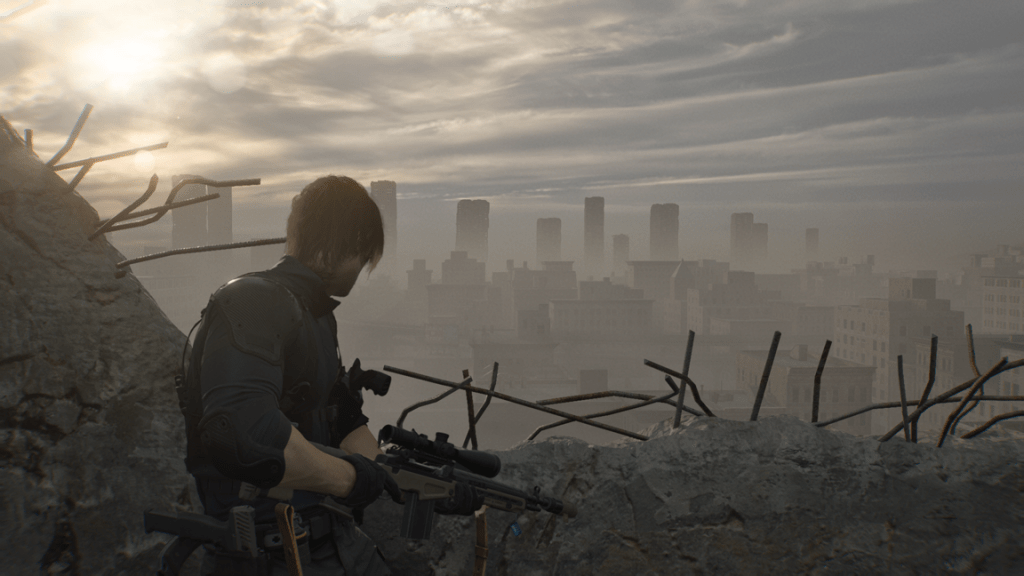
Exploration is satisfactorily varied in Resident Evil Requiem. Instead of basing the entire game out of the Rhodes Care Center (which Capcom could have done and still produced a great game) Leon and Grace get to explore far beyond the mid-western city of Wrenwood. The game keeps it fresh by alternating between Grace and Leon and their respective play styles, and by giving each character plenty to do, and new places to visit. Rooftop sniper shootouts, motorbike races, armed undead soldiers, dodging mortar attacks, mutated spiders, and more keep the task of exploring your surroundings surprising and fun. At times (especially in the later stages) Leon seems to bend the laws of physics and reality in key action moments, but we get that it’s a deliberate creative choice, and rolling with how crazy it all feels it just makes things more enjoyable.
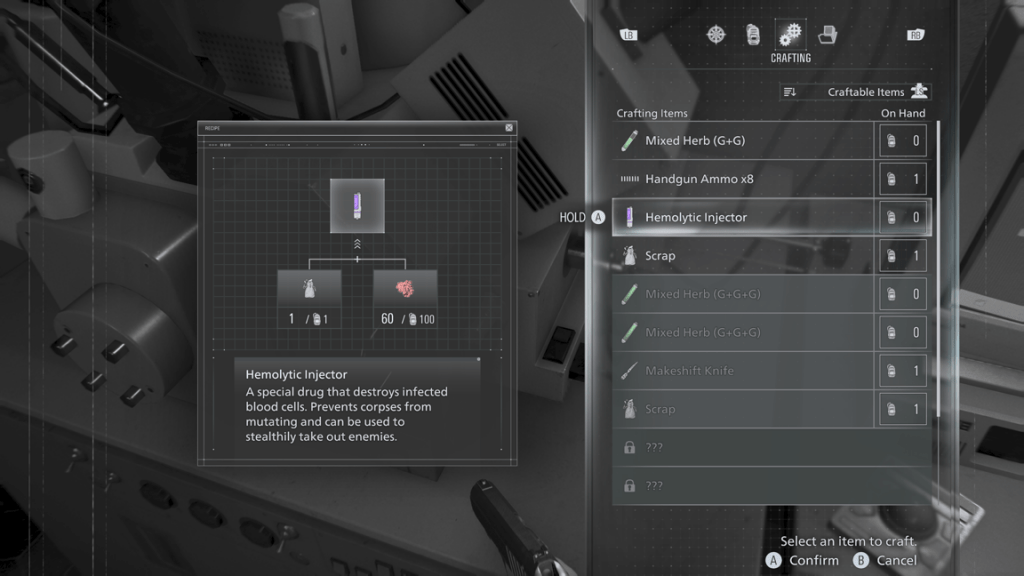
Initially inventory space is tight, and munitions are low. Particularly for Grace. However, Requiem provides several ways to gather what you need to survive. Leaning into the secret laboratory angle, Grace can make use of infected blood (which she can discover and collect from dead enemies, in handy buckets of the stuff just lying around, or even just pooling on the floor) to craft special single-use hemolytic injectors. These can be used to fell larger prey with a single swift stab from behind. Watch with grim satisfaction as an injected infected stops in its tracks, blows up like a balloon, and then explodes all over the walls and floor.
These injectors are equally handy for putting down infected who insist on coming back to life as ‘Blister Heads’ with the power to create even more Blister Heads from previously downed enemies. Grace can also ‘purchase’ additional inventory slots by collecting and spending antique coins, craft upgrades to her own overall health and weapon-handling ability, and equip special bonus-granting charms to her arsenal to buff her character and improve her odds.
However, it’s definitely Leon who gets to have the most fun with the game’s varied military arsenal. Apart from his starting combat hatchet and a special magnum called the ‘Requiem’ pistols, handguns, pump-action shotguns, bolt-action sniper rifles, semi-auto marksman rifles, sub machine guns, chain saws, stacked hand grenades, body armor, and more all help Leon spread the carnage.
Although consisting of a shorter run time than some games of the genre (there are about 10-12 hours of gameplay) Requiem is an exericse in concentrated stress and pure adrenaline that will make you beg for the closing credits. Heavily front-loaded with dread, and leaning into the vulnerability of Grace’s early hours the game ensures the player never feels truly safe.
However, as the narrative shifts gears, the latter half becomes an unapologetic, action-packed thrill ride. Yes, there are certainly moments where you might welcome a more frequent switch-up between our two leads. You’ll find yourself craving Leon’s firepower during Grace’s more suffocating stealth segments, and missing the quiet tension of the Rhodes Care Facility while Leon is busy dodging mortar fire. However, the pacing largely works in the game’s favor. By the time the credits roll, the transition from survival horror to high-octane spectacle feels like a natural evolution of the nightmare.
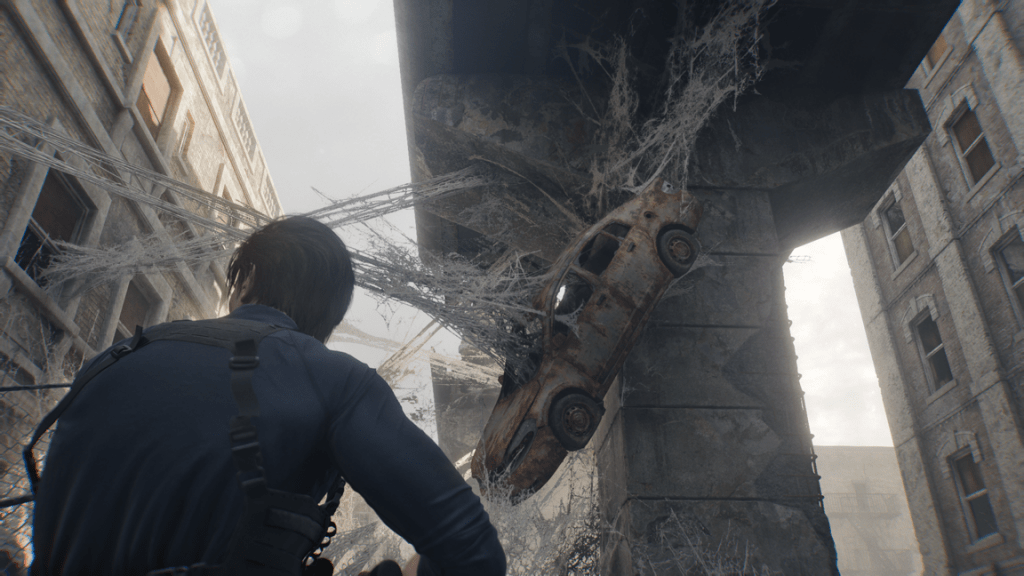
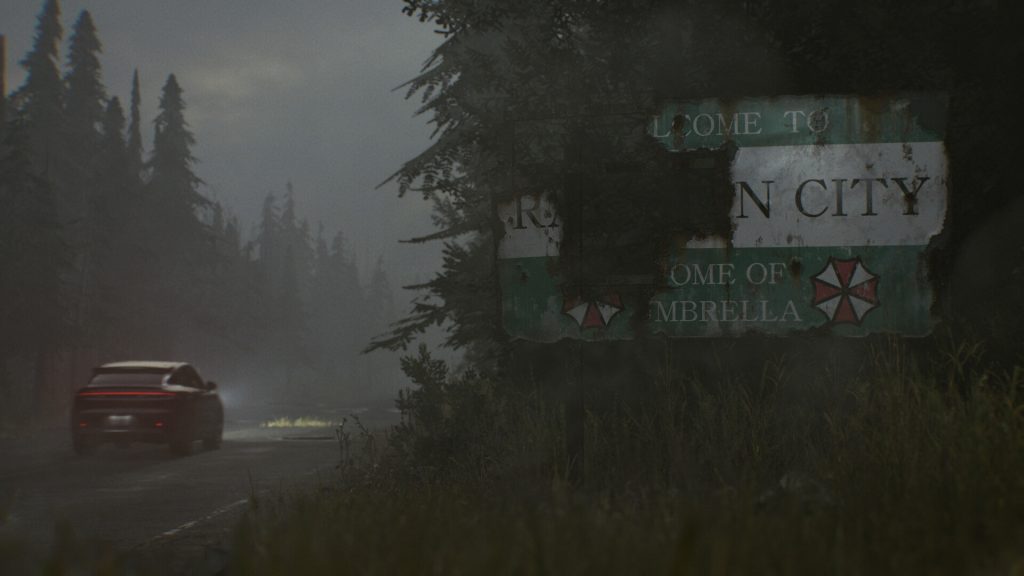
Ultimately, Resident Evil Requiem is an incredibly tense and atmospheric experience that reminds us why we fell in love with this series in the first place. Between the opening rain-slicked streets and the blood-slicked halls that follow, Capcom has delivered a visual and visceral triumph that honors its roots.
Release Date: February 27, 2026. Genre: Survival horror. Developer: Capcom. Publisher: Capcom. Platforms: Xbox Series X/S, PlayStation 5, Windows, Nintendo Switch 2.
Resident Evil Requiem: A gloriously bloody, and at times, unashamedly campy distillation of the classic Resident Evil spirit. Whether you’re meticulously crafting hemolytic injectors or parrying a chainsaw with a combat hatchet, Requiem stands as a bold testament to the franchise’s enduring legacy. – jgriffin