It’s hard to imagine what, if any, original stories or artistic brilliance might still be plumbed from the depths of the Alien franchise. Since the original 1979 Sigourney Weaver-starring movie we’ve had six more Alien films (Aliens, Alien 3, Alien Resurrection, Prometheus, Alien: Covenant, and most recently, Alien: Romulus), and 2 Alien vs. Predator projects (Alien vs. Predator, Aliens vs. Predator: Requiem), not to mention myriad other comic book video game, and novel adaptations. Yet Noah Hawley, the creative force behind such tricky projects as Fargo and Legion, seems to have cracked it with Alien: Earth.
This new series from FX and Hulu is a stylishly directed, multi-layered tale of corporate greed that still manages to bring the scares and the horror after all these years.
Set two years before the events of the 1979 film, the series opens onboard the The USCSS Maginot, a Weyland-Yutani C-class deep space research vessel, now inbound for Earth following a 65-year space expedition to obtain extra-terrestrial life. Practically everything in the expedition’s live inventory is deadly, toxic, venomous, blood-sucking, or face-hugging. You know the drill. The crew, a combination of humans, cyborgs (humans with synthetic parts), and synths (artificial ‘humanlike’ lifeforms), all adjust to their wake cycle, and in the show’s only scene of clunky exposition, describe what life is like on planet Earth below.
We learn that in present day 2120, five companies control Earth, including the recently founded Prodigy Corporation. We later learn that Prodigy is run by Boy Kavalier (Samuel Blenkin), a teenager and the word’s youngest billionaire (Yay! What could go wrong?). Kavalier also runs a secret lab called Neverland, where he is conducting illegal experiments on Hybrids — fully synthetic bodies housing a human consciousness.
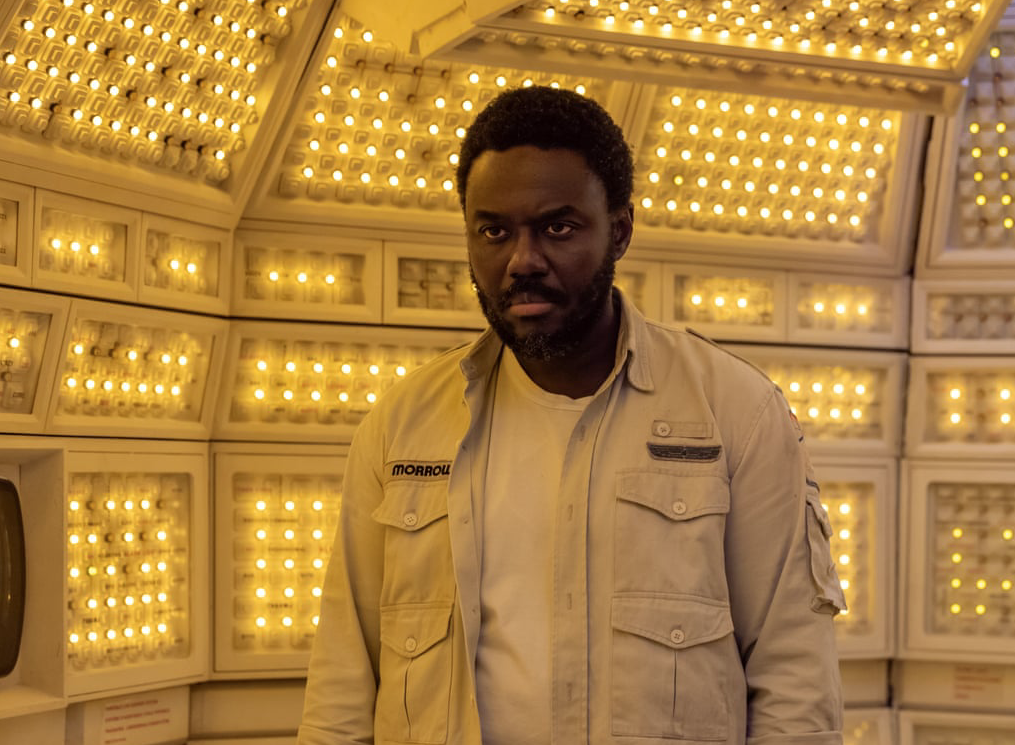
When someone on the Maginot reports that comms have gone down nobody seems to think it’s a big deal. It’s only later when navigation fails, setting the ship on a collision course for Earth, and the specimens breach their containment and begin eating the crew (hello fully grown Xenomorph!) that cyborg Security chief Morrow (Babou Ceesay), a man with a veritable swiss army knife for an arm and a brain capable of absorbing enormous chunks of data, begins emergency procedures. However Morrow’s mission is to save the specimens for his bosses at the Weyland-Yutani Corporation, and not the crew. Securing himself in a pod, he waits for the ship to crash land, so that he can stick around to protect its contents against encroachers in the aftermath.
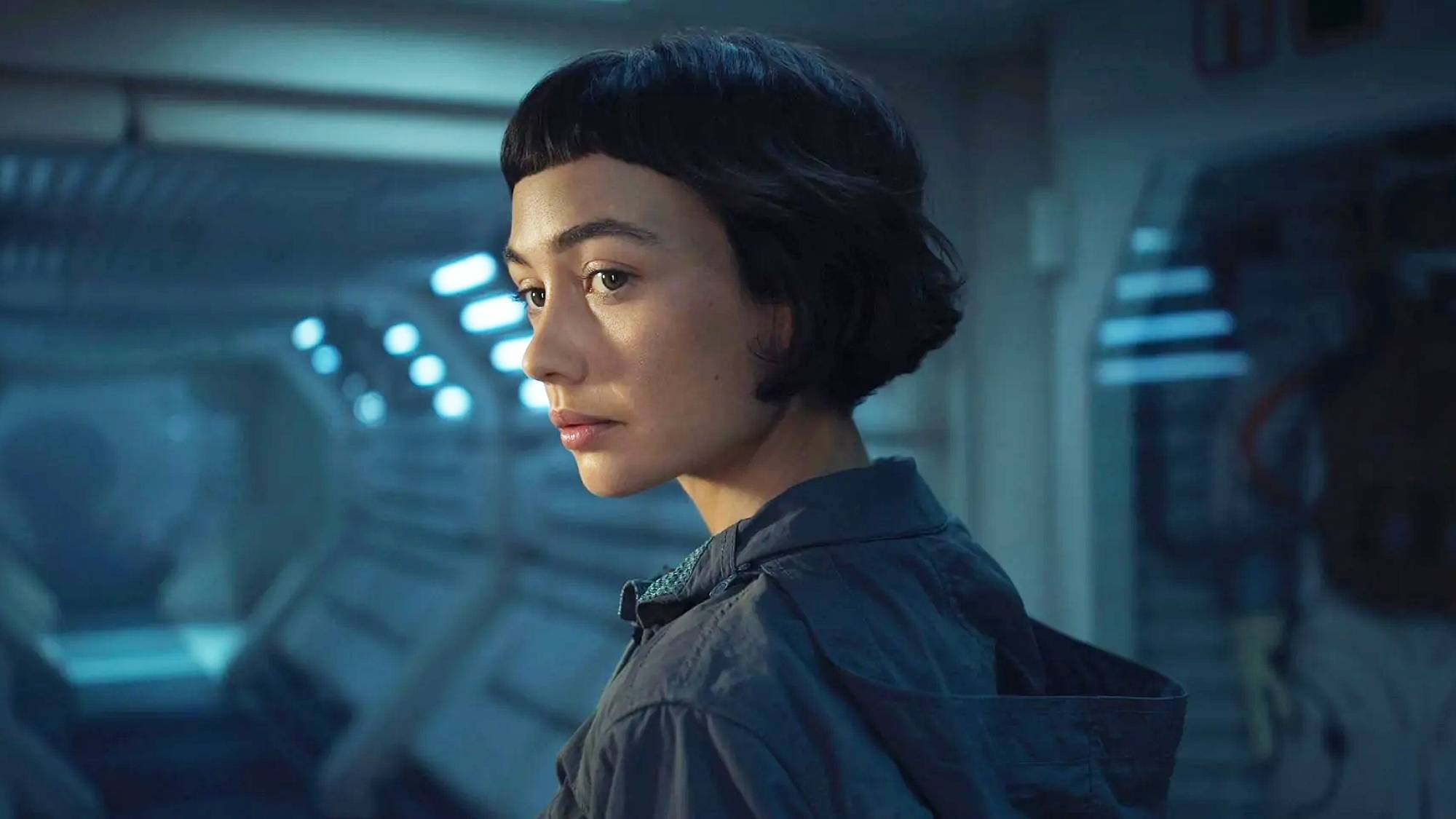
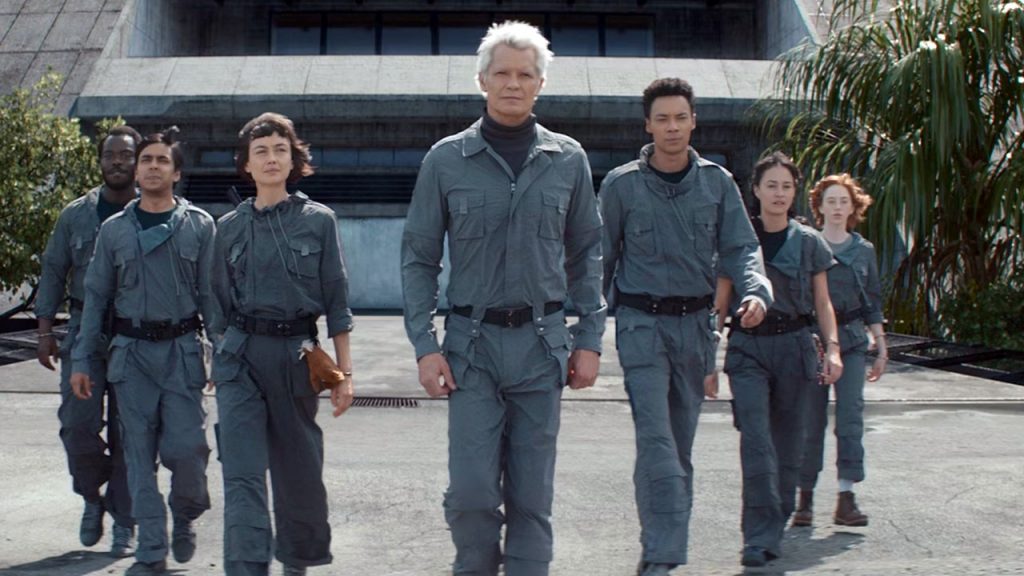
Back on earth, precocious, emotionally disconnected, impulsive Boy Kavalier completes his first Hybrid transformation in the Neverland facility. Marcy Hermit, a terminally ill child, is the first person to undergo the transformation. With Marcy’s consciousness now successfully transferred to an adult synthetic (Sydney Chandler), she renames herself Wendy. A short montage shows us a steady progression of additional Hybrids being created over time, and because the show really wants to hammer home the idea of Peter Pan, Neverland, Wendy, and the Lost Boys, each child (apparently adult brains aren’t malleable enough to handle the transformation process) is renamed after one of Pan’s crew: Smee, Slightly, Curly, Nibs, and Tootles.
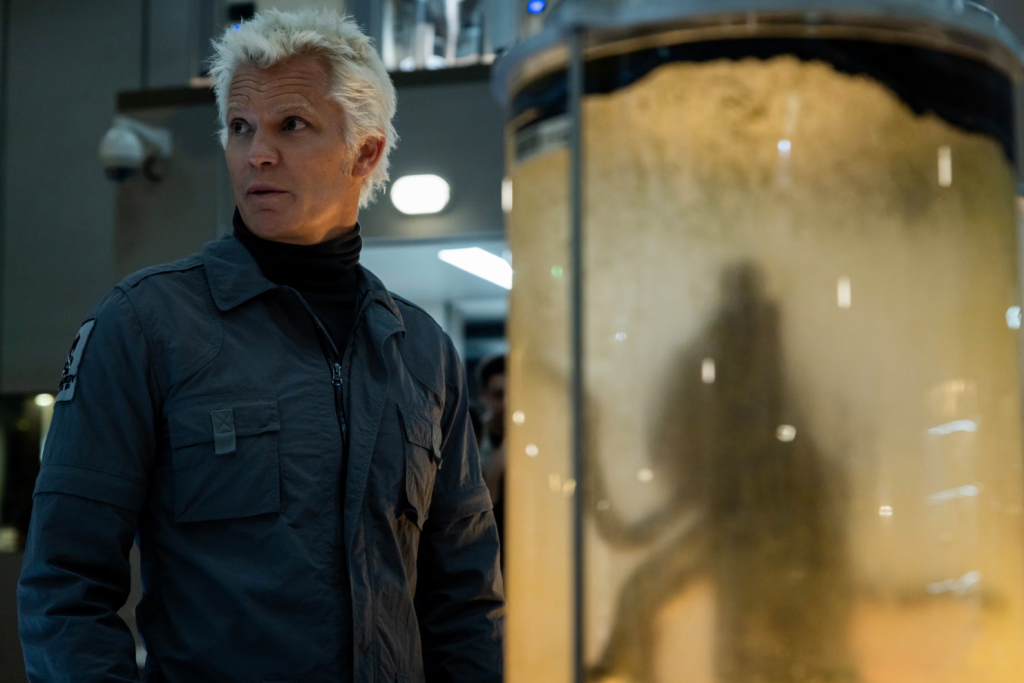
This collection of once terminal children, now in super powered adult bodies, is monitored and mentored by the creepy Synthetic Kirsh (Timothy Olyphant), the Prodigy Corporation’s chief scientist, and the warm and empathic Dame Sylvia (Essie Davis). The pair make for a satisfying double act, with each representing the distinctly differing characteristics of human and synth form. While Sylvia wants to introduce hormones into the childrens’ bodies to allow them to gradually experience a natural adolescence, and all of the emotional turmoil thereof, Kirsh argues that they should abandon their desire to experience fear, sadness, anxiety and desire in favor of cool synthetic logic.
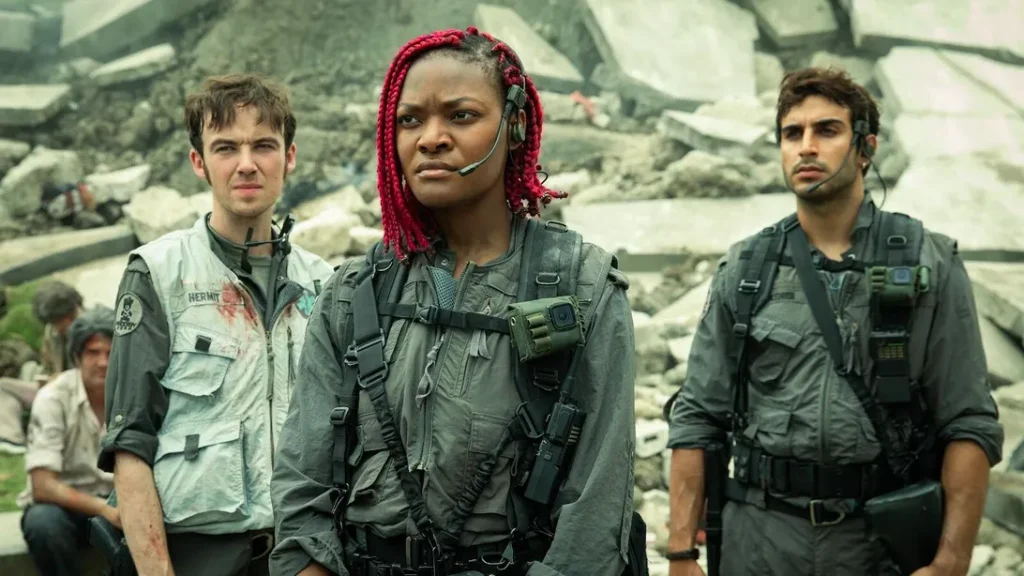
Both stories might never have converged if not for the fact that Wendy’s older human brother Joe Hermit (Alex Lawther) works as a medic and corporate soldier tasked to go to the crash site to look for survivors.
Wendy, who has been spying on her brother from afar immediately seizes on the opportunity to see him again. We learn that Joe believes his sister to be dead. Wanting to assert rights over the Maginot’s contents for Prodigy, and looking for a reason to test out his new Lost Boys, Boy Kavalier agrees with Wendy’s suggestion to go to the crash site to help the rescue team.
On the way to the landing site, Wendy is buoyed by a sense of childish optimism. Kirsh reminds her that Joe, like all humans, will eventually die. Wendy tells Kirsh she’s going to save Joe from death.
We don’t have to dig too deeply to see the themes Alien: Earth has established in its opening episodes. The show is not trying to be clever or oblique about what’s coming down the tracks in humanity’s future. The Hybrids, created by a capricious billionaire, are an unambiguous nod to Artificial Intelligence, still in its awkward childhood stage, capable of so much, yet sliding towards disaster when left unchecked and unregulated.
The Earth of 2120 is in many ways a sad reflection of our own: Billionaire controlled technologies, corporate negligence and profit-driven ethics, and the greed and exploitation of 5 companies who are willing to turn a blind eye to the environmental and social degradation they have helped to create. (Did you know Microsoft’s AI Stargate campus in Abilene, Texas consumed 463 million gallons of water between 2023 and 2024, an amount equivalent to the needs of tens of thousands of households, in a drought-stricken region where residents are urged to conserve water? By 2030, Texas data centers, including Stargate, are projected to use 399 billion gallons annually. In Abilene and elsewhere, wastewater discharge and power plant runoff continue to raise concerns, mostly to deaf ears, about water quality impacts.)
Episode 2 features a scene in which the relentless Xenomorph dispatches an entire apartment of wealthy, out of touch residents who refused to evacuate following the crash. Horrific as it is, there’s something strangely satisfying about seeing how show creator Noah Hawley chooses to place the cat among the pigeons. In Alien: Earth, a corporation-ruled planet underscores humanity’s fragility amid an alien outbreak.
However the rampaging Xenomorphs might be the least of our worries.
Alien: Earth continues Tuesdays on FX, and FX on Hulu, in the United States and on Disney+ internationally.
Follow us @TVPulseMag on Twitter | TVPulseMag.com on Bluesky for TV news, reviews, and interviews.