

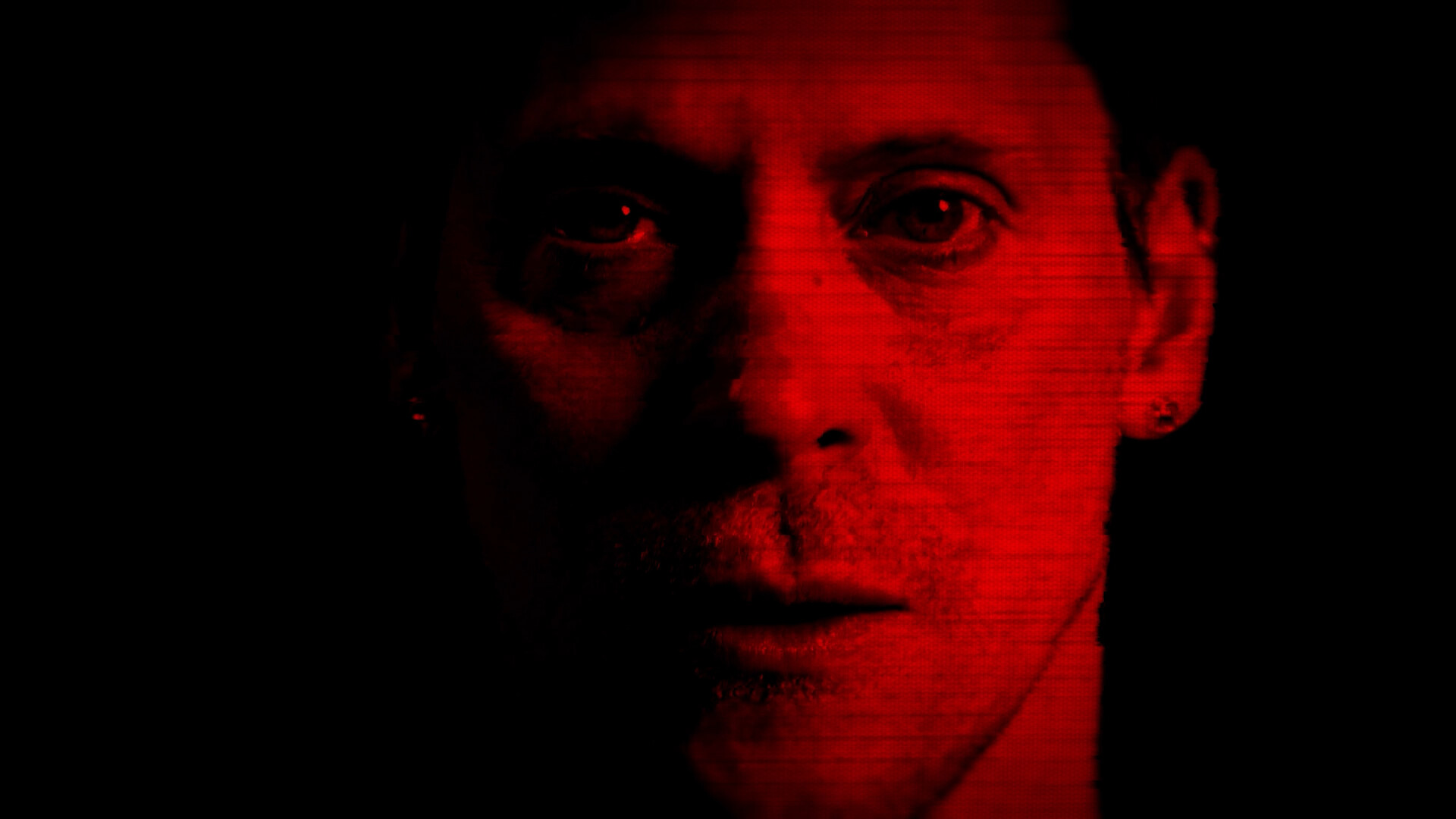
Dead Take is new to Steam this weekend, and what a treat it is!
This tense new psychological horror from from Surgent Studios and Abubakar Salim (Raised by Wolves, House of the Dragon) aims to lift the infamous Hollywood rock to examine what dark secrets are found slithering beneath. The game, made by actors, and perhaps even for actors, shines an unflinching spotlight on the evils of power, coercion, sex, hubris, and the siren call of the Hollywood dream that can eat the unwary alive.
As a veteran on the periphery of the entertainment industry (I’ve been writing about TV and Games, and interviewing actors, producers, and directors for almost 20 years), Dead Take speaks to me on several levels. I’ve met and known people like the game’s protagonists — actors so desperate to land this next role, or be noticed by just the right person, that they’d do almost anything to make it happen. Cut from the same ambition and desperation-soaked cloth are Chase Lowry (Neil Newbon), and Vinny Monroe (Ben Starr), the protagonists of Dead Take. Both Newbon and Starr, who, and I can’t state this enough, absolutely eat up their roles here, are well known talents within the video game industry. The game also stars other “Pixel Pack” talent such as Remedy Entertainment’s Sam Lake, Matthew Mercer, Jane Perry, Alanah Pearce, Laura Bailey, and Travis Willingham.
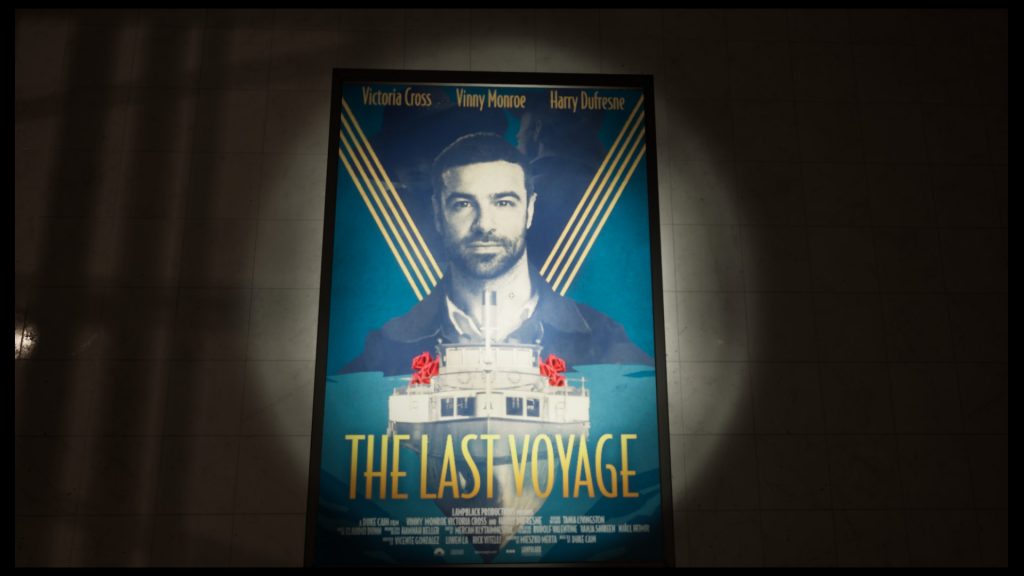
Like many good Hollywood mysteries Dead Take starts with a Hollywood mogul. This one is Duke Cain, a Charles Foster Cain-style character who we learn rose from the ranks of agent to the stars to “Hollywood’s most feared Kingmaker” according to a local newspaper article. Now a powerful Hollywood producer, Cain has the ability to make or break a movie star. But there’s something cruel and inscrutable lurking beneath his professional exterior. So when the star of Cain’s latest movie, Nepo Baby Vinny Monroe (Starr), goes missing during a swanky invite-only party at Cain’s mansion, fellow actor Chase (Newbon), the good friend that he is, decides to go look for him.
Dead Take kicks things off in satisfying a third-person perspective. Playing as Chase you arrive at the mansion to discover the party is over, the guests are all gone, and the lights are out. Undeterred, you find a way to get inside and begin your search for Vinny. But it’s here that Dead Take begins to exact its psychological toll on the player. As you move from room to room collecting clues in the form of notes, newspaper clippings, thumb drives containing candid and surprising information, and other items, you begin to piece together a different kind of story altogether. Nothing and nobody are as you first expect. And the more you learn — about the Cain family, about Vinny’s upcoming movie, and even about Cain himself — the more you begin to doubt Chase’s seemingly heroic intentions.
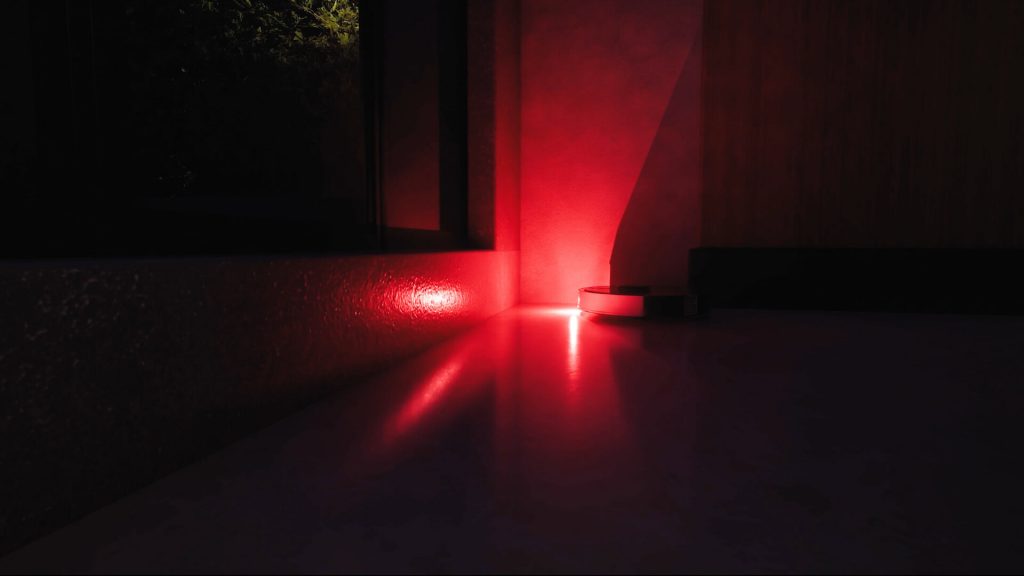
The mansion is a delightfully enormous expanse to explore. Vaulted ceilings and vast rooms give way to shadows that not only fill the corners of every room but seem to reach out and cling to its surfaces in such as way as to render your flashlight almost useless. Trees throw moving shadows, red flickering lights beckon the player to darkened stairwells, and even a malfunctioning robot vacuum cleaner bumping up against a wall is capable of inducing terror.
Sound plays a huge role. If you are playing without headphones, please reconsider. Or at least pump up the volume so that you can hear the thuds, knocking, whispering, laughing, and that baby crying from another room. Against all of those fearful auditory intrusions is the subtle backdrop of a beating heart. Like the protagonist of Edgar Allan Poe’s The Telltale Heart, those beats feel fuelled by the paranoia and guilt of our unreliable narrator. At times Chase will receive text messages from unknown numbers, and even from Cain himself. But as Cain’s messages become more personal and intimate, we begin to doubt what’s actually happening to our protagonist.
Not all of the horror is psychological either. Expect jump scares, fleeting visions, sudden appearances, and more that are sure to unnerve even the staunchest of gamers.
At its heart though, Dead Take is a puzzle game. Chase must explore his surroundings, not just to slowly peel back the layers of this sordid story, but to progress to new sections of the mansion. Players can expect to interact with familiar-feeling objects from iconic game classics like The Seventh Guest, the Rusty Lake series, and even Bloober Team’s recent Silent Hill 2 remake: Keys are matched to special doors with special crests above them. A piano must have its keys played in particular order to open a secret compartment. A screwdriver will come in handy to unscrew and prise open several locked puzzle items. In some sections the game objects (daggers, tridents, swords) are particularly gothic, with cultish horror themes reflecting the depth of Chase’s discoveries and his state of mind.
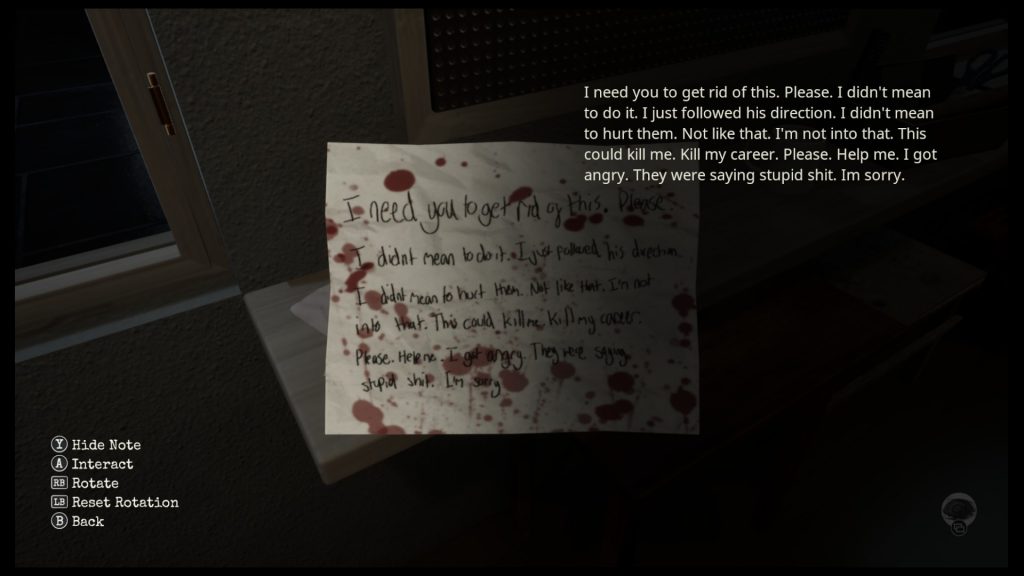
For the most part these puzzles and their pieces feel solidly familiar to the genre, and aren’t so overly fiendish as to stop the player from progressing. Backtrack to grab the screwdriver from the storage room, then use it to open the robot vacuum for another clue etc. The game relies on the player paying attention to their surroundings, and perhaps even jotting down a four-digit number or two if they hope to be able to open a safe, or obtain another key.
But perhaps one of the most original features of Dead Take is to be found in the Projector Room. Once discovered, the room acts like a base of sorts (think Saga Anderson’s Mind Place in Alan Wake 2). Here, Chase sees the clues he has gathered so far on a wall mounted cork-board panel with strings connecting the relevant story notes and character relationships. The wall is a handy way to review all of the text-based clues you have collected to date, without having to scroll left and right on the inventory to access them. In fact, the inventory system is quite light with only a small selection of items to choose from at any one time.
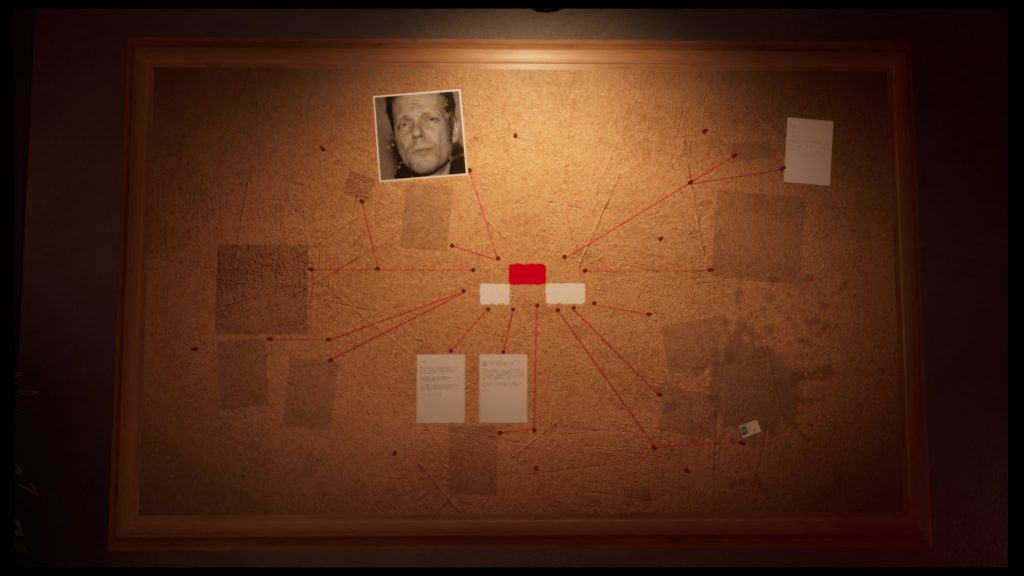
Crucially, Chase can also use the projector room to play video recordings on individual thumb drives scattered throughout the mansion. Each video — consisting of table reads, interviews, candid moments caught while filming, video emails, unhinged ramblings and more — peel back the layers of the mystery surrounding Vinny’s fate and introduce us to its key players.
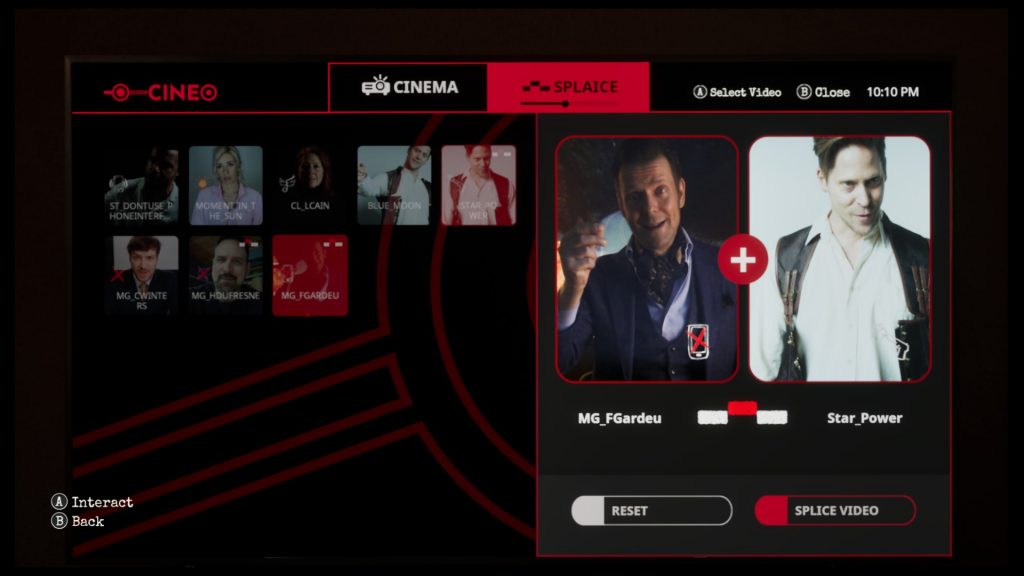
But there’s more! Using a new piece of software gifted to Cain called “Splaice” (a combination of the words “Splice” and “Place” perhaps?) videos can be combined to make a third previously unseen video containing more story and more clues. Players can either pay close attention to previous mansion clues for combination hints at which videos to splice — sorry splaice — together, or just brute force combinations and see what happens. The results are a series of full motion videos of the game’s characters revealing their various states of mind, abuse, ambitions, foibles, and admissions of guilt.
FMV in games has long been a point of debate with some critics loving the medium, while others find it lessens the gaming experience. I am personally a longtime fan of FMV in games, and have been since my Tex Murphy gaming days. Dead Take, and other games, make the case far better than I could here for the use of mixed media in games. I have always believed that Art, when it’s good, transcends the medium in which it was created. If you don’t believe me think about how often you’ve seen or heard Van Gough’s Starry Night referenced in film, TV, music, posters, wood-block, T-shirts, mugs, and even duvet covers.
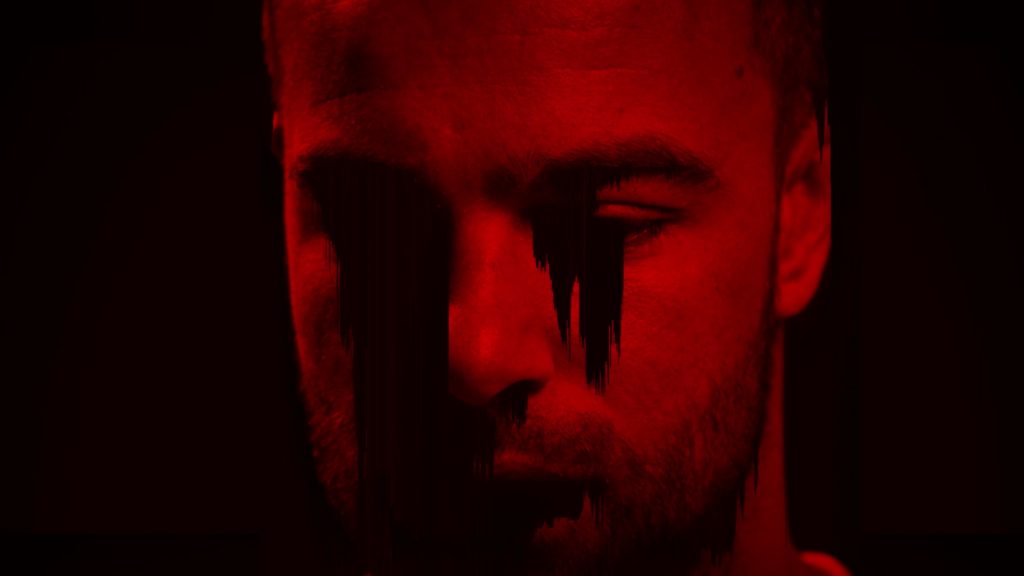
It’s also through the use of FMV that Dead Take really gives space for its stars to shine. Both Ben Starr and Neil Newbon are a tour de force in their respective roles — at times fragile, bold, desperate, determined, overwhelmed, humiliated, and more — and as a video game fan it feels like such a treat to see both actors without the additional layers of their various famous motion-captured alter-egos. In fact, their stripped down selves is exactly what is required in a project such as this. But it’s not just Starr and Newbon who shine. The supporting cast including Mercer, Perry, Pearce, Bailey, and Willingham all bring a raw and unnerving energy to proceedings.
Hats off also to Sam Lake who plays up and coming director Frank Gardeu, a man who wants to change the great Duke Cain’s vision: make the hero more vulnerable! Give the lead actress more agency! Make the ship’s captain more gay! Lake’s Gardeu delivers his new ideas to Cain via a video message wrapped in encouraging smiles and softly-spoken camaraderie but reeking nonetheless of raw ambition and bald intent, like a wolf who’s finally sensed a change in the wind.
There are little Hollywood flourishes everywhere too. When you save your game, the screen displays your file as a slugline in a screenplay — INT. PROJECTION ROOM. NIGHT. which is a nice little touch. Phones contain heartbreaking text messages from naive family members noting how you’re sure to land that part because you were so great in that school play. Party guest lists contain savage notes about the invited — and uninvited. You can even read a full non-disclosure agreement outlining what guests are allowed to say and not say during their stay at the mansion.
2025 is the year of innovation in gaming. Small and mid-sized studios have shown they can out-manoeuvre and outshine AAA behemoths with originality, flair, and creative freedom. With Dead Take Surgent Studios looks set to continue the trend.
Our Score: 8/10 — Dead Take is a deliciously dark tale of Hollywood’s seedy underbelly. A relatively short gaming experience, with fairly linear but satisfying puzzle-solving, is elevated by incredible sound, eerie locations, and the performances of a carefully selected and top-notch cast. Dead Take feels like an unnerving cinematic experience. It may not appeal to those who like to run and gun or hack and slash their way through a game but proudly holds its own against such fare as a singular and ambitious work of art in its own right.
Genre: Psychological Horror
Platforms: Windows
Release Date: 07/31/25
Studio: Surgent Studios
Publisher: PocketPair Publishing
