


The most overdue entry in Capcom’s remake lineup is finally real. Here’s a deep dive into everything confirmed so far.
Some game announcements strike like a thunderbolt. Take The Wolf Among Us 2, revealed at last week’s Summer Game Fest, for example. Others land like a correction to a wrong that has quietly persisted for years, like Capcom’s Resident Evil Veronica.
After Capcom’s modern remake cycle resurrected Resident Evil 2 (2019), Resident Evil 3 (2020), and Resident Evil 4 (2023), the conspicuous absence of Code: Veronica had become the elephant in the room for the franchise’s fanbase.
That wait is now definitively over.
Capcom opened Summer Game Fest 2026 with its biggest gun: a cinematic reveal trailer for Resident Evil Veronica, confirming a 2027 release window across PlayStation 5, Xbox Series X|S, Nintendo Switch 2, and PC via Steam. Following the trailer, producer and director Yoshiaki Hirabayashi hosted invite-only press presentations and an extensive Q&A session in Los Angeles, where he answered many of the questions fans have been sitting on for years.
Code: Veronica?
Before getting into the remake, some grounding on the source material is essential.
Resident Evil Code: Veronica originally launched on the Sega Dreamcast back in February 2000, developed by Nextech (also known as Nex Entertainment) and published by Capcom. An enhanced version, Code: Veronica X, followed on PlayStation 2 in 2001, and later on Nintendo GameCube. (At the time, the GameCube was home to a number of RE remakes, and of course the original prequel Resident Evil 0.) The game was notable for being the first numbered-equivalent Resident Evil title to release without ever carrying a number in its name. It was a distinction that left it in an awkward identity limbo for more than two decades.
Narratively, Code: Veronica is critical to the overarching Resident Evil storyline. Set three months after the destruction of Raccoon City (and running concurrently with the events of Resident Evil 3: Nemesis), the game follows Claire Redfield as she infiltrates an Umbrella Corporation facility in Paris in search of her brother Chris. She’s captured and imprisoned on Rockfort Island, a remote Umbrella military training facility in the Southern Ocean. When an unknown force attacks the island and unleashes the T-virus, Claire escapes alongside fellow prisoner Steve Burnside. The story eventually expands to an Umbrella research base in Antarctica, delivers major developments for the Ashford family’s T-Veronica virus research, and culminates in confrontations with Alfred Ashford, the monstrous Alexia Ashford, and crucially, Albert Wesker, who just won’t die, apparently. Oh, and now also has superhuman abilities.

For all its narrative importance, Code: Veronica has long been characterised as one of the series’ more divisive entries. Its fixed-camera angles and tank controls, already feeling dated at launch, have only aged more unevenly since. For many fans, it was the ugly stepchild in the Resident Evil family. Roll on the clock to 2027, and Veronica looks to have had a massive glow up.
The first thing to note is that Capcom isn’t treating the remake as a gap-filler or a side project. In the private press session following the announcement, Hirabayashi was explicit on this point: internally, Capcom has always viewed Code: Veronica as occupying the same narrative importance as any numbered entry in the series. The prominent roles of Claire Redfield, Chris Redfield, and Albert Wesker make it a cornerstone chapter in the franchise’s lore, regardless of what its title did or didn’t say.
While Code: Veronica had been widely expected to follow the Resident Evil 3 remake in 2020, Capcom instead pivoted to Resident Evil Village in 2021 and the acclaimed Resident Evil 4 remake in 2023. The extended delay, which stretched to 27 years after the original’s release before the remake was announced, reinforced the sense that it had been left outside the modern remake cycle for far too long.
The timing also benefits from momentum. Resident Evil Requiem, the franchise’s ninth mainline title, launched on February 27, 2026, and went on to become the fastest-selling title in the franchise’s history. For many it’s 2026 GOTY material. That commercial success has clearly given Capcom confidence to press forward with its next major remake project.
It’s Just Veronica Now
One of the first and most discussed details was the simplification of the title. The remake is not called Resident Evil: Code Veronica but simply Resident Evil Veronica.
Hirabayashi addressed this directly and at some length. The rationale is twofold. First, the single-word subtitle aligns the game with Capcom’s current naming philosophy for the franchise. Since Resident Evil 7: Biohazard in 2017, the series has moved toward single-word subtitles — Biohazard, Village, Requiem. A game called “Code: Veronica” would stand outside that pattern. Second, and perhaps more significantly, the name change is a deliberate statement about the game’s status. Hirabayashi reiterated across multiple press interactions that Capcom considers Veronica every bit as important as a numbered main entry, and the cleaner title underscores that positioning.
One question from the Q&A caught Hirabayashi visibly off-guard, however. A fan asked whether the prominent “V” in the title’s branding was intended to imply Resident Evil 5. Hirabayashi was immediate and unequivocal in his response: “The V does not signify five.” The “Veronica” subtitle is there because Capcom wanted to carry forward the essence of the original title while conforming to modern series naming conventions. Nothing more.
A Closer Look at the Team
Resident Evil Veronica is being developed by the same core team responsible for the Resident Evil 2 remake (2019) and the Resident Evil 4 remake (2023), two titles widely regarded as among the finest entries in the franchise’s modern era. Hirabayashi himself produced both of those titles and has been a franchise mainstay at Capcom for decades. He is serving as director on Veronica.
Additionally, Hirabayashi confirmed that members of the Resident Evil Requiem development team have contributed to the project, allowing the remake to incorporate the latest technology and design approaches that Capcom has developed across its recent run of survival horror titles.
There is an interesting historical note here as well. The original Code: Veronica was developed by external partner studio Nextech rather than internally at Capcom. Hirabayashi acknowledged that very few, if any, of those original developers remain involved in the remake, but he noted that Capcom staff members who worked alongside Nextech during the original game’s production, and who understood the game’s foundational vision, are helping guide development now.
The team is also using the latest version of Capcom’s proprietary RE Engine, the same engine that has powered Resident Evil 7, Resident Evil 2 Remake, Resident Evil 3 Remake, Resident Evil 4 Remake, and Resident Evil Requiem.
That Game Fest-Opening Trailer
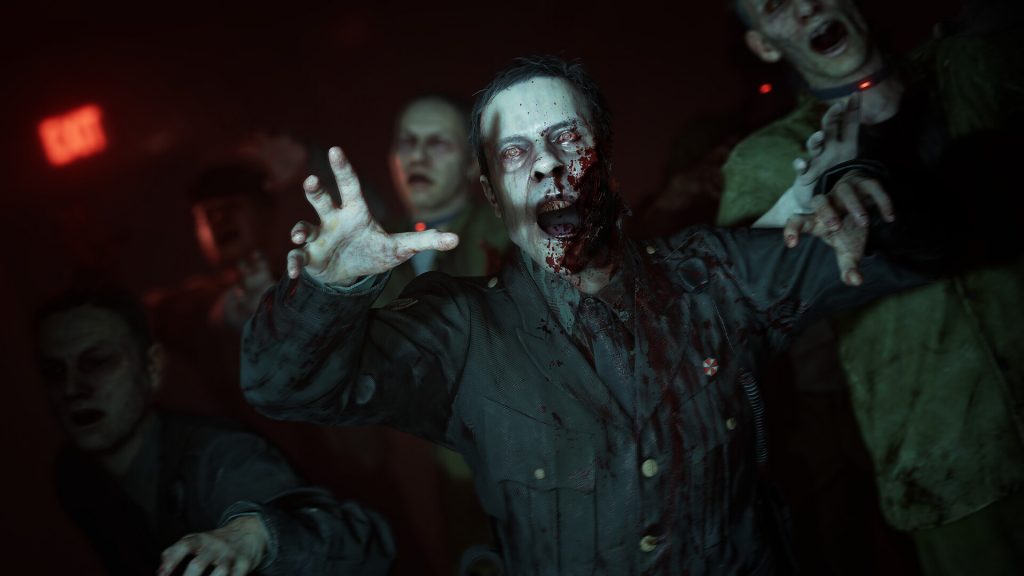
The reveal trailer was entirely cinematic, with no gameplay footage included in the public reveal, and the invite-only press presentations that followed also contained no additional footage beyond what was shown publicly.
The trailer opens with an unknown protagonist (later revealed to be Claire Redfield) investigating a dilapidated apartment building in Paris, as she searches for signs of her brother Chris. The sequence is played largely from a first-person perspective, framing that initially led some viewers to speculate about a camera choice for the remake.
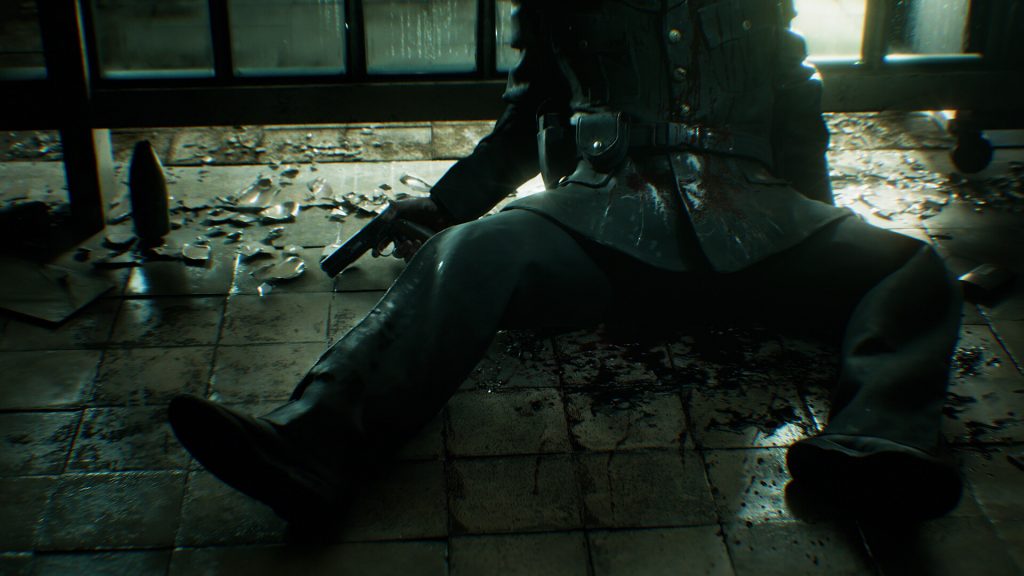
As Claire looks around Chris’ apartment, a knock on the door distracts her. When she opens the door, she is suddenly captured by an unknown person saying “Don’t move!”. Speculation is already rife that the figure is none other than HUNK, Umbrella’s elite operative and recurring franchise presence. Others suggest the possibility that this could instead be Umbrella security officer Rodrigo Juan Raval, who utters similar dialogue in the original game. However the red-tined glasses/goggles, visible in the closing seconds of the trailer, add some weight to the HUNK theory.
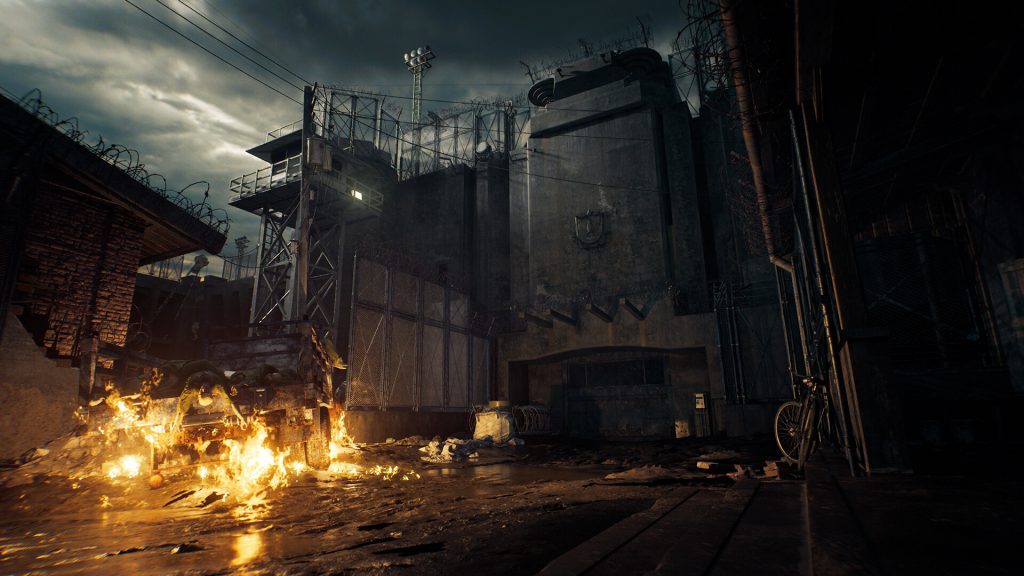
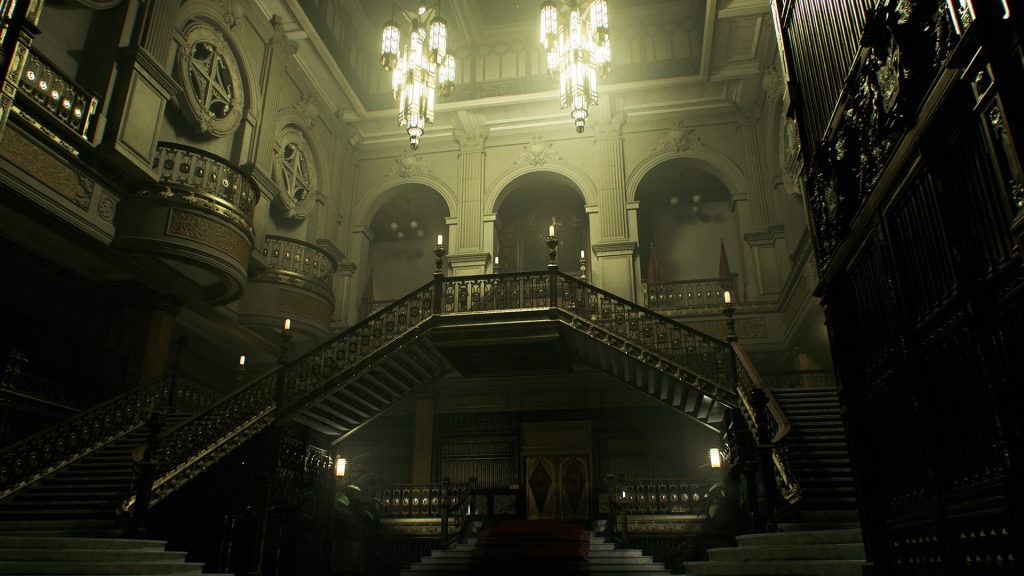
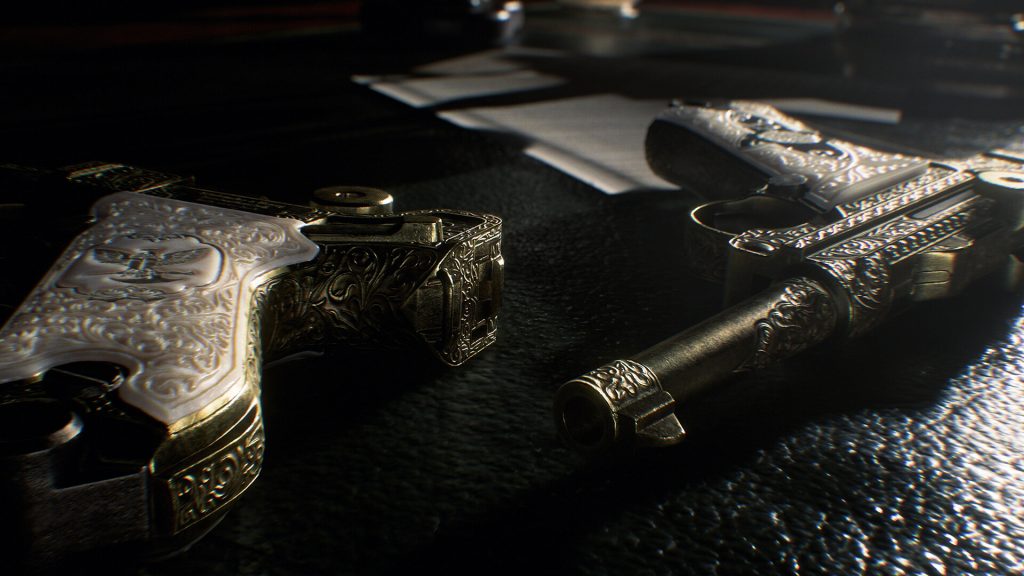
The trailer also contains a playful nod to Chris Redfield’s infamous boulder-punching reputation from Resident Evil 5, as his landlady laments the untidiness of the apartment, saying it looks like a boulder rolled through here. The footage also shifts through a montage of locations clearly drawn from the original game: Rockfort Island’s prison, outdoor courtyards, and a whole lof of Resident Evil-style architecture. Steve Burnside’s distinctive gold Lugers are briefly visible, though the character himself does not appear, and no confirmation was given as to whether he features in the remake. Albert Wesker is also not directly shown in the trailer.
Gameplay: What’s Been Confirmed?
✔ Third-Person Perspective
Despite the trailer’s predominantly first-person framing, Hirabayashi confirmed clearly and without qualification: Resident Evil Veronica is a third-person game. The decision to shoot the announcement trailer from Claire’s point-of-view was a stylistic choice for the cinematic reveal, not a representation of how the game is played. This aligns the remake with Resident Evil 2 and Resident Evil 4 remakes rather than with the first-person Resident Evil 7 or Village.
✔ Claire’s Combat Style and Character Feel
Hirabayashi was careful to manage expectations around how Claire will play. Given that Code: Veronica takes place just three months after the Raccoon City Incident, Claire is not a seasoned government operative, although she is a survivor. Hirabayashi described her as capable but still vulnerable, someone who has been trained by her brother throughout her life but has not undergone the kind of elite conditioning that would make her an action hero.
Players should expect Claire’s gameplay to feel like an evolution of her role in Resident Evil 2 Remake, while also incorporating lessons absorbed from developing Resident Evil 4 Remake. The goal, as Hirabayashi described it, is a distinct gameplay identity that fits Claire specifically, not simply Leon Kennedy’s moveset and weapons transferred to a different character. Her character model carries over from Resident Evil 2 Remake but with subtle tweaks to reflect her growth and maturation since Raccoon City.
✔ Quality-of-Life Improvements
When pressed on the original game’s more notorious rough edges (including some frustrating resource management issues, certain inventory decisions, and puzzle design that has not aged gracefully for all players!) Hirabayashi acknowledged these concerns without detailing specific fixes. He confirmed that the remake benefits from everything Capcom has learned across Resident Evil 2 Remake, Resident Evil 4 Remake, and Resident Evil Requiem, including usability improvements and modern quality-of-life features that the studio now considers standard expectations for the series.
✔ Rebuilding, Not Copying
Hirabayashi was explicit that the team is not simply recreating the original scene-for-scene. The development process begins by identifying which moments players remember most fondly from Code: Veronica, then discusses what new mechanics or narrative expansions are necessary to deliver a contemporary survival horror experience. Whether that means cuts, additions, or significant restructuring of certain sections was deliberately left unspecified.
So What’s New?
✔ Expansion of Claire’s Story
The announcement trailer makes clear that Capcom is not working from a strict one-to-one adaptation. The extended Paris sequence appears to be new material added to contextualise the story and give the remake room to breathe before Rockfort Island. Hirabayashi confirmed that Resident Evil: Veronica will expand Claire’s story relative to what the original offered.
✔ Rockfort Island and Its Inhabitants
When asked about how the remake plans to reimagine Rockfort Island, the original game’s primary setting, Hirabayashi described a greater emphasis on the human history of the location, including the people who lived and worked there before the T-virus outbreak transformed them. This approach echoes the Resident Evil 2 Remake‘s treatment of the Raccoon City Police Department, where grounded environmental storytelling made the setting feel inhabited rather than merely functional.
Rockfort Island encompasses Umbrella’s military training facility, a prison complex, a private airport, outdoor courtyards, underground laboratories, and the palatial Ashford family estate. All of these locations were glimpsed in the announcement trailer.
✔ The Narrative Beats: What Likely Returns
While Capcom has confirmed this is a reimagining rather than a straight remake, the core narrative architecture of Code: Veronica — Claire’s capture, the Rockfort Island outbreak, Steve Burnside, the Ashford family’s T-Veronica research, Chris’s arrival as a second playable character, and the Albert Wesker confrontation — has not been indicated as subject to removal. Capcom’s previous remakes have shown a willingness to restructure and expand while preserving the major story beats that defined the originals.
✔ Albert Wesker
Wesker’s role in Code: Veronica is pivotal. It’s the game that establishes his post-Spencer Mansion survival and his acquisition of superhuman abilities. Den of Geek confirmed that players will eventually cross paths with Wesker in the remake, though he was absent from the announcement trailer.
Steve Burnside: The Elephant in the Room

No character from Code: Veronica generates more divided opinion than Steve Burnside, Claire’s fellow prisoner on Rockfort Island. In the original game, Steve’s writing was frequently criticised as melodramatic and poorly executed, despite his central role in the narrative.
When asked directly whether Steve would appear in the remake, Hirabayashi was deliberately evasive, laughing and admitting he “didn’t even know” if Steve appears, which drew laughter from the assembled press. He did not deny Steve’s involvement. He then pivoted to a broader principle: every remake in Capcom’s modern run has focused on expanding its characters with greater personality, stronger motivations, and more believable drama. The implication was clear. If Steve returns, he will be rebuilt into a more compelling character than the original version. The presence of what appear to be Steve’s signature pistols in the announcement trailer has led many observers to conclude his return is likely, even if Capcom isn’t confirming it yet.
What Was Not Shown or Confirmed

Capcom is keeping a significant amount of information under wraps. As of the Summer Game Fest 2026 reveal:
❓ No gameplay footage has been shown publicly.
❓ No specific release date within 2027 has been given.
❓ No confirmation on whether Chris Redfield will be playable, as he was in the original game.
❓ No direct confirmation of Steve Burnside’s presence.
❓ No details on specific gameplay systems or mechanics changes.
❓ No word on whether the Antarctic base section of the original game — often considered a weaker portion — will be reimagined or restructured.
❓ The question of whether the original Code: Veronica will be included as an unlockable bonus (a fan suggestion raised in the Q&A) was met with a joking “No” from Hirabayashi, though he said he would pass the idea along to the team.
Context: Where All of This Fits in Capcom’s Remake Cycle
Resident Evil Veronica arrives in the wake of the most commercially successful period in the franchise’s history. Resident Evil Requiem, the ninth mainline entry, launched in February 2026 and became the franchise’s fastest-selling title of all time, with DLC content still in development. Prior to that, the Resident Evil 4 remake was widely acclaimed and commercially dominant.
Pre-announcement leaks had anticipated this announcement accurately. Noted insider/leaker Dusk Golem (AestheticGamer) had publicly stated that a Code: Veronica remake (which he teased would “start with C and end with ode Veronica”) would be announced in 2026, and had also suggested a 2027 release window. IGN separately verified that a new version of the game was in development. Reports from MP1st indicated a Q1 2027 launch window was the internal target, though Capcom has not confirmed any specific date.
Rumours have also circulated (again from Dusk Golem) that a Resident Evil Zero remake is in earlier development for a 2028 release, and that a full remake of the original Resident Evil may be in even earlier stages.
None of that has been officially confirmed by Capcom.
And So, Here We Are
Resident Evil Veronica is real, it is coming in 2027, and it is being built by the team whose recent track record (Resident Evil 2 Remake, Resident Evil 4 Remake) constitutes arguably the two strongest entries in the franchise’s modern history.
The RE Engine, the same development philosophy, and the same producer-turned-director are all in place. The ambition, at least according to Hirabayashi, is to give Code: Veronica‘s story the same care and weight as any numbered Resident Evil game, because, in Capcom’s own estimation, that is exactly what it has always deserved.
Gameplay footage and a firm release date remain outstanding. But for a franchise that has spent years making the right moves, the foundation here looks unmistakably solid.
Resident Evil Veronica is in development at Capcom for PlayStation 5, Xbox Series X|S, Nintendo Switch 2, and PC. Release is scheduled for 2027.
