

We’ve all heard the story. Some games go through troubled development cycles. Take Patrice Désilets, for example. The Assassin’s Creed mastermind walked away from Ubisoft in 2010, set up a new studio at THQ, and began work on 1666: Amsterdam. It was a fresh start for Désilets. His own thing. Then THQ collapsed, Ubisoft bought out the studio, and Désilets suddenly found himself back under his old employer’s roof. Briefly. Because they promptly fired him. He sued, and after a three-year legal battle walked away with full rights to the game restored.
Désilets’ story is just one among many.
Then there’s The Wolf Among Us 2, a project that has navigated bankruptcy, studio splits, a ground-up engine rebuild, and years of near-silence, and somehow still managed to come out the other side. After an eight-year journey marked by bankruptcy, cancellations, restarts, and repeated delays, the franchise is finally back in the spotlight, and fans are extremely happy.
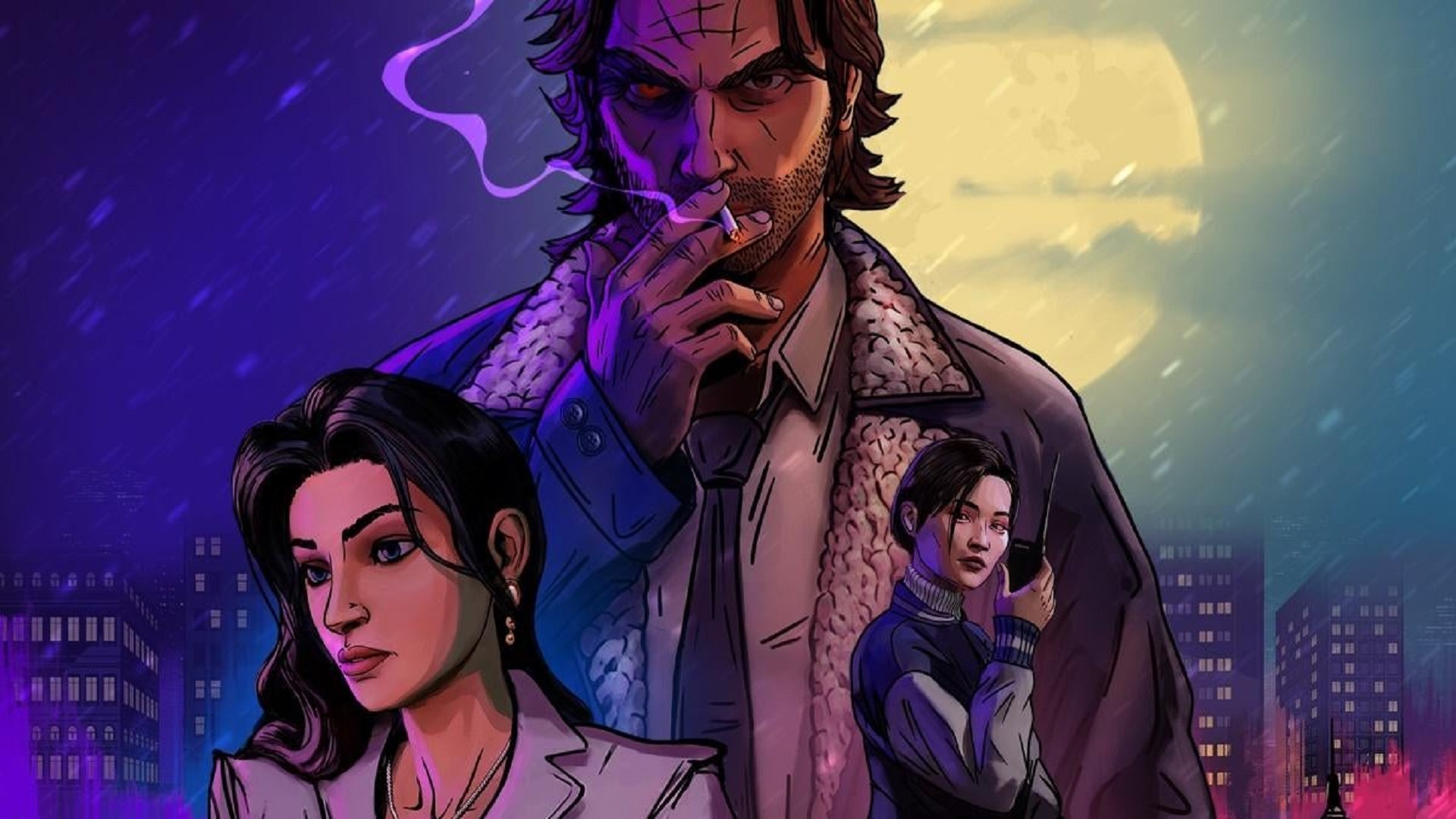
Last week’s Summer Game Fest event saw Telltale Games unveiling a new trailer for a years-in-the-making sequel The Wolf Among Us 2, confirmed for a 2027 release window. The studio also revealed The Wolf Among Us Remastered (see below), slated to launch later this year, for those haven’t experienced the original, or who might need a refresher after all this time.
THE WOLF AMONG US (REMASTERED)
But to understand really just how far this game has come, we have to go back to the beginning. This is a story of ambition colliding repeatedly with reality.
The original Wolf Among Us launched in 2013 to widespread acclaim. It was a neon-noir adaptation of Bill Willingham’s Fables comic book series, that felt like nothing else in the growing Telltale catalogue. A sequel was greenlit in 2017, only for Telltale’s infamous 2018 collapse to kill it before it ever really got started. Following the acquisition of the Telltale brand by LCG Entertainment, the project was revived at The Game Awards in 2019. Hope was renewed. But so were the complications.
The revived Telltale partnered with AdHoc Studio, a small team of former Telltale developers who had worked on the original game, to develop the sequel. Development originally began using the legacy Telltale tool combined with Unreal Engine 4. It was a setup that, on paper, promised strong production gains, scalability, and iteration efficiencies. It also did not go as planned.
CEO Jamie Ottilie says the studio tried to combine the Telltale Tool with Unreal Engine 4, found the setup unworkable, and ultimately had to walk away from years of work.  The pandemic made things worse. Attempting to fix production and optimisation issues during remote work resulted in poor team communication and significant friction.  By 2022, there was no avoiding the inevitable.
“That looked like a great idea on paper,” Ottilie said. “It seemed to promise lots of production efficiencies, time savings, and the best of both worlds… that turned out not to be true.” The studio made the call to reset entirely, rebuilding the pipeline from scratch on Unreal Engine 5. “We took the hard choice to reset, and unfortunately when you do a pipeline reset, it really involves going back to square one and unwinding everything. There’s going to be a period of time where you’re not producing content.”
That period lasted roughly a year, and it directly shaped what happened with AdHoc. When Telltale realised they wouldn’t be producing content for at least a year during the pipeline overhaul, Ottilie explained it simply didn’t make sense to keep AdHoc “tied up and effectively sitting on the sidelines not doing a lot” while the studio rebuilt from the ground up.
The partnership ended.
AdHoc went on to focus on Dispatch, their own superhero narrative game, which launched last year to big sales and positive reviews. Ottilie has since praised AdHoc’s episodic release strategy for Dispatch, though it’s worth noting the separation was not entirely without tension, with AdHoc later expressing frustration at not having been granted creative control over the project. To boot, AdHoc had no certainty over how much of their written work would make it into the final game, at the time of their departure.
With AdHoc now gone and the engine rebuild complete, Telltale pressed forward. Fast forward to now. The current version is being developed in partnership with Argentine studio Trick Studios, with Telltale and Trick operating as a single integrated team. Telltale has also signed with PM Studios as publisher in 2024 to help bring the game to market.
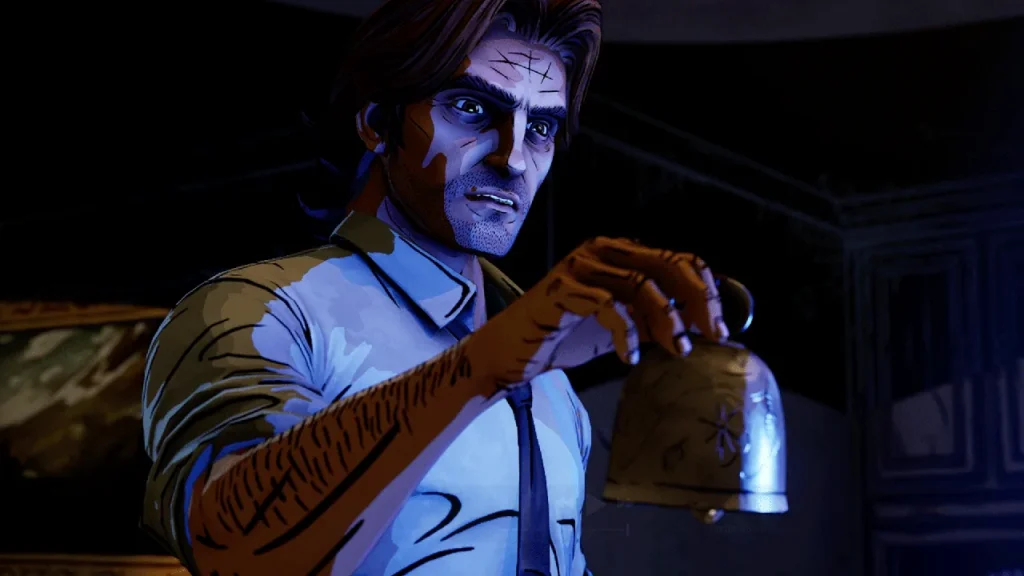
The game they’re now building looks to honour the spirit of the original. The Wolf Among Us 2 takes place approximately six months after the first game’s events, with players returning to Fabletown as Bigby Wolf (Adam Harrington). The new trailer shows Bigby diving into a fresh mystery, with people dying and a monster on the loose. Familiar faces return alongside new allies and enemies, with Bigby once again caught between maintaining order and giving in to his more dangerous instincts.
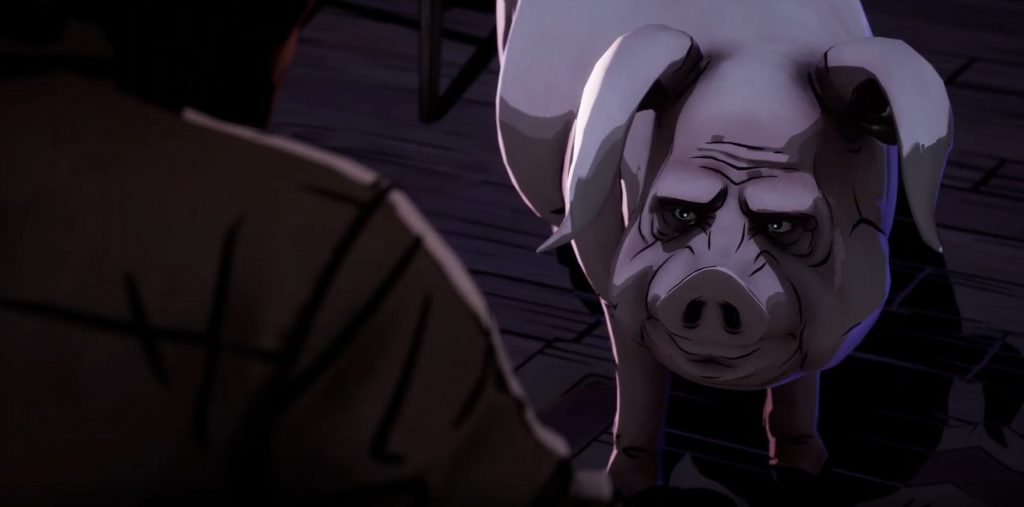
In addition to Harrington as Bigby, Erin Yvette stars as Snow White. Other recurring characters include Colin the pig, Bigby’s sarcastic and chain-smoking roommate, Bufkin the winged monkey librarian, and Bluebeard, a wealthy and intimidating Fabletown resident.
New characters include Faye Leung, a sharp New York City detective handling the human “Mundie” side of the murder investigations, and the the Wizard of Oz Cast, including Dorothy Gale, the Tin Man, and the Scarecrow, who are all confirmed to play major roles in the narrative.
The loglines for the game, which is coming to PC and Console in 2027, read as follows:
Return to the role of Bigby Wolf, sheriff of Fabletown, as a deadly conspiracy tears apart the precarious peace among the exiled Fables. Betrayed, framed, and exiled, Bigby must work from the shadows to save a city consumed by corruption, vengeance, and fear.
The Oz Gang rises in power. Ancient forces manipulate events from the shadows. Allies become liabilities. Will the monster within threaten to destroy everything he’s trying to protect? Or be the key to its salvation?
Investigate crimes, interrogate suspects, explore a fractured Fabletown, and survive intense cinematic combat as your choices shape the future of the city and determine whether Bigby’s legacy becomes one of redemption or ruin.
Telltale promises:
- A dark neon-noir narrative thriller.
- Expanded exploration and investigative gameplay.
- Ferocious cinematic combat as Bigby Wolf.
- Branching choices with lasting consequences.
Crucially, the game will be content complete before launch, with the entire story playable on day one, which is an interesting (and welcome) departure from traditional Telltale episodic rollouts. Divided into episodes, the total game play run is estimated to sit at aproximately 8-12 hours. Some are viewing the all-at-once format a signal the studio has genuinely rethought how it operates. Ottilie has been clear that Telltale will not commit to a firm release date “until we’re happy,” framing The Wolf Among Us 2 as the cornerstone of what the studio is going to be going forward.
As for what comes next, Telltale is planning a sequential slate, one project at a time, targeting roughly one to two premiere releases every two to three years, which seems a far more sustainable model than the old Telltale’s chaotic crunch-filled, and exhausting multi-track approach.
The Wolf Among Us 2 is, by any measure, a miracle of persistence. It was cancelled, revived, reset, restructured, and quietly doubted for years, and it’s still coming!
Whether it lands as the pinnacle of narrative entertainment Ottilie is reaching for remains to be seen. But after everything it’s been through, the fact that it exists at all is already an achievement in this crazy industry.
THE WOLF AMONG US 2
