


When self-help guru Dr. Wayne Dyer wrote the famous words “When you change the way you look at things, the things you look at change” he probably never imagined his words might one day inspire gamers to use a wedge of Gouda as a staircase, a chess piece as a key, or a miniature doll’s house to create a paradox that breaks reality. However I do think Dyer might have liked what Pillow Castle Games did with Superliminal, a surreal first person perspective puzzle game that first appeared back in 2019, and is reviewed here for the first time* thanks a dip into Xbox’s extensive Essential Tier catalog.
The game was originally conceived back in 2014 by Albert Shih and a tiny crew of just six developers. An undergrad at Carnegie Mellon University at the time, Shih developed the core mechanics of the game as part of a programming assignment dubbed “What kind of interesting first person game can I build by just moving cubes around?”
Several years, tech demos, awards, and revisions later, Superliminal — by now much more than an exercise in moving cubes around — was released on Steam and console. Receiving generally favorable reviews at the time, the Xbox One version was voted the highest-rated game of all time by users on Metacritic in 2020.
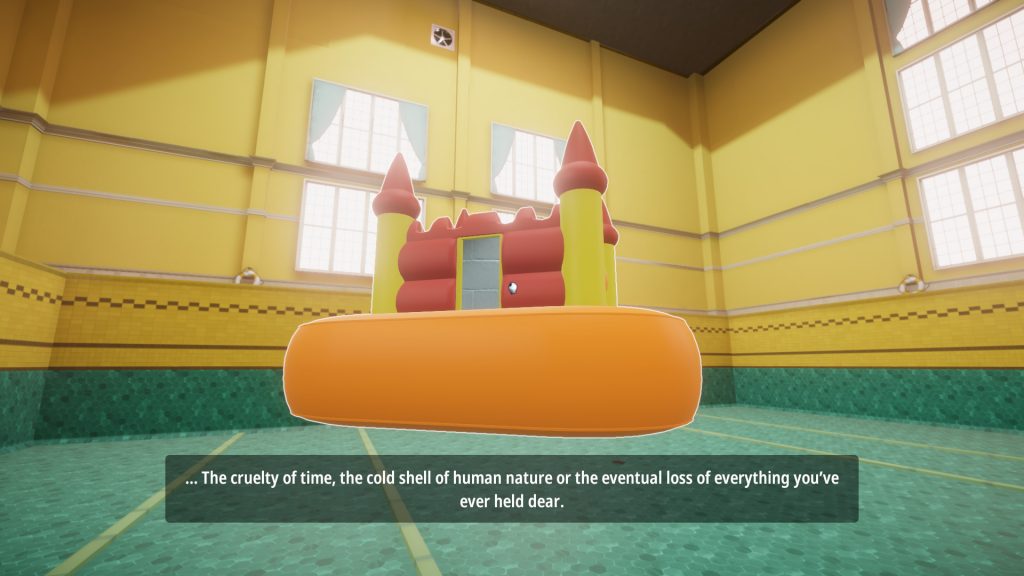
Instantly evocative of both The Stanley Parable and Portal, Superliminal sees the player, disillusioned by life and all of its hefty decision-making processes, paying a visit to The Pierce Institute for Therapy.
There, using ‘SomnaSculpt’ technology — a dream-based treatment designed to address your psychological ennui — you are put to into a special sleep called I-LDS (Eyelids! Geddit?), or Interactive Lucid Dream State, entering a constructed dreamworld testing environment where you can manipulate the very reality around you. Your SomnaSculpt orientation consists of moving from one eerie liminal space to the next, and completing a series of mundane tasks therein.
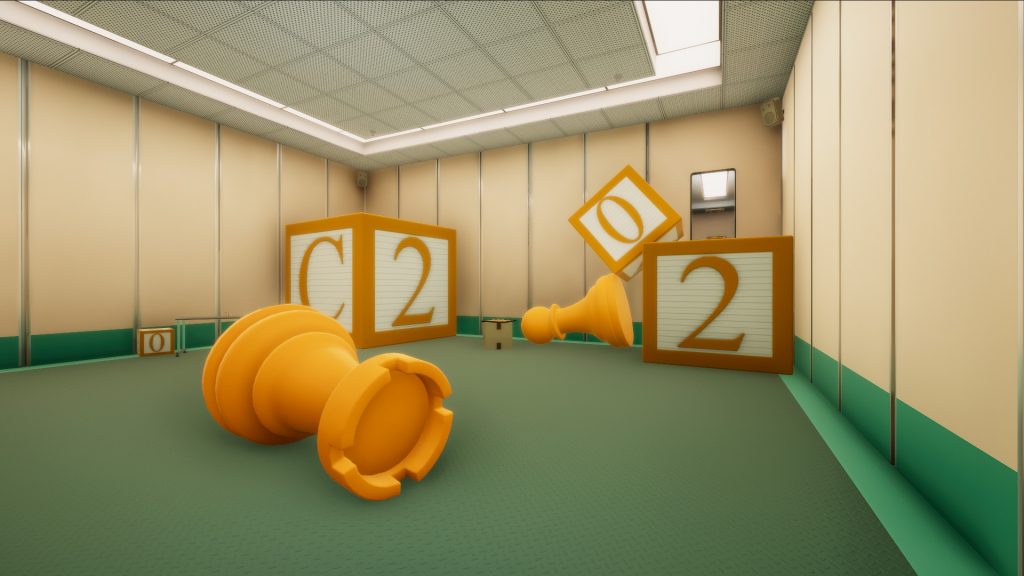
However, you soon discover you have the power to alter your dream reality while asleep, doing cool things such as resizing, duplicating, and altering objects through forced perspective shifts, optical illusion, light and shadow, and by other means we won’t spoil for you here, in order to assist your movement from one dreamscape room to the next.
You’re going to need to put all of your imagination to use because, despite initial progress through several dream layers, when the Emergency Exit Protocol suddenly fails, leaving you trapped in the dreamworld, you soon realize the only way out is through. Or over. Or under. Or around.
Toss a child’s toy block into the air and watch it fall to the ground as a hulking cube that can be used to knock down walls or scale to previously inaccessible heights. That cheese wedge might make a great ramp if it was one thousand times bigger. That glowing Exit sign could be an effective flashlight with which to navigate dark areas. Stuck in a room with only a doll’s house for company? Why not enlarge it, step though one of its doors, and find yourself a new reality with different choices therein?
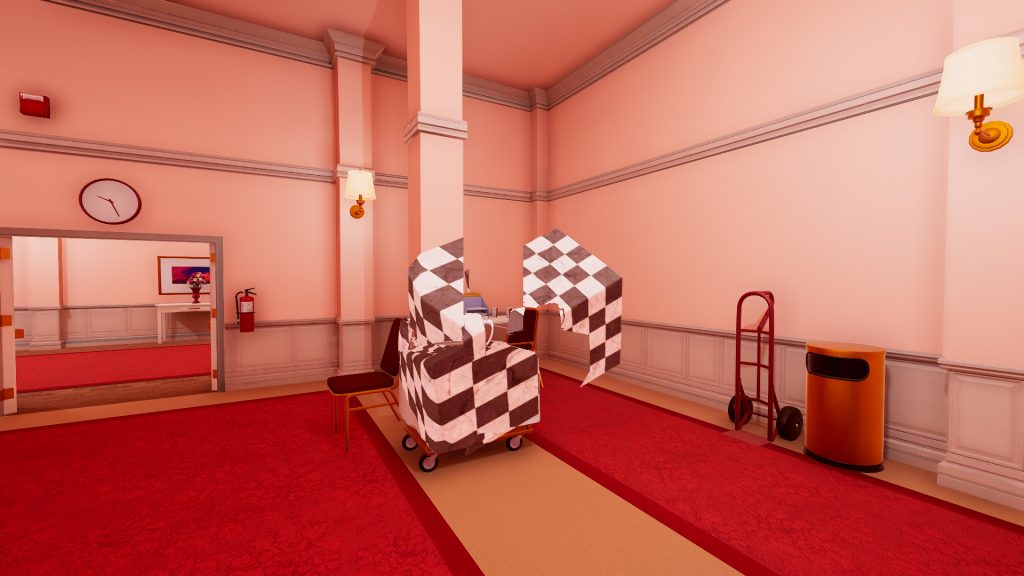
Throughout your dream-state journey you are guided and hindered in equal measure by a SomnaSculpt AI (think GlaDos from Portal), who likes to coldly chastise you for going off-grid and failing to comply with SomnaSculpt protocols, and by radio messages from the reassuring and softly-spoken Dr. Glenn Pierce, a head doctor at the institute. As you navigate deeper into the layers of your own subconscious searching for an alternative escape, your surroundings only grow increasingly bizarre and surreal.
It’s down to you to find a way to wake up.
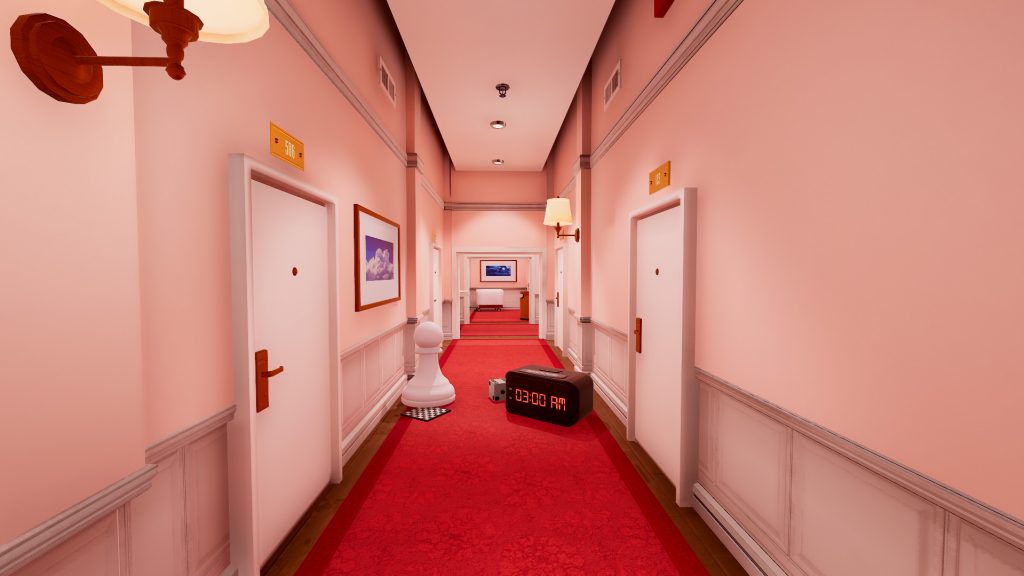
With posters on the walls hinting “Perception is Reality” Superliminal playfully invites players to think outside the box, in its most literal definition. Doors become climbing apparatus that enable you to leave a room by climbing over or around them. Elevators with mirrored walls are now labyrinths. Shadows are walls, or entrances, by turns. Even white space is not what it seems.
But it’s not all liminal spaces and doubting your own sanity. Superliminal leans into the wackiness of Valve’s Portal via some hilarious environmental storytelling of its own. In one level, we are given the impression that there’s a killer on the loose. Streaks of red stain the floors and walls of a set of darkened creepy hallways. An open door appears to have the words “Die, Die, Die, Die, Die” written on the wall behind it. However, when the lights come on, we see that the red goop is in fact paint, and the words on the wall actually belong to a partially obscured vending machine and spell “Diet Soda” instead.
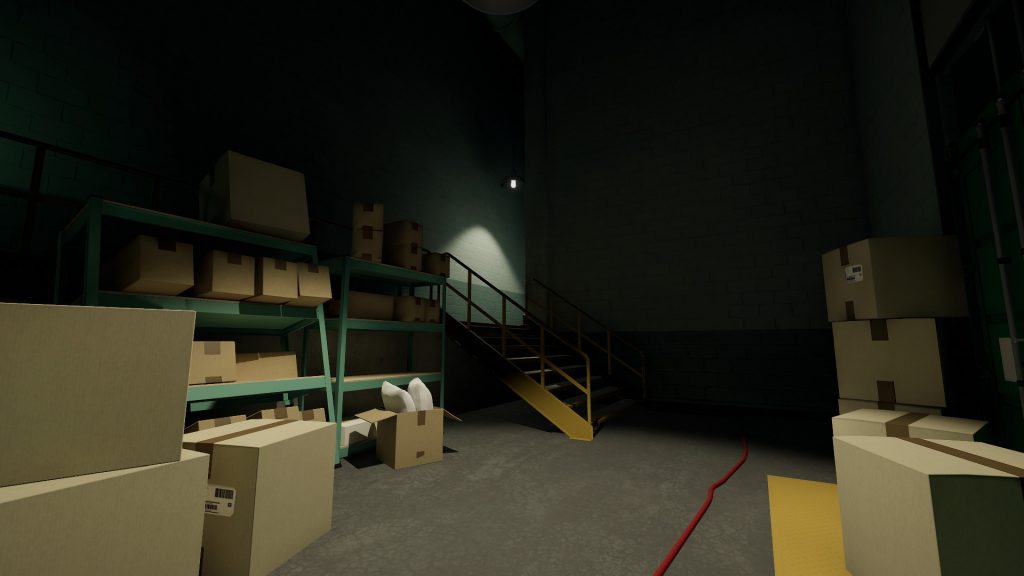
Take a closer look at the vending machine and notice how the list of sodas include baking soda, diet soda (“Made with REAL avocados!”), random soda, and even water soda! Elevators also display advertisements for staircase and cardboard conventions, along with instructions to eat more avocados. Everywhere there is a sense of the peculiar.
When it was first published, Superliminal was praised for its ingenuity, originality, and engaging narrative. It also drew criticism for being a little too brief (There’s roughly about two and a half hours of gameplay, total). At the time, not many outlets mentioned that the narrative was built on pretty sound psychological advice, hidden, but not too deeply, behind a fun puzzle-solving and humorous facade.
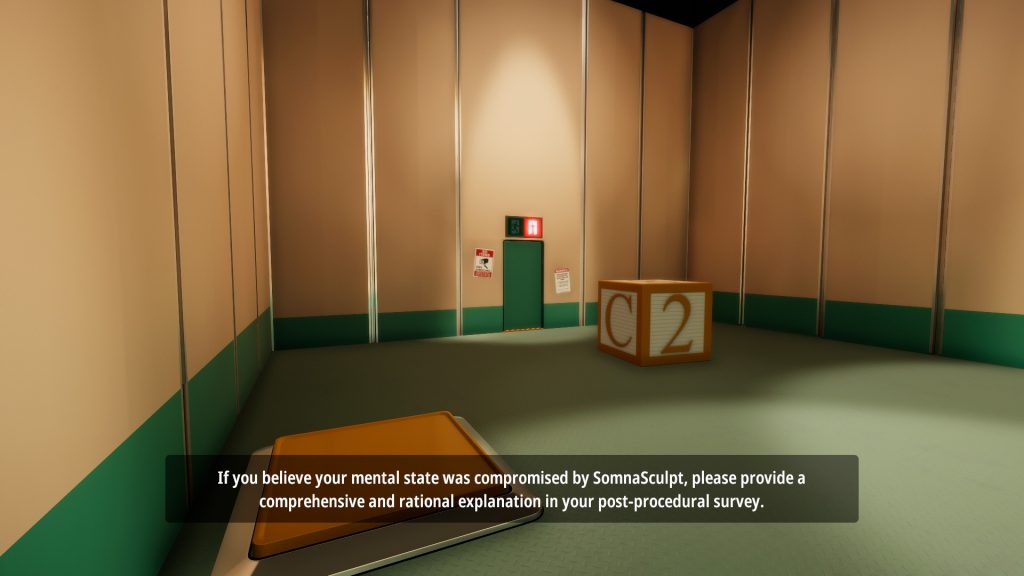
And while the game was noted to contain a series of puzzles that were, on the whole, not too challenging, it’s worth mentioning now that in the rush to review a game, often before finishing it, certain details can be omitted or go unexplored: One such element involves how the game teaches the player to navigate a particular level, then subverts expectations in the next, forcing a perspective change. For example, in one level doors can be pulled off hinges and used as ramps to vault over the doorframe, but on another level, clicking a door produces a maddening copy of said door. Before you know it, you’re 50 doors deep in a tight corridor and wondering where it all went wrong. Time to try a different approach!
Eventually though, every secret you’ve learned by looking at things in a new way becomes vital to the end game. (I’ll admit there were at least two occasions in the final chapter in which I had to look up a solution online.) It’s only in the final minutes that you realize just how far you’ve come, and just how far you’ve broadened your original perspective to get here.
The game ends rather beautifully, with the gentle words of Dr. Pierce lingering long after the credits roll. Superliminal is a game in which the dreamworld is as meaningful as the player chooses to make it. The lessons learned within are deliberately designed to expose both the character and the player to diverse perspectives, fostering our personal growth in a surprisingly gentle and most touching manner.
Superliminal, I’m sorry I didn’t see you back in 2019, but I see you now.
Our Score: 8/10. Face your problems from a new perspective. Look at things from a different angle. Climb giant cheeses. Consider the meaning behind it all.
Genre: First Person Puzzle Solver
Platforms: Windows (November 12, 2019), Switch, PS4, Xbox One (July 7, 2020), macOS, Linux (November 5, 2020), PS5, Xbox Series X/S (November 21, 2022)
Release Date: 12/11/2019
Studio: Pillow Castle Games
Publisher: Pillow Castle Games
*In our revisited column, we revisit older games we feel deserve a perspective change. Superliminal is the first game in this series.
