

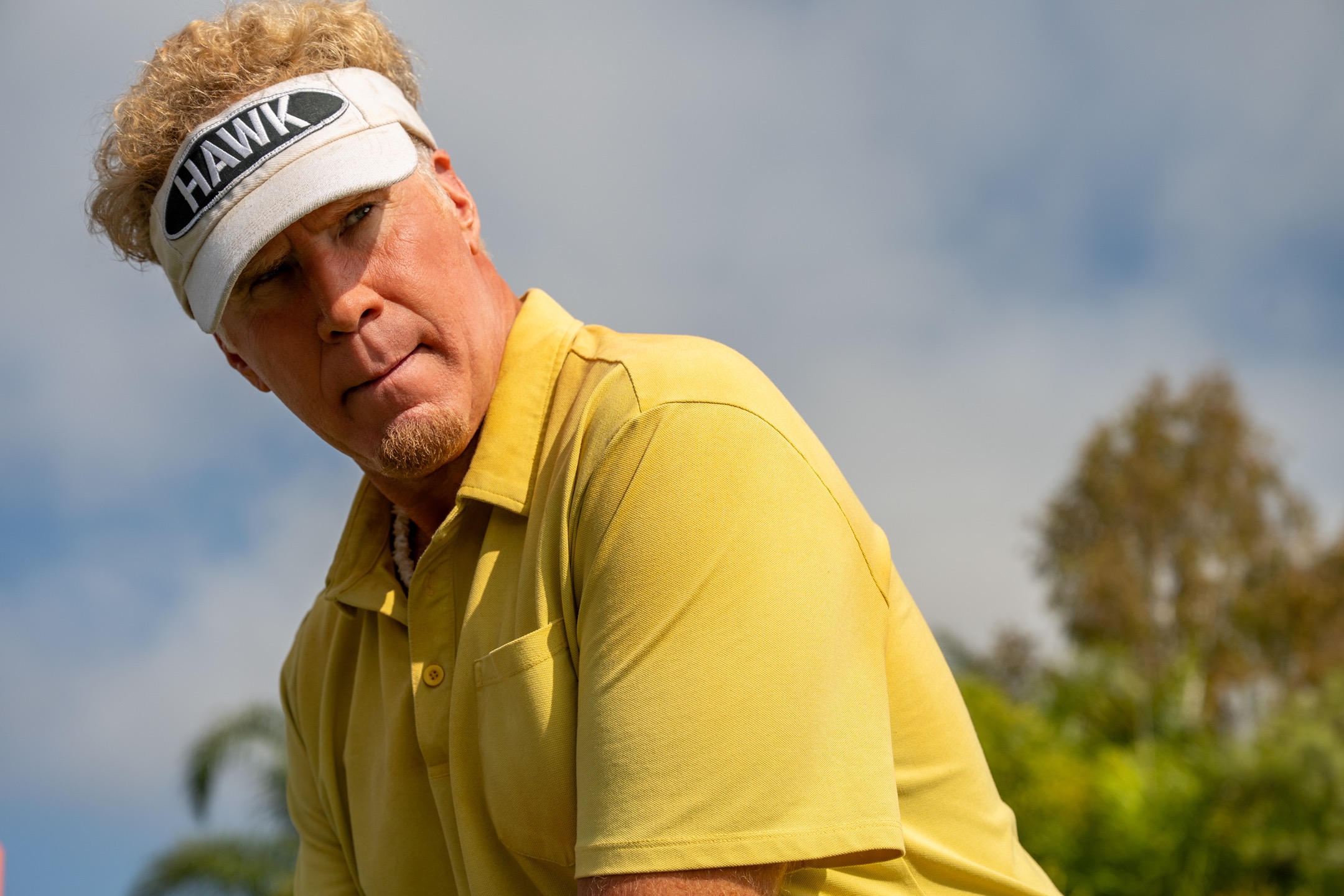
If the ribald comedies of the late ’90s and early aughts, starring the talents of Will Ferrell, the Wilson brothers, Mike Myers, Ben Stiller and other members of the “frat pack” are your thing, then you’re probably going to enjoy The Hawk.
Netflix’s new golf comedy (not to be confused with Apple TV’s new golf comedy Stick, starring the aforementioned Owen Wilson) stars Ferrell as Lonnie Hawkins, a washed-up golf pro who dreams of getting back onto the PGA tour and maybe even winning the U.S. Open. It’s the kind of premise that arrives fully assembled. We’ve all seen the sports-comeback comedy a hundred times, and The Hawk seems perfectly aware of that, leaning into the familiarity rather than fighting to subvert it in any meaningful way.
Much like Wilson’s Pryce Cahill in Stick, Lonnie “the Hawk” Hawkins is broke, haunted by the memory of a crushing golf defeat at the hands of a smug rival, Golden Fisk (Luke Wilson), and now travels from tournament to tournament in a tour bus that doubles as his home.
Lonnie’s caddie is his long-term and long-suffering friend Old Henry (Keith David), who dies about eight minutes into the first episode, leaving Lonnie alone, afraid, and victim to his own worst impulses. And Lonnie has quite a few impulses, as it happens. We quickly learn he’s maxed out his soon-to-be ex-wife’s credit card to fund his venture. He’s also quickly shown to be a staggering egotist obsessed with his own image and vision of success, in addition to being a boozehound and an all-round obnoxious person. In one scene, Lonnie reluctantly rides in the ambulance alongside the body of his dead caddie, who, by the way, suffered a heart attack while carrying Lonnie’s golf bag and other personal effects. Untouched by the sight of Old Henry in a body bag, Lonnie commences a search of the corpse, retrieving Henry’s watch and wallet, before being tossed out on the side of the road.
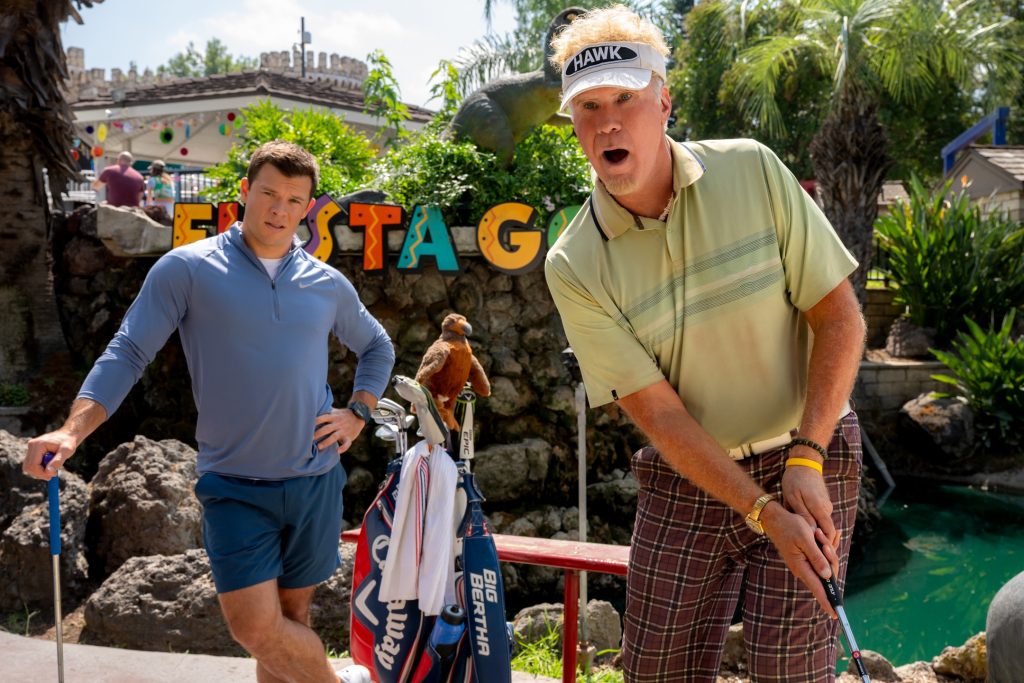
Only Will Ferrell could make a character this bad on paper even remotely amusing, but somehow we feel the odd pang of pity for Lonnie as he scrapes by in a series of excruciating encounters, competitions, and personal moral obligations. Keith David, for what little screen time he gets, makes Old Henry’s exhausted loyalty to this man feel entirely lived-in, and his absence is felt in a way that a lot of prestige dramas fail to achieve with characters who stick around for entire seasons.
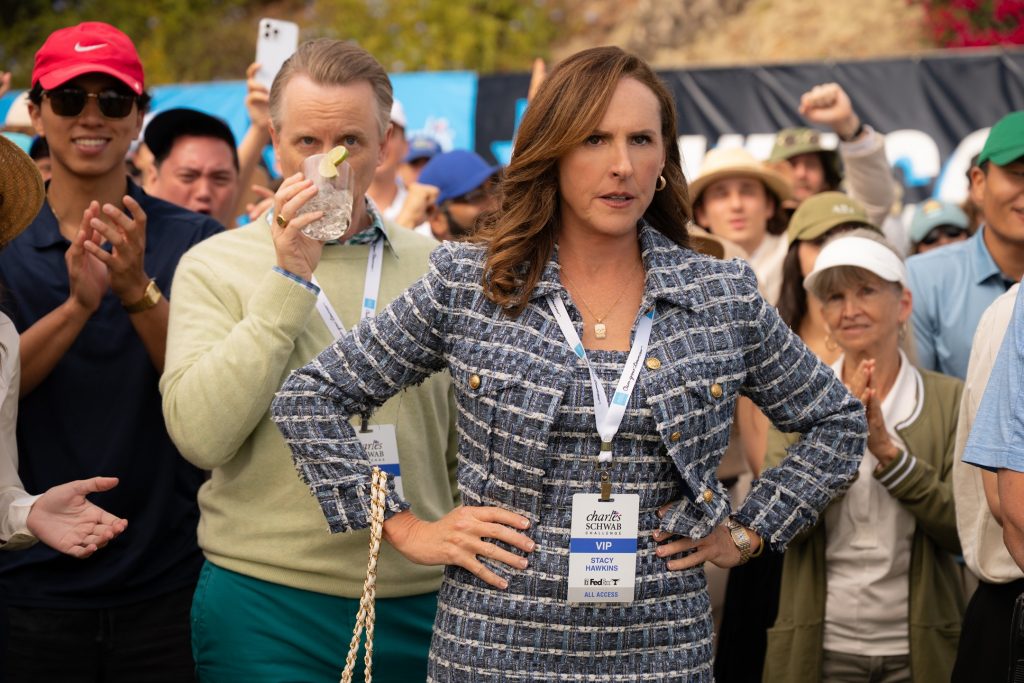
Along the way we meet Lonnie’s son Lance (Jimmy Tatro), an up-and-coming golf pro; Lance’s aspiring influencer girlfriend Natalie (Katelyn Tarver); and his almost-ex-wife Stacy (Molly Shannon). The family dynamic is predictably weird. Lance is on track to become the next Hawk, with pundits claiming he’s an even better golfer than his dad ever was, and it isn’t long before this estranged father-and-son duo become rivals in the next tournament. Tatro, who’s built a career playing lovable dim-bulbs, plays it a little straighter here than usual, and the choice pays off. Lance reads as a confused young man who genuinely doesn’t understand why his father is the way he is, which makes their scenes together land with more weight than the broad comedy around them would suggest they could. Meanwhile, foul-mouthed, highly-strung Stacy and controlling girlfriend Natalie soon find themselves at jealous odds with each other, their various petty enmities spilling out onto the golf course, usually at the worst possible moment for whoever is mid-swing. Molly Shannon, unsurprisingly, walks away with most of the scenes she’s given, finding a vein of real hurt underneath Stacy’s constant screaming that the script doesn’t always seem to know it’s earned.
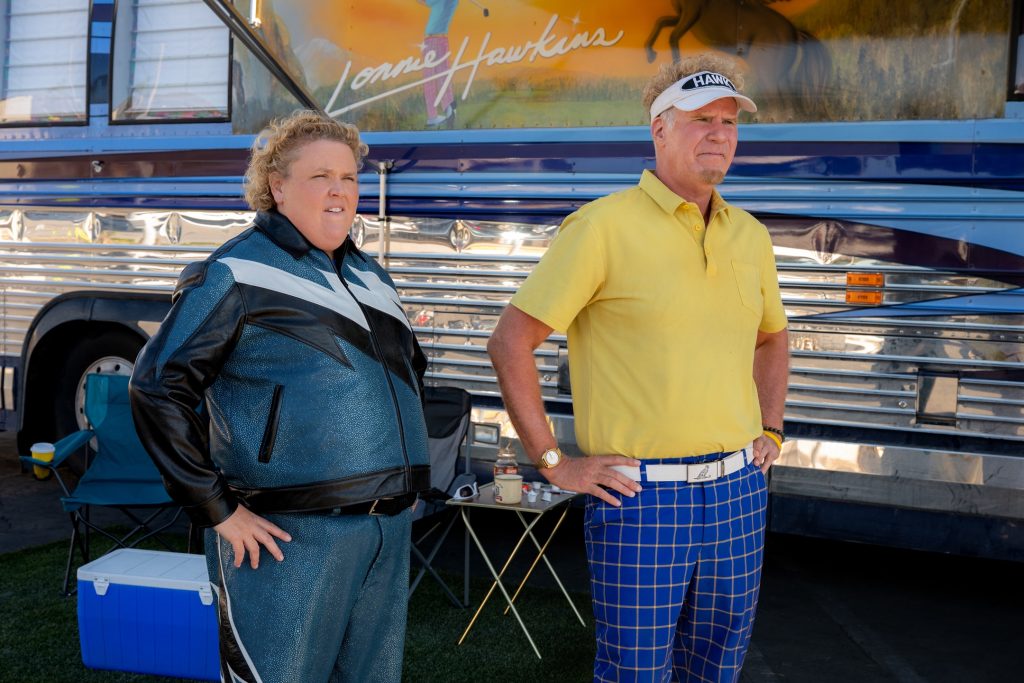
In the middle of all this chaos is Lonnie’s new caddie, Sam (Fortune Feimster), a well-meaning and down-to-earth woman who jumps at the chance to take Old Henry’s place, despite knowing nothing about golf. Feimster is doing some of the show’s best work, largely because Sam is the only character who ever seems to notice how absurdly everyone around her is behaving, and her gentle reactions do a lot of heavy lifting between the bigger comedic set pieces. It soon becomes clear that Sam is fleeing a dangerous presence from her recent past, one that eventually zeroes in on the colorful pair, and this thread is where the show occasionally, and unwisely, tries to inject something closer to real tension. It never quite earns the tonal shift, and a couple of episodes sag under the weight of a subplot that would probably work better as its own show than as a garnish on this one. However, this is no ensemble show at heart, and the characters in Lonnie’s orbit tend to remain fixed there, with Ferrell’s comedy taking center stage in every scene.
The character of Lonnie himself is such a dichotomy of awfulness and charisma that you’ll question whether you’re supposed to be rooting for him to succeed or fail. He is a man without a sense of introspection or shame. All of his moments of clarity arrive a little too late. Between the layers of Ferrell’s physical comedy, his unique brand of impish mischievousness, the childish outbursts, the show’s slew of profanity-laden dialogue, and all the sex and poop jokes, there’s a lingering question: what is The Hawk trying to say? What point is the show attempting to make? And honestly, after 10 episodes, I’m still not entirely sure.
Some critics will no doubt unfavorably compare The Hawk to Talladega Nights, or Anchorman, or any other high-profile Ferrell film from the mid-2000s. But perhaps those comparisons are unfair. Those movies thrived on the humor of the day — that is to say, the comedy was underpinned by a steady stream of sex and toilet jokes, delivered by characters who were, underneath it all, kind of loveable idiots. Time has moved on. Humor has moved on. Would modern audiences laugh less if these movies were made now? Maybe. Probably. The Hawk seems caught between two eras without fully committing to either. It wants the anarchic, anything-goes spirit of those earlier films, but it’s also clearly aware, in its more self-conscious moments, that a straightforwardly awful protagonist doesn’t play the same way to a 2026 audience raised on antiheroes who at least occasionally earn their redemption arcs. Lonnie’s own is ultimately ambiguous, and I suspect the show is better for it, even if it makes the whole experience a little harder to love.
Like Lonnie himself, The Hawk feels like a curious and amusing anecdote from another time, a relic of tone and pacing that feels out of step in 2026. That’s not entirely a criticism. There’s something almost bracing about a comedy this unbothered by likeability, in an era where so many shows soften their worst characters by episode three. The Hawk refuses to do so. Lonnie is almost as insufferable in the finale as he is in the pilot, and the show trusts Ferrell’s performance to carry that lack of growth rather than manufacturing a cheap epiphany. Whether that’s a bold choice or simply a missed opportunity probably depends on how much patience you have for spending ten episodes with a man who literally phones in his dead friend’s epitaph because he’s too busy golfing to be there in person.
All 10 episodes of The Hawk drop on Netflix today, Thursday, July 16.
