


As a geriatric gamer it’s always a thrill to note how the next shiny new thing often evokes memories of gaming’s past.
Such is the case with Sad Cat Studios’ Replaced, a new cyberpunk thriller that also just happens to be a 2.5D platformer done in the pixel-art style of early 90’s classics of the same type.
If you’re of a certain vintage, your mind will surely be transported to Paul Cuisset and Microids Flashback, or Éric Chahi and Delphine Software’s Another World. If you’re a lot younger, you might even be reminded of more recent gems such as Playdead’s Limbo and Inside titles.
In the case of Replaced, that sense of the familiar is quite deliberate. Sad Cat has set out to create a game that pays homage to the early 90’s through pixel artwork, a tinny 80’s synth soundtrack (the game is set in the 80’s), a pulpy cyberpunk narrative, and vintage platforming mechanics. The result is a deeply stylish effort that evokes a time when cinematic ambition far outstripped the modest capabilities of the Amiga and Atari ST gaming consoles.
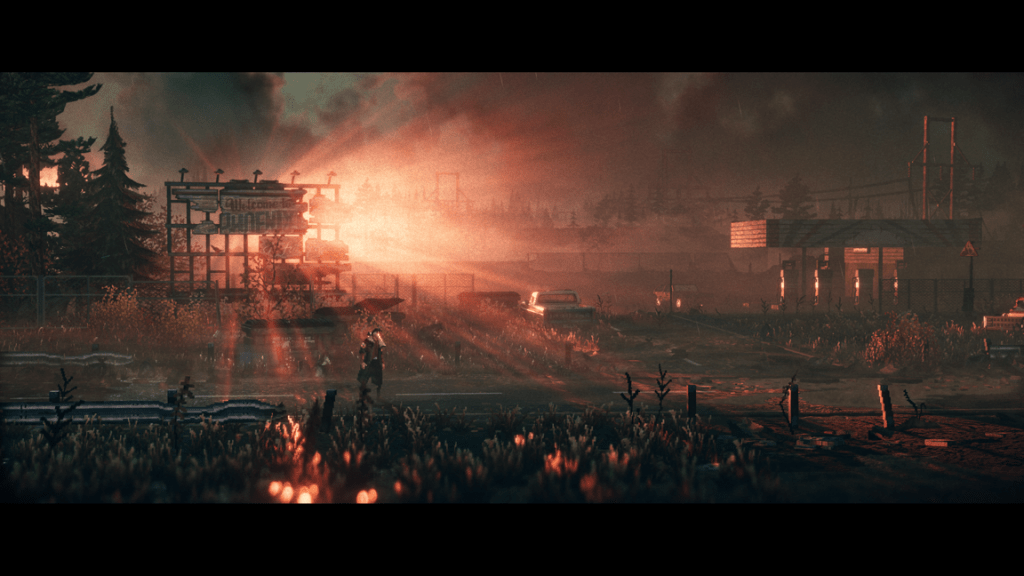
In Replaced, you play as R.E.A.C.H. (Research Engine for Altering and Composing Humans), an AI trapped inside the body of its human master Warren after an accident of the electrical variety bonds both entities together. This momentous event, occurring in the game’s opening moments, feels like a homage to mid-eighties sci-fi, wherein a rogue electrical spike, or even just beverage spilled on a keyboard, brought computers surging to life on the regular.
Now that you’re ‘alive’ you are tasked with exposing the sinister secrets of the Phoenix Corporation, and freeing the enslaved population of an alternate 1980’s America from slavery. And from having their body parts poached by the rich and powerful. (The game establishes early on that the US has been scarred by nuclear catastrophe, and the slow succumbing of its population to radiation. There is a brisk market for healthy eyeballs, larynxes, arms, legs, and basically any other body parts which are harvested by force from destitute locals, known as Disposals. Poor guys.)
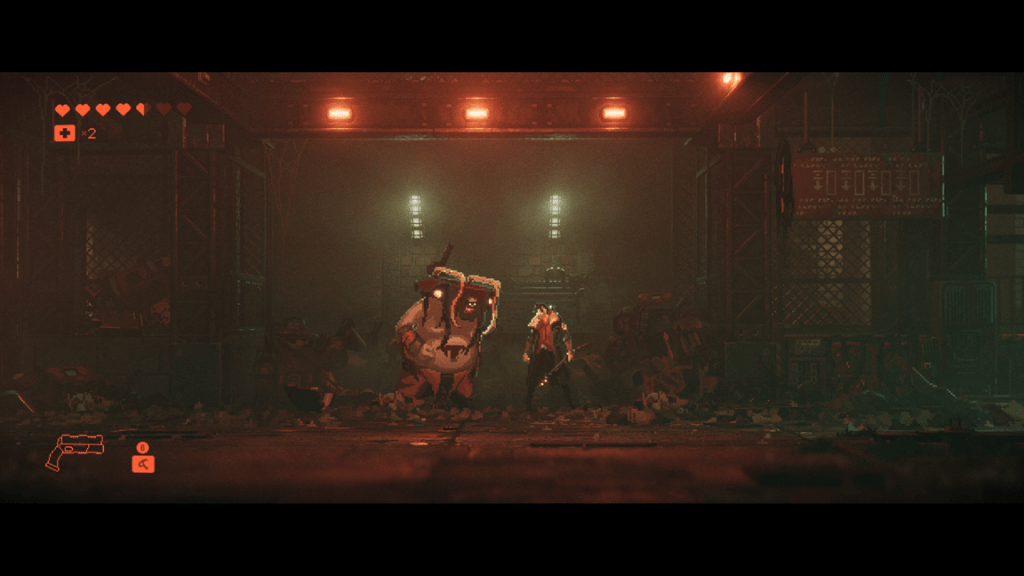
Navigation in this narrative-driven 2.5D platformer is a simple left to right affair, with options to jump, attack enemies, and pick up items. Occasionally Reach will be given the option to “Move Up” or “Move down” a staircase, bulky containers, and other structures, lending the brief appearance of 3D movement, but of course, it’s not.
In fact, Sad Cat has really made the most of Replaced’s limited (by modern standards) environments. Some locales are layered affairs, with pixelated characters going about their day in the foreground or background, adding depth, life, and a real sense of a lived-in world. Reach can often move up or down between these layers, via ladders and staircases, allowing him to explore and investigate every nook and cranny presented on screen. In later stages Reach will gain a pickaxe, allowing him to latch onto crumby walls, in true Prince of Persia style. We’re also treated to camera zooms and Dolly shots that push in and pull out to great cinematic effect. In the early sections of the game in particular, this feels like a real thrill.
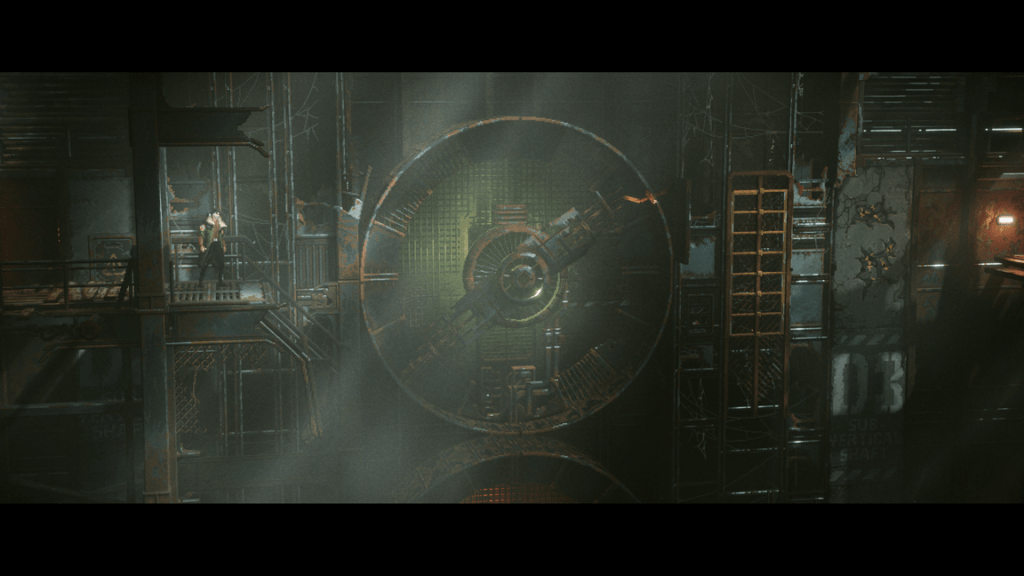
However, Replaced’s unique selling point doesn’t always work to the player’s benefit. Some sections (climbing in particular) don’t benefit from the game’s pixellated style. With visual cues occasionally difficult or impossible to see, I found myself plunging to my death on several occasions because I failed to recognize a shadowy ledge or railing.
A Wingman (Replaced’s version of a 1980’s Walkman — ask your parents! Ok, maybe ask your grandparents!!) helps Reach interact with his environment. The Wingman’s simple menu contains Scans (collectible documents, notes, diary entries, and so on that fill you in on the world and its inhabitants as you collect them), an Organizer (your list of missions), Tutorials (in case you forget the basics), and Music. The Music selection allows Reach to listen to any song you’ve managed to collect along your journey. However, as soon as you put your Wingman away, whatever 80’s synth tune you were vibing to, cuts out, and it’s back to the game’s central musical score again. This feels like a lost opportunity to allow players to listen to their own musical selections while playing. What’s the point of collecting songs if you can only listen to them in a menu?

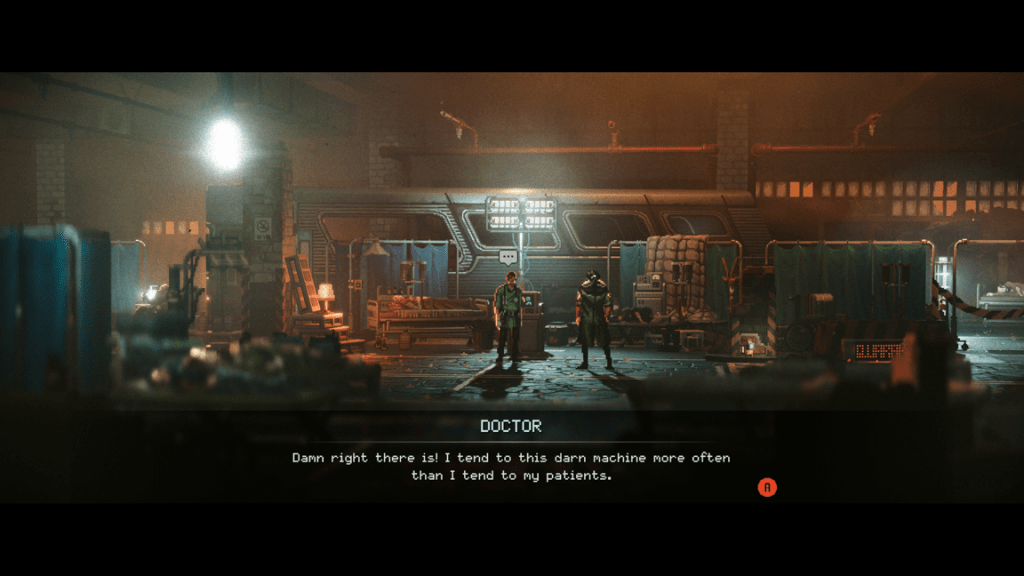
The Wingman isn’t Reach’s only way to learn more about the dystopia he must navigate. He’ll also meet many characters along the way, who are there to help or hinder him via fetch quests and dialogue trees.
It has to be said that the dialogue in Replaced is curiously clunky and “scripty” and in a way that must actually be seen to be believed.
“Let’s make like a banana and split!” Tempest, an ally, urges in one example of Replaced’s quippy Mid-century kitsch. I like to think this brand of anachronistic camp is a purposeful decision by the developers to recreate 80’s and 90’s Arcade style dialogue. If so, it’s a subtle and clever nod to yesteryear.
Combat centers around Reach’s Huxley Gun, a Phoenix Corporation firearm that also doubles as a police baton in the early stages. As forearms are linked to their owners’ fingerprints, Reach is going to need some help to unlock bullets and add-ons if he wants to do more than batter his enemies with his gun. Thankfully Yo-Yo, the Station Engineer can help you to add Kinetic Charges (Reach basically builds up enough charge to unleash a kill shot bullet by bludgeoning his enemies. The more you bludgeon, the faster your gun charges).
Reach can also dodge and roll out of the way of incoming attacks. Meanwhile, the Pickaxe is not just a handy climbing tool. It can also be used to pry stubborn armor from bigger enemies when your baton is having little effect. Later in game, snipers can be overcome via the use of a built-in Deflect Shield, while tougher troopers will require the use of a high-tech Shockwave AOE upgrade.
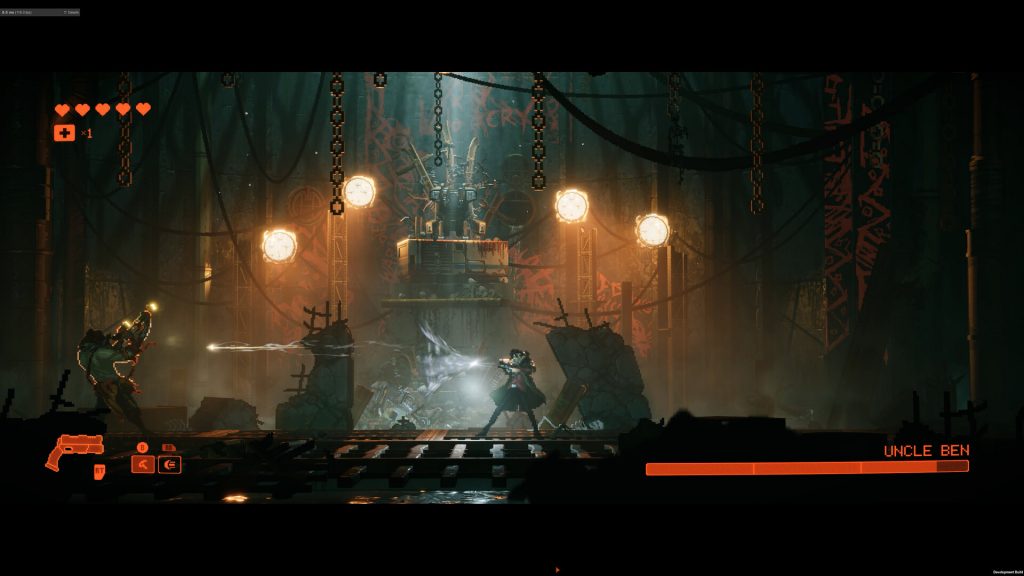
According to interviews with Sad Cat’s co-founder Yura Zhdanovich, the game was originally conceived more as a cinematic platformer, designed to prioritize both atmosphere and visual storytelling over more intricate fighting mechanics. The addition of a combat mode happened because the studio realized they needed a more functional way to add depth and “meat” to the gameplay loop without requiring the infinite unique assets a purely narrative trek would demand.
However, while it’s a definite asset, combat in Replaced feels like a rudimentary arcade-style button mash for the most part, with waves of enemy Termites rushing Reach from the left and right side of the screen simultaneously. Despite their numbers, action is not particularly challenging, and most situations can be overcome through a steady dance of well-timed dodges, liberal baton use, and making your bullets count.
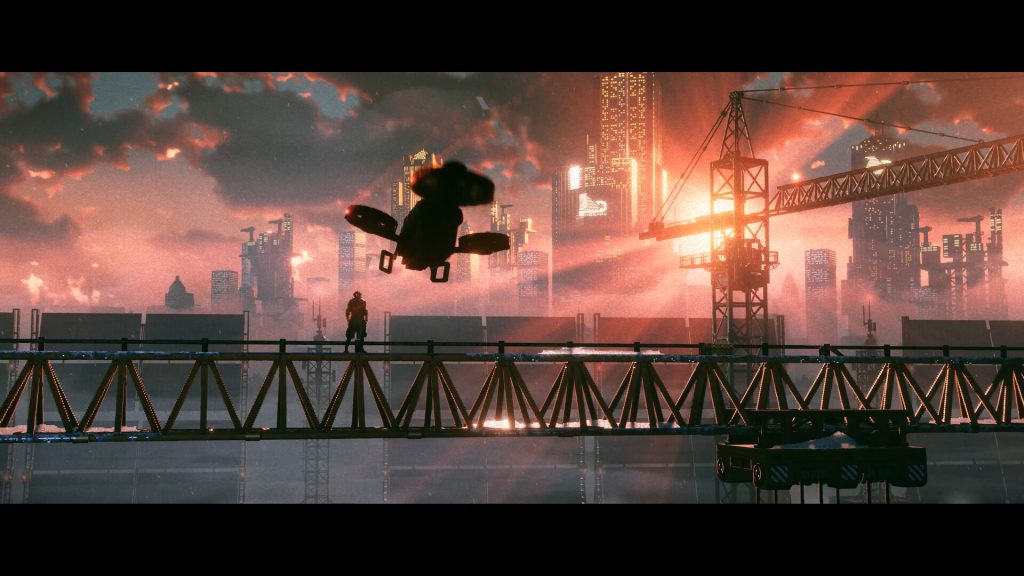
The strength of Replaced lies in its commitment to the bit. (Or in this case 16-bits.) It’s a mood piece first, and a video game second, and it succeeds best when it leans into its beautiful pixellated world and meticulously crafted atmosphere and cinematics. While the combat serves its purpose as a structural backbone, the experience feels best enjoyed when simply soaking in the neon-soaked grime of Phoenix-City.
Replaced is an impressive, confident debut from Sad Cat Studios that proves they have a keen eye for aesthetic and a genuine love for the genre’s history.
Platforms: PC, Xbox Series X/S (Day One Game Pass). Release Date: April 14, 2026. Studio: Sat Cat Studios. Publisher: Coatsink, Thunderful Publishing
Replaced: Replaced is an impressive, confident debut from Sad Cat Studios that proves they have a keen eye for aesthetic and a genuine love for the genre’s history. While this gritty 2.5D odyssey may never truly replace the pioneering titles that inspired it, it certainly earns a respectable spot on the shelf right alongside them. – jgriffin
