Hey, have you heard the sequel to Hollow Knight is finally out?
Of course you have. Hollow Knight: Silksong has been the topic of conversation since its surprise and welcome release on Sept. 4. The game has already sparked memes, Sherma Disco and Techno beats, and a whole lot of discussion over whether gameplay is terribly difficult or merely cruelly difficult. Meanwhile, other newly released titles like Cronos: The New Dawn and Hell is Us are fighting for attention on gaming sites and magazines whose columns are filled almost entirely with Silksong boss fight tips, Silksong essential beginner tips, Silksong maps, Silksong mods, and endless Silksong conversations as to whether Team Cherry’s long awaited sequel to the much loved 2017’s metroidvania might just be a bit too hard for the average player.
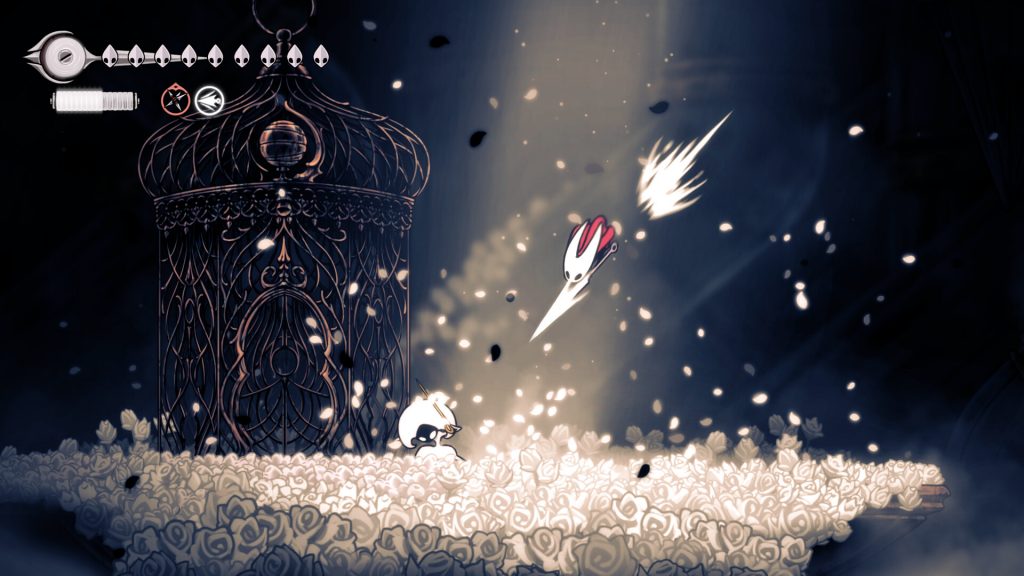
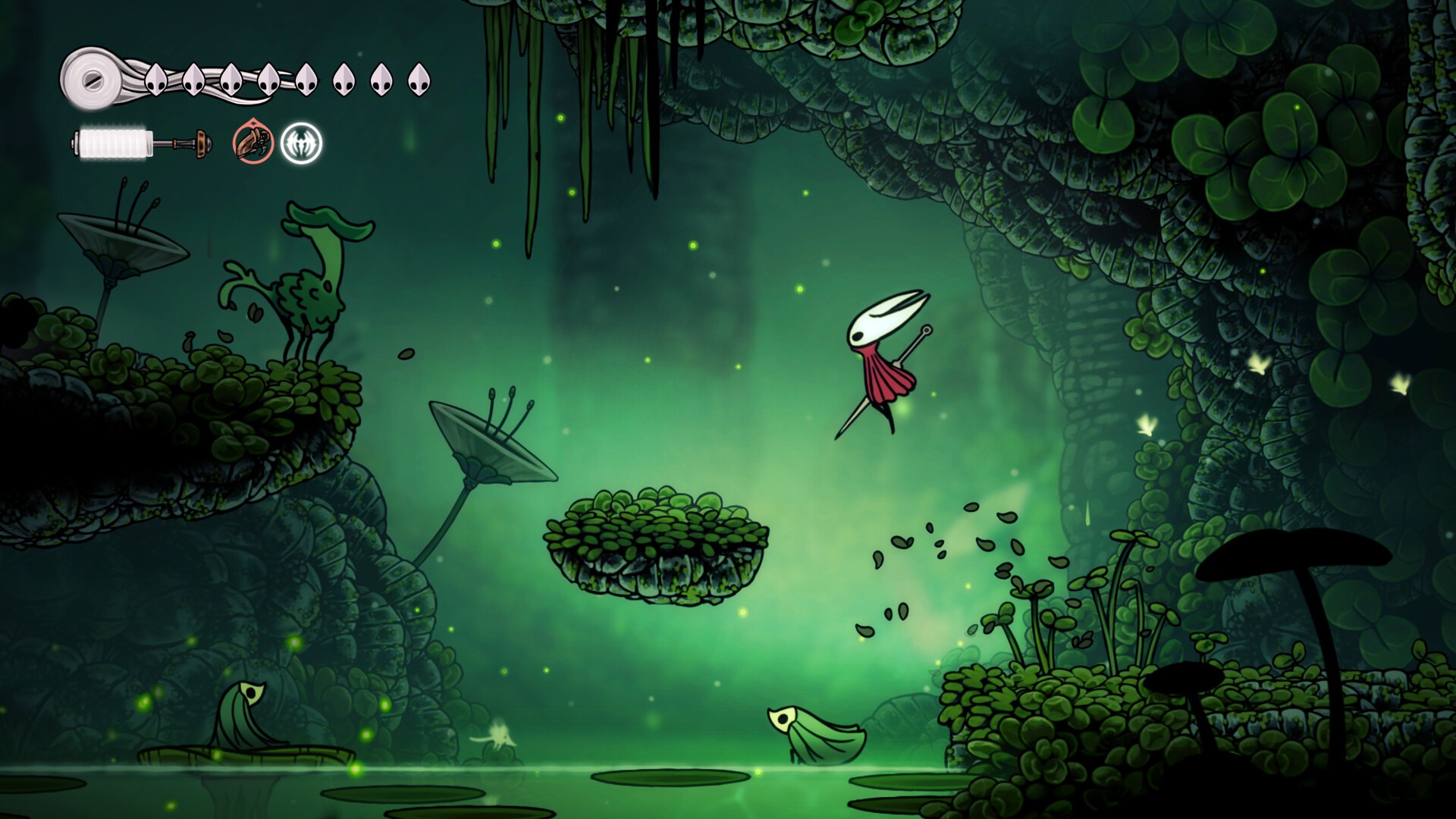
The game sees us take on the role of the elegant but lethal Hornet, an insectoid of impeccable fashion sense armed with a sharp sewing needle and a cool disdain for her enemies. Hollow Knight fans will instantly recognize Hornet as the former Princess of Hallownest, a major supporting character from the original game.
When we first meet her, Hornet is in the process of being abducted and transported to the strange new world of Pharloom. Like Hallownest, Pharloom is populated by a mostly gentle and varied insect population, some of whom are on a pilgrimage to Hornet’s very destination, and all of whom have a strange affinity for bells and music. (Seriously, there are so many bells!).
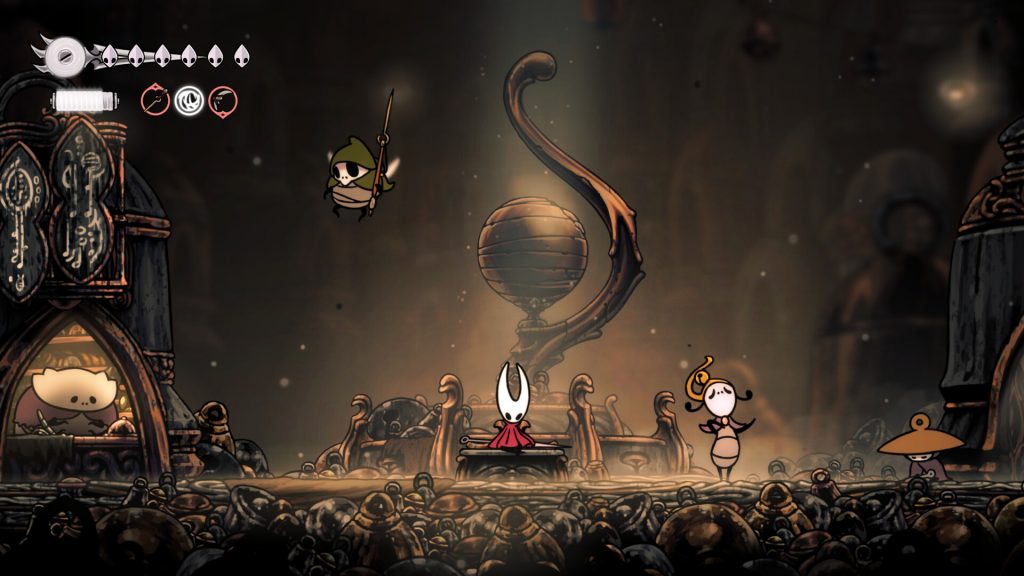
With her powers diminished, Hornet must gather her strength, and climb to the highest tower in the land to demand answers (and maybe pointy retribution) from her captors. As she sets out, Hornet will discover a vast, labyrinthine, and connected map of key locations where she can collect resources, regain her abilities, engage with curious locals (Sherma!) fight bosses, and learn more about the curious land of Pharloom.
The first thing players might notice is that Silksong expands on the combat, movement, and healing mechanics of Hollow Knight.
Hornet uses a skein of silk thread which is slowly gathered from a series of defeated enemies, and used to heal her via a ‘bind’ command that fills up multiple health meters / masks at once. (Hornet can even use bind to heal herself mid-jump if she wants.) This might seem like an advantage, and it is initially. However it does mean that healing will use up Hornet’s entire skein of thread every time. If she dies to an attack she can return to the scene of the crime and collect a threaded cocoon of items lost during her defeat, which is another plus. (Note: dying on the way to retrieve your cocoon nixes all the currency inside, so beware, and be careful when making your way back to an enemy that has previously defeated you in battle.)
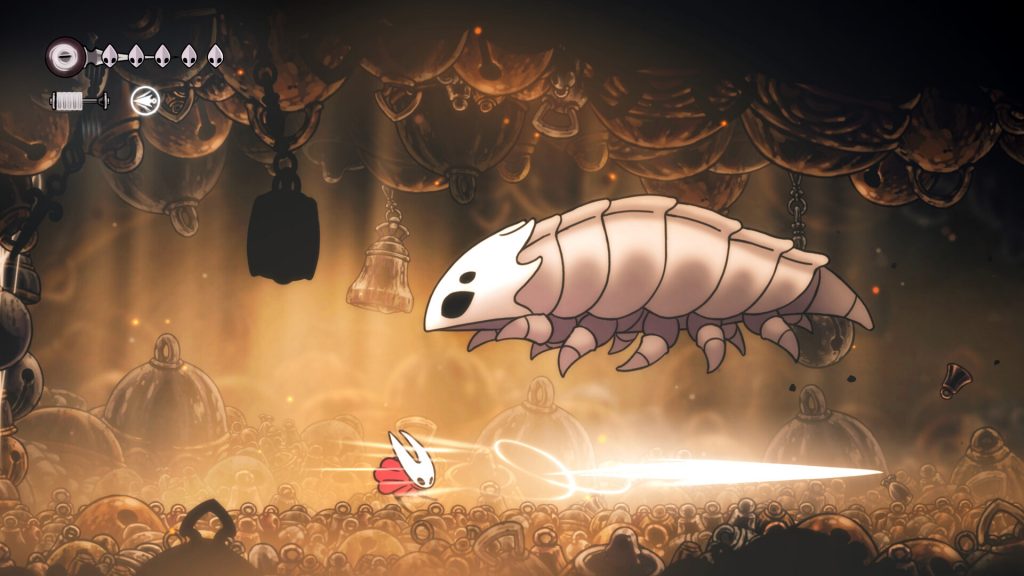
Hornet’s weapon is an adorable sewing needle, although she can collect other weapons as she goes, including straight pins which act as throwing daggers — a useful tool for prising lesser enemies from walls and striking at foes from a distance. The needle can also be used to strike at enemies on platforms directly above you, cutting through the scenery with ease.
Hornet can also use her needle as a movement/navigation aid. While the downward strike (or diagonal pogo jump) is the go-to move for tackling many of Silksong’s foes, it also allows her to bounce off said enemies and various objects, granting access to higher platforms and otherwise inaccessible areas.
Finally, Hornet can use her silk skein combined with her needle for special attacks, like the “Silkspear” attack, that turns your needle into a deadly retrievable harpoon.
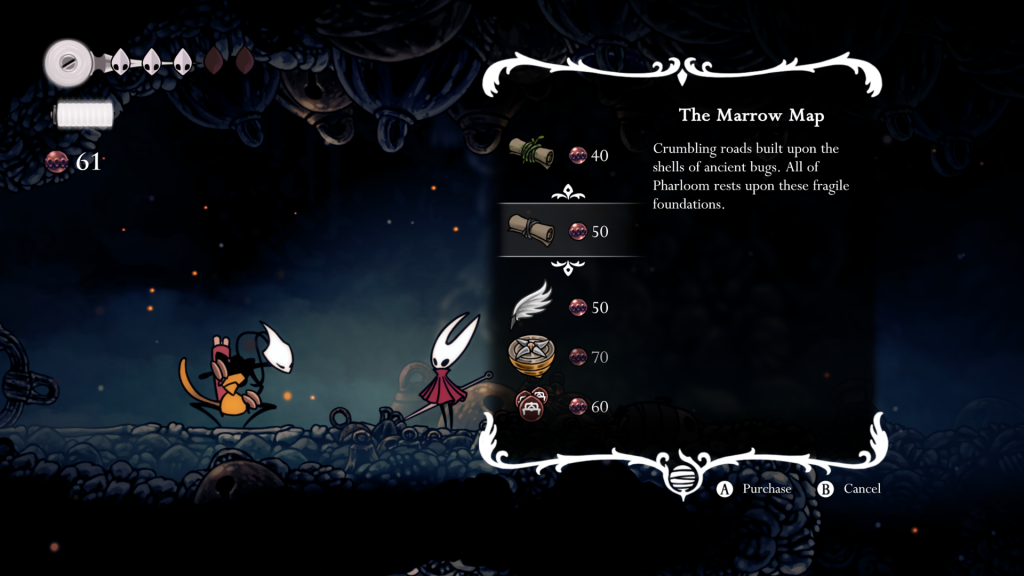
Silksong’s main currency are rosary beads, which can be found attached to strings, or just lying on the floor, all over the map, as well as on the bodies of fallen insect enemies. Collect beads to buy access a bench upon which to rest (i.e. save your progress). You can also buy a compass, quill, maps, and other items from the shop or from characters whose paths you will cross. Additionally, shell shards can also be collected to restore your various tools whenever you are resting on a bench.
Shoutout to both the map seller (Shakra) and pilgrim (the aforementioned Sherma) whose beautiful songs can be heard from several screens away thanks to the game map’s interconnectedness.

Tools replace charms in Silksong. Tools can be purchased and added to a special crest to grant different bonuses of the melee, ranged, and protective variety, depending on which objects you choose to attach to them. Each of the seven obtainable game crests has a distinct combat style and tool layout, which determines base attack patterns, and more. Overall, the system is tidier and more straightforward than Hollow Knight’s all-in-one system.
But how difficult is the game really, and is it an obstacle to playing? The answer may depend on your affinity not only for metroidvania-platforming tiles, but games with a soulslike aesthetic.
Combat can be particularly tough, particularly in the game’s early stages before Hornet has levelled up her sprint dash and gotten to grips with her crest load outs. To boot, benches, the game’s reload points, are deliberately positioned far from the action, meaning that if you die (and you will die a lot), Hornet will be forced to backtrack over lengthy distances for another bite at the cherry. Not all enemies stay dead either, meaning you may find yourself endlessly replaying certain sections of the map in your early attempts just to get back to the location of the last boss.
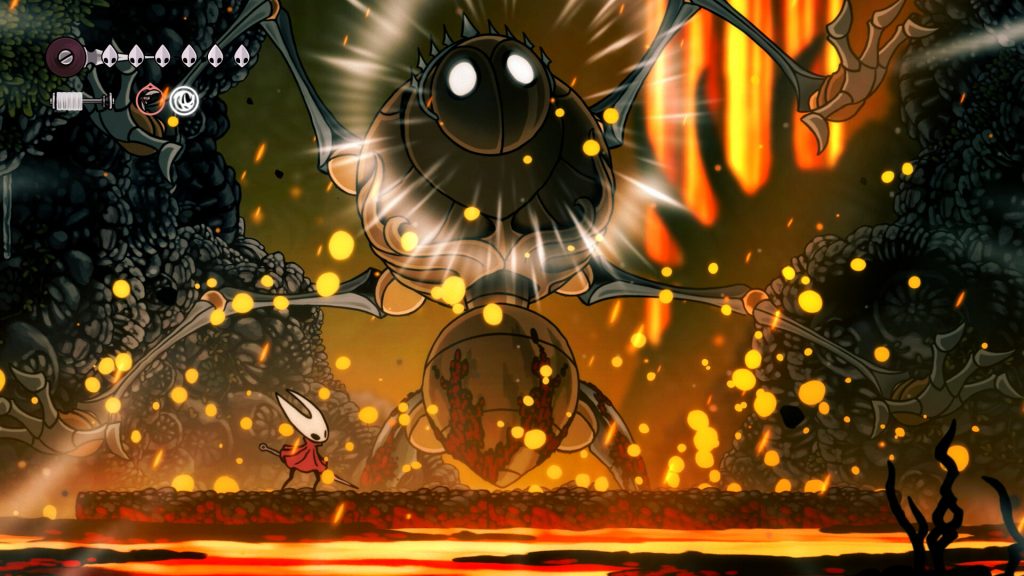
The number of enemies that deal double damage in the early sections of the game is likewise eye-wateringly high. So high in fact that Team Cherry has responded to criticism of this mechanic with a “slight balance adjustment” patch to help players out.
Another area of contention arises from the number of movement combos needed to access certain areas. Leaping and bouncing from one platform to the next, occasionally onto enemies’ heads and other mobile obstacles, can present quite an inconsistent experience.
At times, navigating your way up the map can feel like a joyful and smooth leap from one foothold to the next, while at other times a small misstep will send Hornet hurling though several screens of the map to crash into the floor — or worse lava river or lethal spike nest — below.
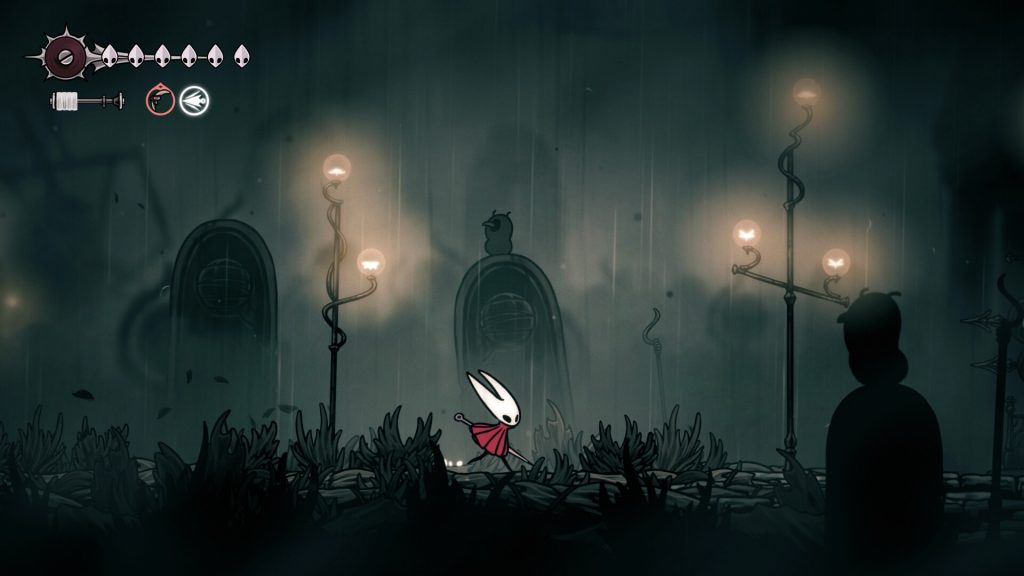
Added to this is the fiendish difficulty of several bosses, with players calling out Sister Splinter, Widow, and Last Judge as examples that tax those with even the greatest muscle memory. Team Cherry’s choice is a deliberate one. Silksong is an elegant, polished, and beautiful game, but one fine-tuned to a degree that it will alienate some players who are not willing or able to invest their heart and soul into its unforgiving challenges.
Yet, for those who embrace its punishing rhythm, the difficulty is precisely what makes Silksong soar. The steep learning curve rewards persistence with a profound sense of mastery. The soulslike influence, with its emphasis on precision and consequence, is balanced by the metroidvania joy of exploration, where uncovering new paths or hidden secrets feels equally as rewarding as conquering one of the game’s brutal bosses.
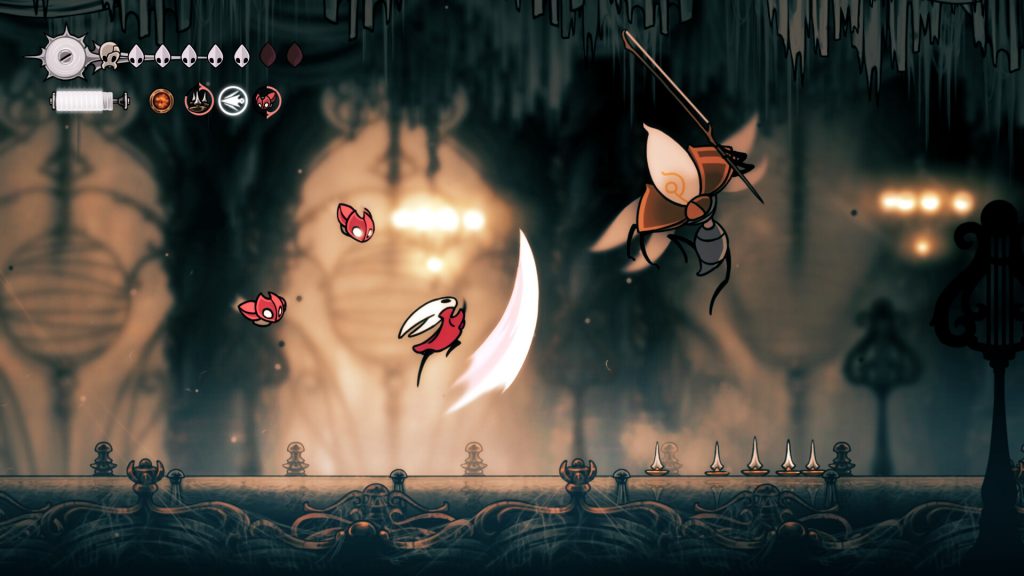
Some might argue that Silksong’s punishing design isn’t without purpose. That distant benches, impossible bosses, and respawning enemies force players to engage deeply with the environment, memorizing layouts and enemy patterns. That high-damage foes push strategic experimentation with Hornet’s needle, thread, and crest abilities. That even the platforming, frustrating as it can be when a mistimed leap sends you plummeting, encourages a balletic precision that mirrors the game’s ethereal aesthetic, and Hornet’s grace and deadly skill.
Some might even argue that the fact Team Cherry has crafted a game that doesn’t hold your hand is exactly the point. The difficulty, while daunting, weaves a narrative of resilience, much like Hornet’s own journey through a decaying kingdom. For every player turned away by a spike-filled death or a merciless boss, another will find exhilaration in overcoming the odds.
You just have to ask yourself which player you are.
Genre: Metroidvania. Platforms: for Linux, macOS, Nintendo Switch, Nintendo Switch 2, PlayStation 4, PlayStation 5, Windows, Xbox One, and Xbox Series X/S. Release Date: 09/04/25. Studio: Team Cherry. Publisher: Team Cherry.
Hollow Knight: Silksong: Ultimately, Silksong’s difficulty isn’t an obstacle but a defining feature. It’s not for everyone, and that’s okay. If you’re drawn to the metroidvania genre’s exploration or the Soulslike thrill of conquering the impossible, Hollow Knight: Silksong offers an elegant, highly customizable experience that’s as rewarding as it is relentless. For those less enamoured by its punishing style, the beauty of Pharloom might be best admired from a distance. – jgriffin