It takes a level head and a steady hand to navigate the nightmarish city of New Dawn in Bloober Team’s latest sci-fi survival horror. It’s just as well you have both. Well, onscreen at least.
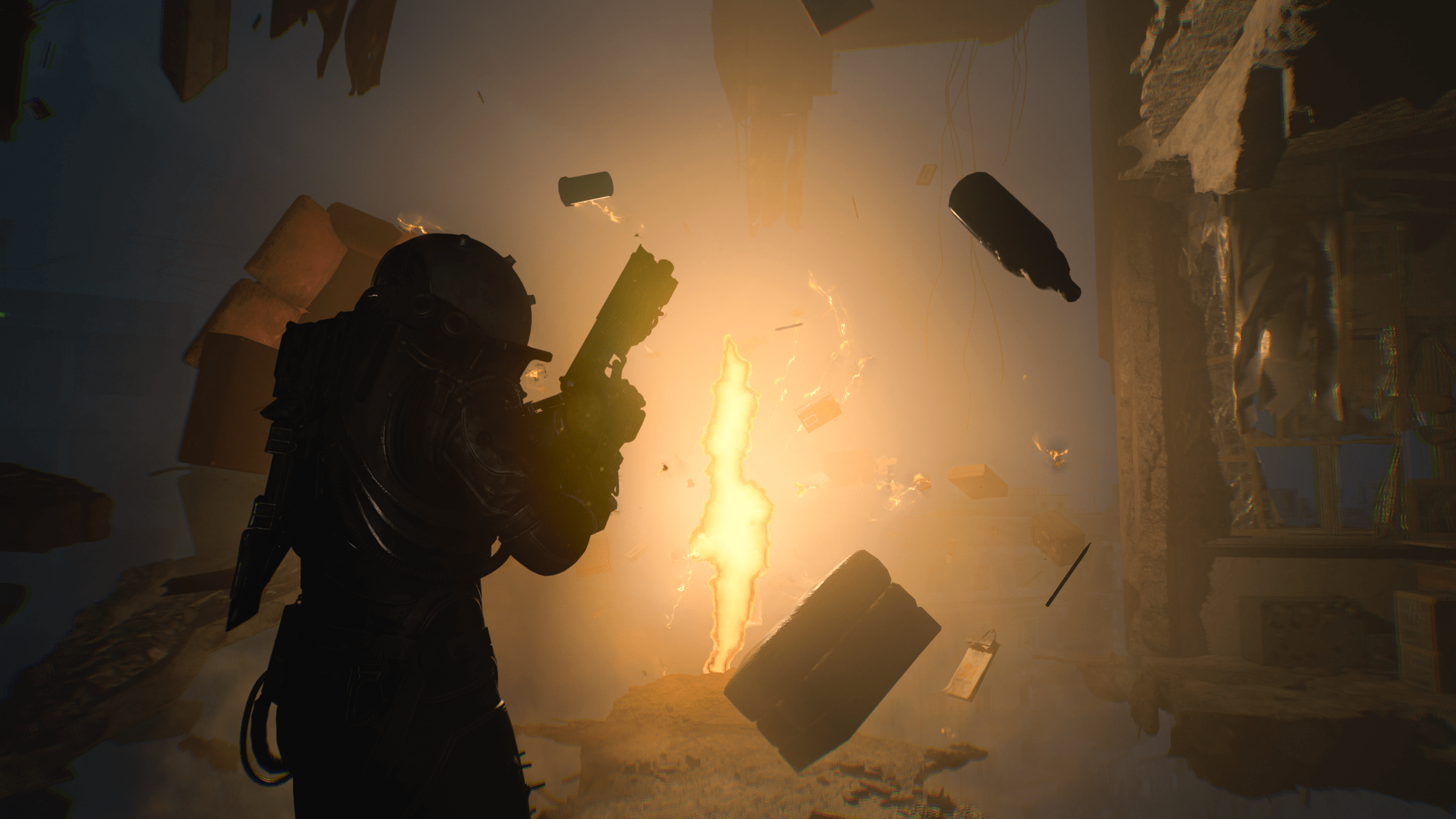
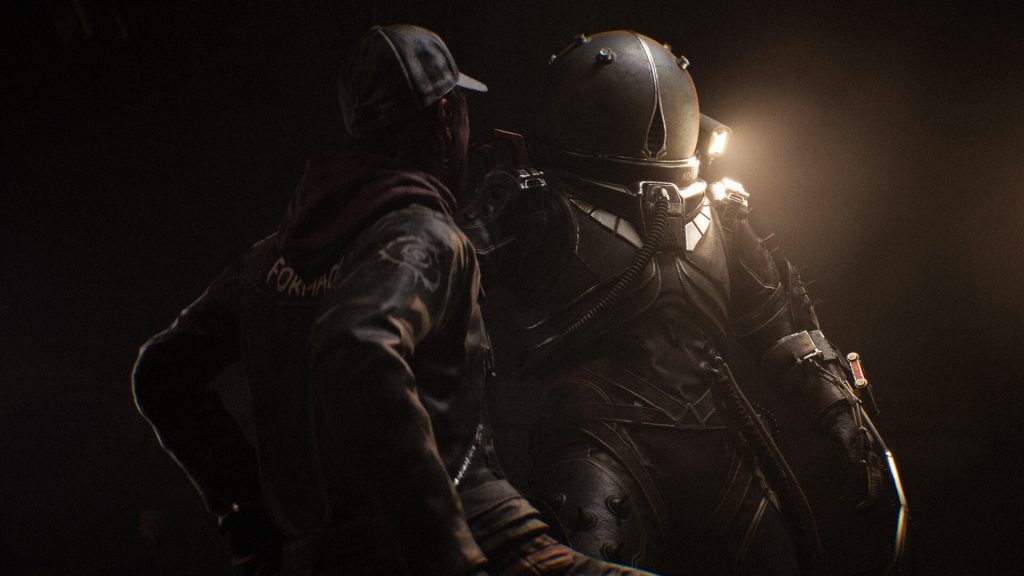
Players take on the role of ND-3576, a steely-nerved, ploddingly methodical, and monotone-voiced scientist kitted out against the elements and its horrors in a formidable metal suit that resembles an old-fashioned deep sea diving suit.
Sent to the post-apocalyptic Polish city of New Dawn on a cryptic mission to investigate the origins of a horrific plague that wiped out all of humanity, ND-3576 — a traveller from a mysterious scientific organization known as The Collective — must navigate the horrors that still call New Dawn home in order to find data, via a series of Dive Points crucial to the Collective’s mission.
Who are the Collective? Is there a real person under that iron suit? What are Dive Points? It this a mission to save humanity, or one undertaken simply to reflect on the origins of its demise? Cronos: The New Dawn has answers, but don’t expect an exposition dump at the start of the game. This is an experience in which answers, character development, and narrative, are intricately linked discoveries you’ll make on your journey through the city, and one that is definitely worth your time.
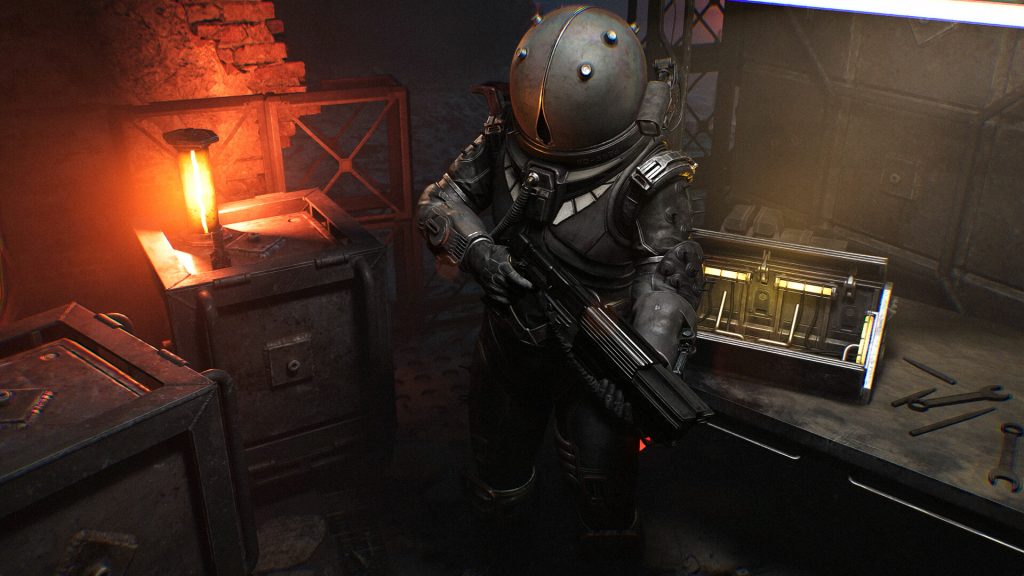
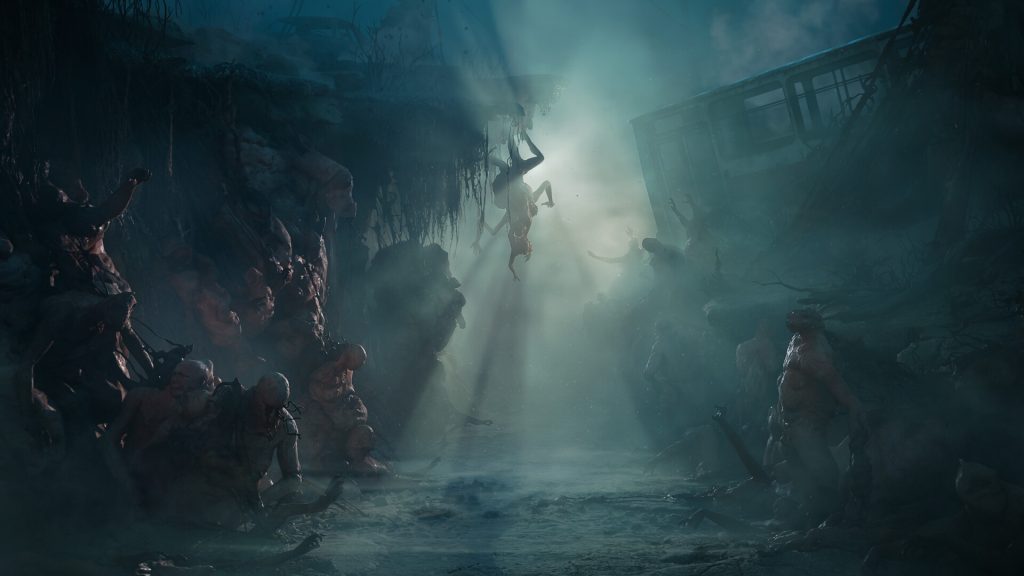
Of course, getting to your various research points won’t be easy. What once were people in the apartments, streets, businesses, and public parks of New Dawn are now hostile shambling abominations of molten human flesh — or biomass — as they have become known, and ND-3576 will have to navigate to her various designated locations by exercising a combination of brute force, careful resource management, and light environmental puzzle-solving. Oh, and some assistance from the local cat population!
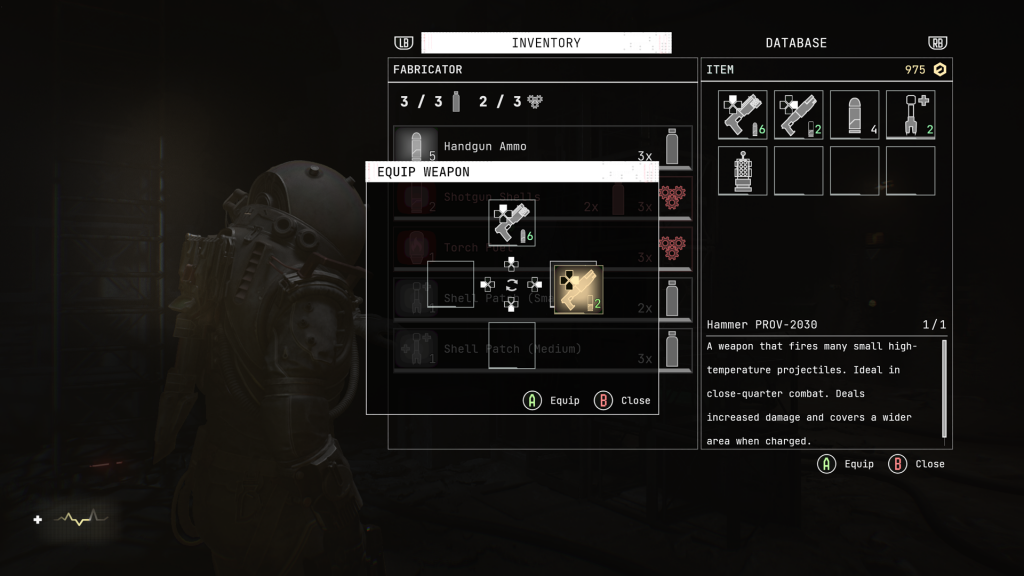
The nuts and bolts of gameplay center around 5 essential items — Energy, Weapons, Chemicals, Scrap Metal, and Cores.
ND collects energy as the game’s central form of currency. Energy is primarily used to purchase upgrades for your weapons. Think of things like faster reload, more firepower, a bigger clip, and so on. You can also break down everyday collectible electronic items like cameras, if you can find them among the debris, for even more energy.
The weapons themselves are discovered in-game, and often come just when the heat of battle is starting to feel overwhelming. ND-3576 starts with a handgun base — the Shift Gun — onto which additional arsenal can be loaded. The basic handgun — or Sword — is useful in the early stages of the game, but you’ll soon be glad to have the Hammer (the game’s version of the shotgun), and Integrity Scanner (which lets you know which hulking dripping masses of post-humanity oozing on the floors, walls, and ceilings around you still have a pulse and are lying in wait for you), and more.
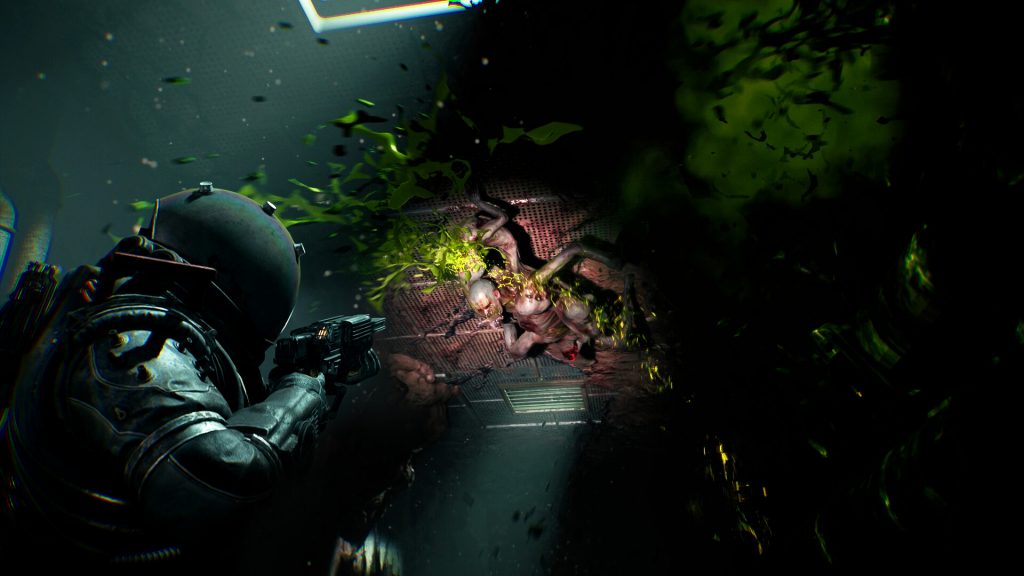
Another powerful weapon is the Torch, which is essentially a Molotov Cocktail of sorts. Biomass is vulnerable to fire, and ND is, thankfully, invulnerable to it. Tossing a torch at a difficult enemy can buy you vital seconds to reload your weapon (those initial reload times can feel excruciatingly slow), or to get out of reach of a flailing arm. The game also features flammable barrels and other fuel containers that can be exploded for added damage.
By leaning into ND’s strengths, you can lure a collection of shambling biomass ejections (known as “orphans”) to your location, then strike a barrel right next to you and watch them all light up at once. Strategies like this are extremely helpful as tight resource management is a huge feature of the game. You will find yourself constantly under pressure to decide whether to craft 3 handgun bullets or restore your health — as you guess what horrors await you around the next corner. Added to this, an initial paltry number of inventory slots make choosing what items to collect on your travels a serious consideration.
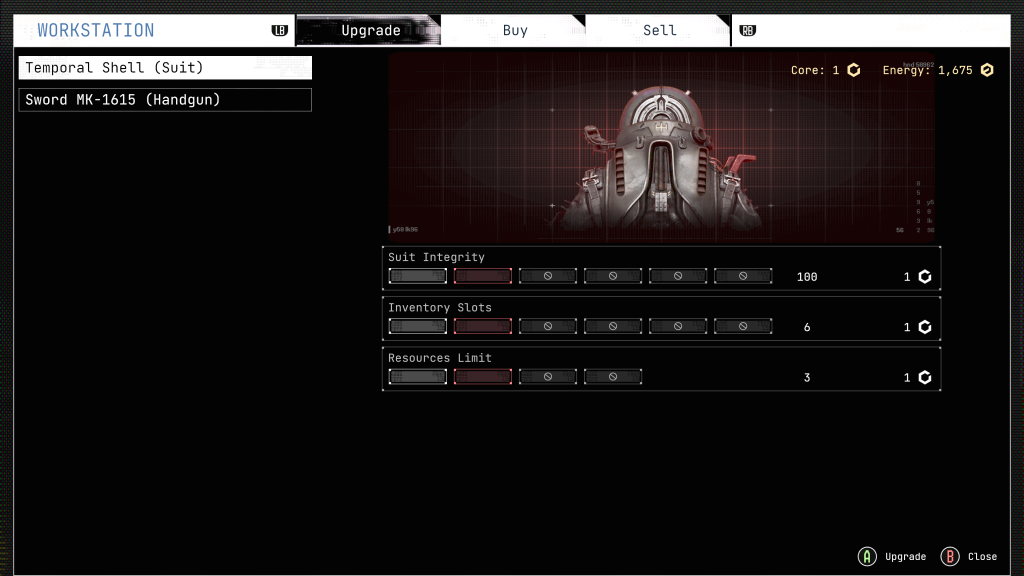
Metal scraps are used to craft items such as Torch fuel and shotgun shells. Chemicals, meanwhile allow you to craft handgun ammo and Shell Patches. As ND-3576 doesn’t have a standard human health meter as such, she is healed by making repairs to her suit via patches, big and small. Finally, highly-prized Cores are used to upgrade ND’s suit and her Torch.
This combination of materials may sound overwhelming, but Cronos‘ neat menu and inventory system keeps it all simple. Gather what you can carry. Think carefully about what you want to craft, keep your eye out for Cores, and stay alive. In an amusing aside, the city is also home to a small number of feral cats (We don’t know how they managed to escape the apocalypse but they somehow did!). Petting a cat will cause it to drop a treat for your inventory. Later, you’ll have the opportunity to see all your previously befriended cats hanging out together in the same safe house next to a cosy Christmas tree. Aw!
Environmental puzzles are fairly straightforward, but are made cool by a feature that can rewind time. ND will encounter a series of anomalies (they look like mini black holes) which can be activated to reverse time in that location, uncollapse bridges, staircases, and more to allow access to previously inaccessible heights. Time actually plays a big role in Cronos: The New Dawn, but to say more here would spoil the surprise. If you manage to find a barrel next to an anomaly, you can have fun luring New Dawn’s Orphans in, blowing them up, and then rewinding time on the barrel so that you can do it all over again.
When it comes to enemies, Cronos has been likened in some early reviews to 2008’s Dead Space, a fan-favorite sci-fi survival horror from developers EA Redwood Shores. Comparisons are fair in so far as both games feature enemies of the body-horror variety — twisted torsos, elongated limbs, broken rib cages that resemble jaws, merged headless flesh with porcupine quill limbs. Cronos’ number, variety, and difficulty level are challenging, and the fight always feels terrifyingly skewed in their slimy favor. Downing an Orphan doesn’t mean it will always stay dead either, as its teammates will often try to rush in to ‘absorb’ their fallen comrade’s biomass, making them twice as strong. So no, although you can’t shoot the individual limbs off your enemies à la Dead Space, you probably have enough to be getting on with.
It should also be noted that Cronos is not trying to be Dead Space. Although there are plenty of flickering lights and dimly-lit, claustrophobic hallways and tunnels reminiscent of EA Redwood Shores’ classic, Cronos shares more DNA with Bloober Team’s other critical hit, the Silent Hill 2 remake. Replete with walls of flesh, dangling wet monstrosities that need to be squeezed past, and skittering abominations scuttling from the glare of your flashlight, this studio knows how to create and maintain a feeling of creeping dread. Even some of Silent Hill 2’s mannequins seem to have made the leap to Bloober’s latest project.
At its heart though Cronos: The New Dawn is a competent and intriguing sci-fi story, reminiscent of both Greg Bear’s award-winning sci-fi novel Blood Music and the 1995 sci-fi movie 12 Monkeys. Set in 1981, just days before Christmas, the origins of humanity’s extinction are set out in a Soviet-era city undergoing a lockdown in its futile attempt to halt the progress of a mysterious plague no one seems to fully understand. As the dispassionate ND-3576, you will discover letters, memos, voice recordings and other media that bring the human beings at the epicenter of events briefly back to life. If you’ve lived in a city with severe Covid lockdown restrictions, some of the events will feel disturbingly familiar.
Yet, what truly elevates Cronos: The New Dawn beyond its various influences is a masterful balance of dread and discovery. The oppressive atmosphere, amplified by Arkadiusz Reikowski’s haunting score and the game’s muted, frost-bitten palette of greys and blues, immerses you in New Dawn’s desolate environments. Every creak, drip, and distant growl, keeps you on edge, while the time-rewind mechanic adds a cerebral layer to both puzzles and combat, letting you outsmart enemies in ways that feel ingenious. The cat-collecting side mechanic, though quirky, adds a touch of warmth to an otherwise bleak journey, with safe houses offering brief respite amid the horror.
The game isn’t flawless though. ND’s limited starting arsenal, slow reloads, and sparse inventory slots force agonizing choices. Comparisons to Dead Space and Silent Hill 2 also set a high bar that Cronos doesn’t always meet. While the denizens of New Dawn are terrifying, their appearance and behavior are the familiar stock of many survival horror games. The game’s narrative, while evocative, lacks the “from the get-go” emotional gut-punch of James Sunderland’s journey or Isaac Clarke’s personal stakes. Lastly, Cronos frugally ekes out its narrative beats too, keeping players in the dark even after several hours of gameplay. Still, these are minor quibbles in a game that nails its core promise: a chilling, atmospheric descent into a ruined world.
Genre: Sci-fi Survival Horror. Platforms: Linux, macOS, Nintendo Switch 2, PlayStation 5, Windows, Xbox Series X/S. Release Date: 09/05/25. Studio: Bloober Team. Publisher: Bloober Team
Cronos: The New Dawn: Bloober Team’s experience with psychological horror shines here, making Cronos: The New Dawn a competent entry in the Survival Horror genre. ND-3576’s stoic demeanor and mysterious origins, revealed gradually through environmental storytelling, keep you invested, while the game’s tight resource management and inventive mechanics demand strategic thinking. For fans of Silent Hill’s creeping unease or Dead Space’s visceral terror, Cronos delivers a thrilling if familiar nightmare. The game may not have reimagined the Survival Horror genre, but it nonetheless delivers a punishing, gorgeous, and unforgettable trek through a city where humanity’s end feels all too real. – jgriffin