

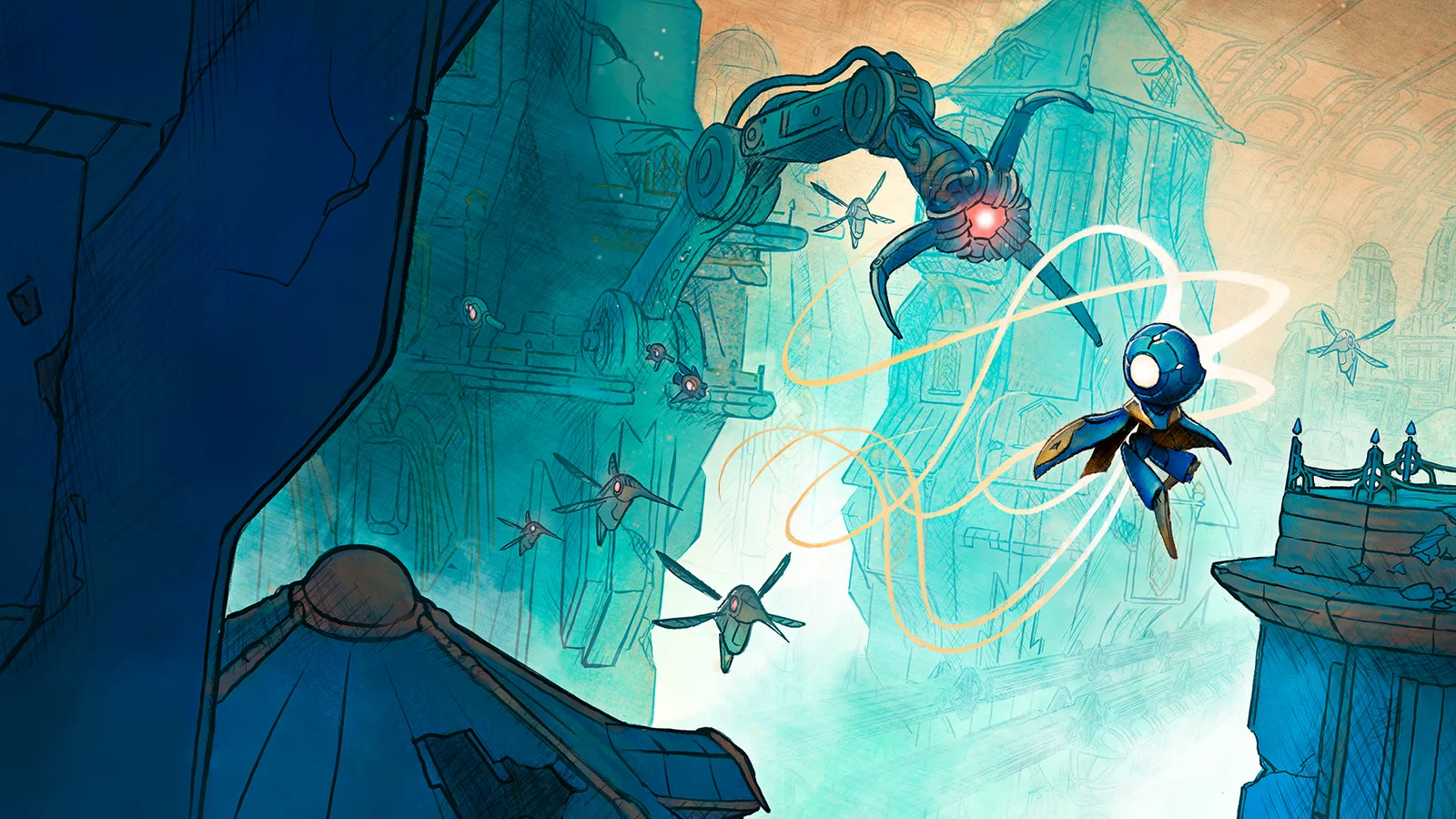
If I were to suggest a beautifully artistic game from a small French studio about grief, connection, and the end of all things, you might immediately think of 2025’s critical darling Clair Obscur: Expedition 33. But no, it’s a cold wet January afternoon in 2026, and as I write, Expedition 33, along with its colossal haul of awards, is but a sweet memory. I’m talking about MIO: Memories in orbit, Douze Dixièmes and Focus Entertainment’s new offering, which dropped yesterday.
The French, it seems, have done it again.
This meloncholic and meticulous Metroidvania, part puzzle platformer, and part action adventure, places you in the center of the action as MIO, a plucky but frail android with a shock of electric hair, exploring and navigating the perils of a vast technological ark that teeters on the brink of extinction.
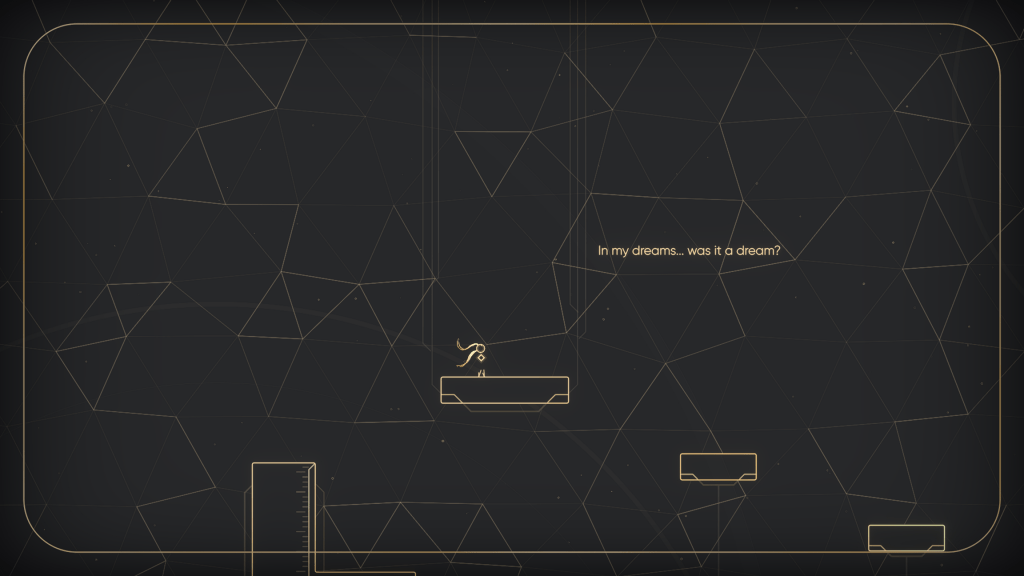
MIO begins life by literally falling into existence in the game’s opening moments. Here, in this initial existential plane, we learn how to fall, jump, double jump, and navigate platforms as well as eavesdrop on some of MIO’s thoughts on death, loss, and crushing separation in the moment of birth.
Eventually MIO is brought to full consciousness, and sets out to explore the Vessel, an enormous technological ark overgrown with a mysterious and deadly plant-like growth, and machines that have gone rogue. As MIO, you must uncover the secrets of the Vessel, restore its memories, enhance your frankly puny starting abilities, and try to save the ship from oblivion.
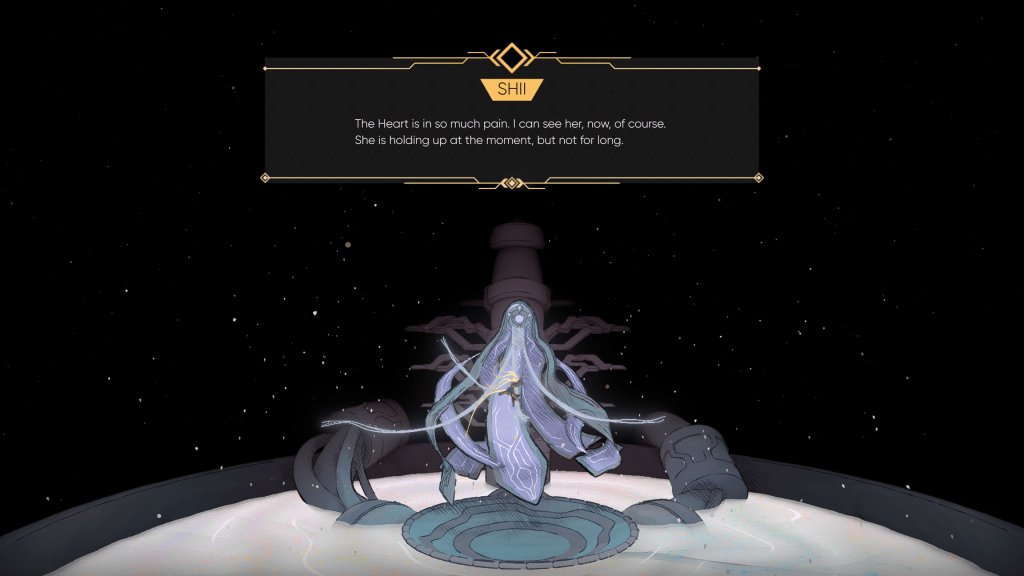
Among the Vessel’s inhabitants (dead and deranged bots aside) are Pearls — the ship’s robotic caretakers who are themselves conduits to consciousness. By restoring each caretaker, MIO assists in bringing the dead ship back to life. Of course to do that you must navigate a series of different biomes, face off against a number of enemies big and small, and solve a series of puzzles to progress deeper into the Vessel.

The yellow tendrils of hair-like circuitry that float from the top of MIO’s head can be used like arms to open doors, interact with other androids, or even slash at enemies. Controls are the simple but fluid stock of the Metroidvania genre. Jump, slash, and pogo-strike your way through levels and enemies to gain nacre, in-game currency you can use to restore your health, purchase upgrades, and save the game at special nacre basins scattered throughout the map.
Although favorable and apt comparisons will surely be made, MIO is not as unforgiving as 2025’s Hollow Knight: Silksong. For example, lose your nacre to an enemy and it’s automatically transferred to a Pearl, a thoughtful mechanic that allows all effort to have some meaning, however small. However that does mean that once your nacre is lost, you can’t run back to pick it up.
Also, although some of the more punishing boss battles may require several/many attempts to beat MIO: Memories in Orbit isn’t a sweaty button-mashing fest for the most part, with exploration and narrative beats filling out the spaces between bigger boss fights. Combat enthusiasts will either love or hate that there are really only 3 combat options — pogo, grapple, and dodge — in MIO’s repertoire. Mods (more on those in a moment) can be used to enhance your combat approach, but on the flip side they can be expensive to purchase. This makes the prospect of grinding for nacre, especially in the game’s early stages, a real possibility. Also, as is the format in games of the Metroidvania genre, boss fight runbacks are definitely going to be on the cards.
As you progress you can use the environment to assist in a number of cool ways. For example in an early level, huge sloping ice sheets can be used to build a ‘skating’ momentum to help you reach distant ledges. There is a sense of wild joy in swooshing down an icy slope, arcing through the air, bouncing off a platform, and sliding to your destination in the next room in the blink of an eye. Try it. It doesn’t disappoint. Later, MIO will be able to use special floating nodes scattered throughout the map to grapple onto in order to reach higher platforms, and even scurry along the ceiling!
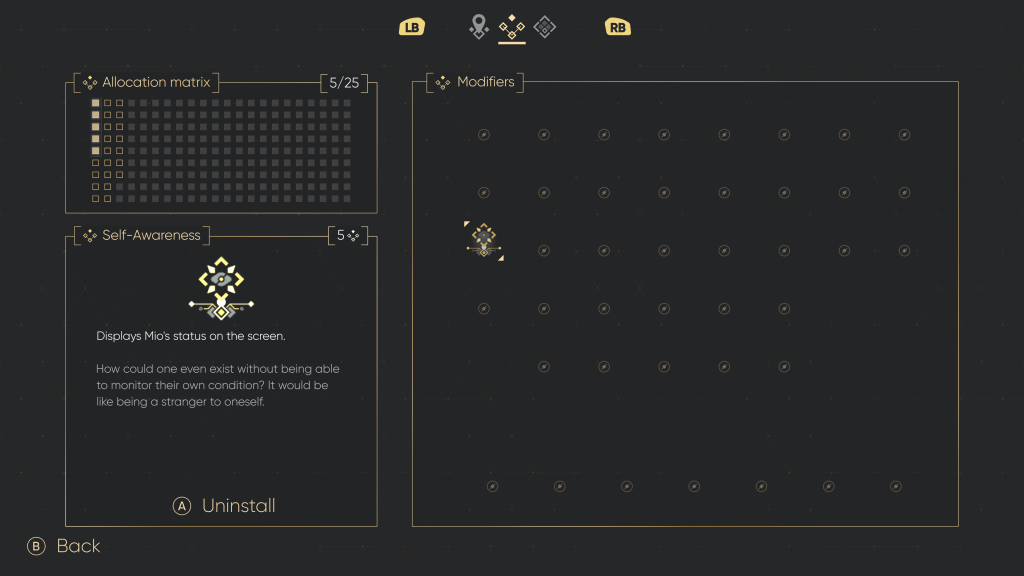
However, real progress is made with modifications. Initially MIO starts with just 25 slots, several of which are already taken up with a free starting mod — your own health meter. As you progress you’ll discover new modifications (view an enemy’s health meter, gain an extra protective overlay, repair yourself for free, gain a specific damage boost, gain more nacre for kills and so on) that will help you travel further and level up your own abilities along the way. Until you can unlock more slots, choosing which mod to make use of, and which to forgo, can be a tricky balancing act.
The game’s labyrinthine map is crafted with almost surgical precision, with all roads leading back to a central Spine. There were moments — especially in the earlier sections of the game — where I felt disappointed and frustrated not to be able to reach a particular platform or open a specific door, only to discover later that these sections were specifically crafted to be discoverable in time. You’ll find yourself blinking in surprise to discover how a lengthy journey of discovery links back to the game’s Spine in a manner that feels deeply rewarding.
Memories in Orbit is not just beautifully designed. It’s beautiful to look at too. Every room looks as if it’s been painstakingly colored and shaded by hand. The use of color is emotional too, with your environment literally losing vibrancy as you are injured or suffer a similar setback, or bursting into a rosy blush when you restore a Pearl to health. In fact, MIO: Memories in Orbit works hard to switch things up visually all the time. Whether you are starting in a blocky 2D black-and-white world, skimming over snow and ice-capped slopes, navigating blue-tinged industrial complexes, or trying to stay out of swampy plant-infested waters, there is always something magnificent to draw the eye.
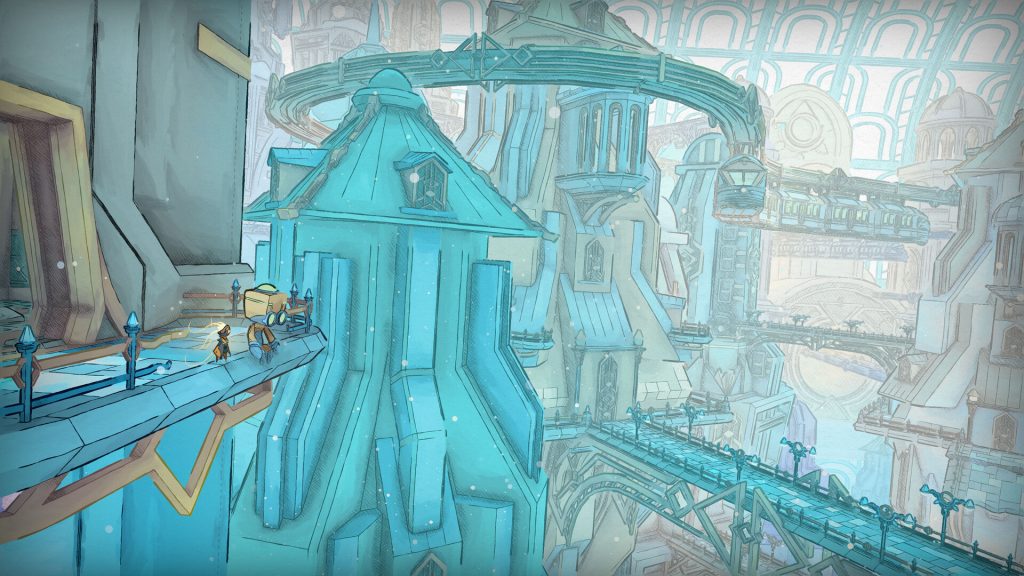
This is a confidently mapped Metroidvania in the grand tradition that doesn’t try to shoe-horn in the game’s other elements of action adventure and puzzle-solving. Rather, these elements blend seamlessly so that MIO’s journey feels like the voyage of a tiny surgeon gliding through a vast body, connected by arteries, lungs, and a nervous system in need of reconnecting to a greater whole. The individual Pearls that you restore — sight, breath, heart etc. — only add to the feeling of your environment as a living entity.
MIO may have started life in the empty void, but your mission, one of connection, affinity, and remembering who you are makes the journey worthwhile.
Release Date: January 20, 2025. Genre: Metroidvania/Platform/Adventure. Developer: Douze Dixiemes. Publisher: Focus Entertainment. Platforms: Xbox Series X/S, PlayStation 5, Windows, Nintendo Switch, Nintendo Switch 2.
MIO: Memories in Orbit: A spectacular polished experience that will appeal to fans of the Metroidvania genre for its meticulous structure and challenging boss fights, to platforming and puzzle fans for generous and clever gameplay, and to gamers everywhere who enjoy the thrill of technical perfection with a surprisingly heartfelt core. – jgriffin
