For a tale of revenge there’s something surprisingly joyful about Ghost of Yōtei.
Sucker Punch Productions’ stand-alone sequel to 2020’s Ghost of Tsushima works hard to preserve what worked in the original, while confidently expanding exploration, combat, and graphics in a number of bold, thrilling, and yes, even joyful ways. Let’s dive in.
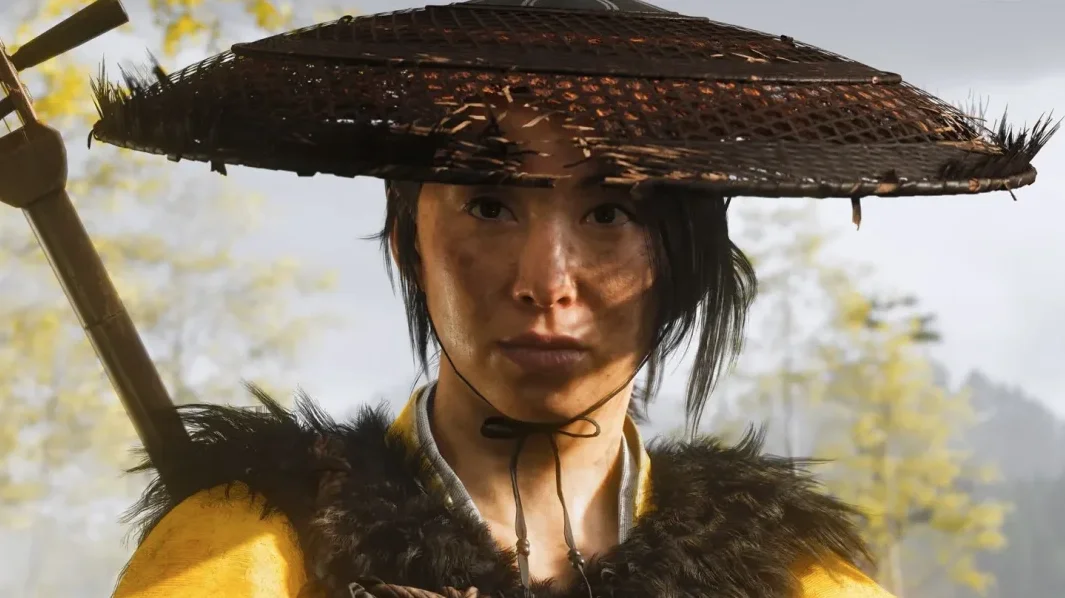
Set in 1603 in Ezo, Japan, this open-world action adventure follows Atsu, a brave onna-musha (female warrior) seeking vengeance against the “Yōtei Six” for slaughtering her family sixteen years prior. You play Atsu from a third person perspective, and your adventures involve varied elements of combat, stealth, and the open-world exploration of the beautifully realized Ezo as you hunt down and kill the individuals responsible for your family’s demise.
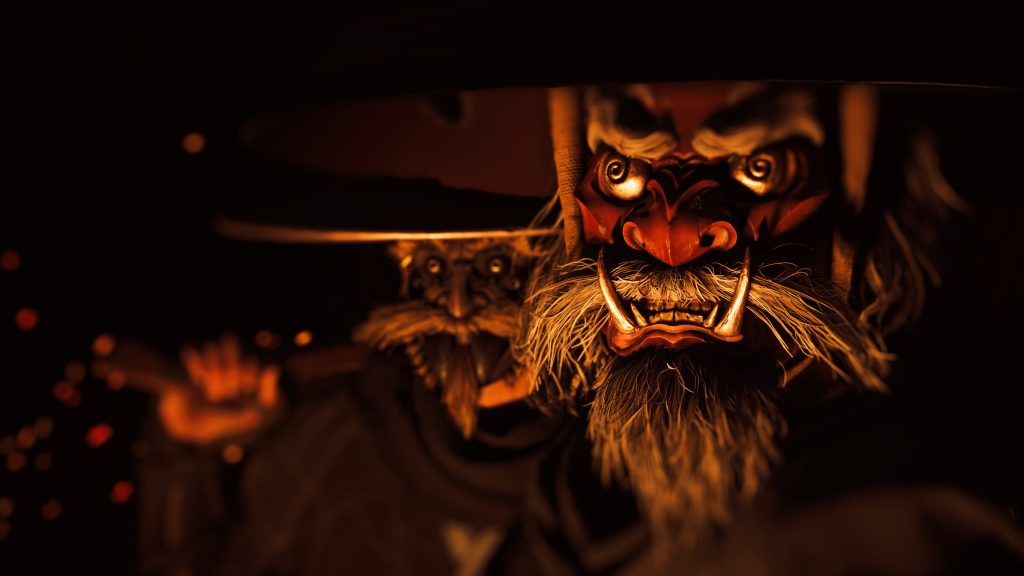
Ghost of Yōtei doesn’t try to hide its unabashed homage to Akira Kurosawa, the legendary Japanese director behind some of the most influential samurai films ever made (in addition to being a massive influence on the Film Noir genre of the 1940’s and 50’s in the US). When starting, we are given the choice to play the game in English, or in Japanese with subtitles, or in Black & White format. This authentic take from Sucker Punch — also recently seen in Hangar 13’s Mafia: The Old Country where players can choose a Sicilian language model with English subtitles — sets both the tone and setting, as well as player expectations, beautifully.
We learn that Atsu has been fighting in the war over the last decade, but can now finally return home as a skilled fighter, capable of exacting specific revenge against those who callously murdered her family. Ghost of Yōtei drops us into the action almost from the get-go, as we face off against the first of the Six mere minutes after choosing a difficulty level and starting the game.

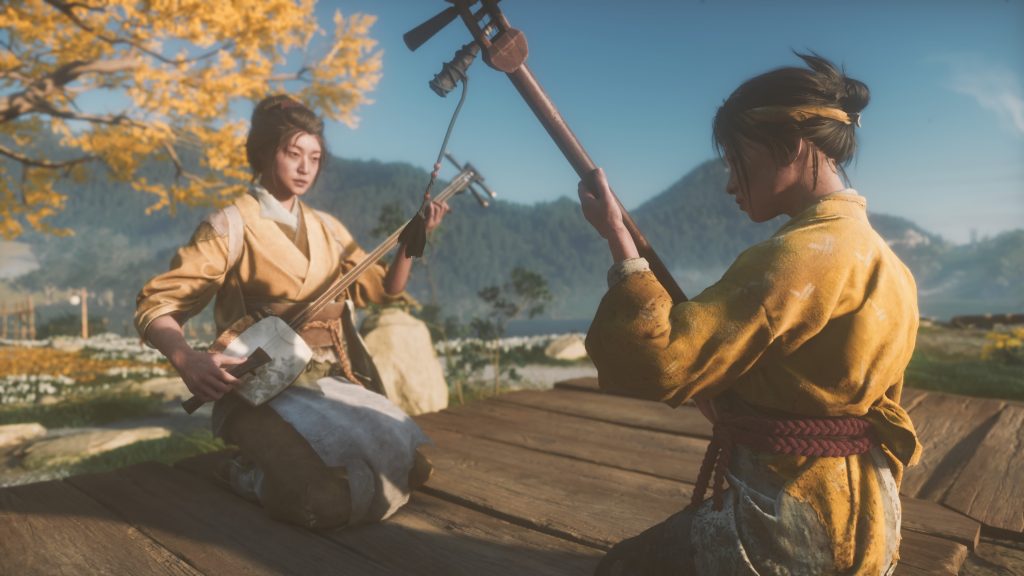
The narrative is stylishly handled, foregoing a brutal ‘revenge origin-story’ prologue for a quick flashback instead. As the game progresses, we flash back again to Atsu’s childhood, learning more about her family, her blacksmith father’s history with the Six, and the part Atsu naively thinks she played in his demise. These moments are well handled, and never feel like an exposition dump. In fact, at certain intervals we can even choose to explore a specific area by switching up perspectives between child and Adult Atsu. For example, by unlocking a memory, child Atsu may notice her brother hiding coins in a stash outside their farmhouse. When adult Atsu switches out of this “memory” she can go to where she recalled her brother’s coin hoard is stashed. In other instances, Atsu will “remember” how she learned to whistle, or play the shamisen, or gain other useful skills she will need to traverse the wild and dangerous world of Ezo.
The shamisen is more than just a musical instrument with which to charm companions by the fire in return for a hot meal. Players can make use of different tunes to pinpoint landmarks, collectibles, and character upgrades.
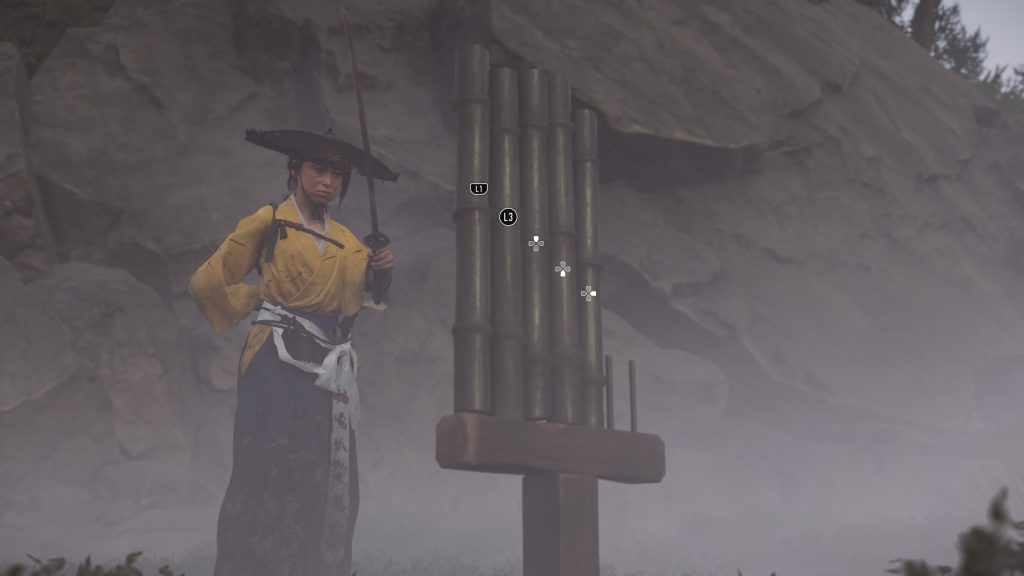
At other times, Atsu will encounter a mentor or companion who will train her in a specific combat move. Atsu may already feel like a skilled onna-musha, but mentors like Hanbei will soon disabuse you of that notion. This particular one-armed bounty hunter is a former friend of Atsu’s father, and will teach you how to increase your left arm strength in order to dual-wield Katanas — an extremely useful upgrade for those willing to learn how to use the left side of their game controller to swipe cleanly though a series of bamboo logs. (You’ll feel both elated after your first clean swipe, and instantly more powerful with a Katana in both hands!)
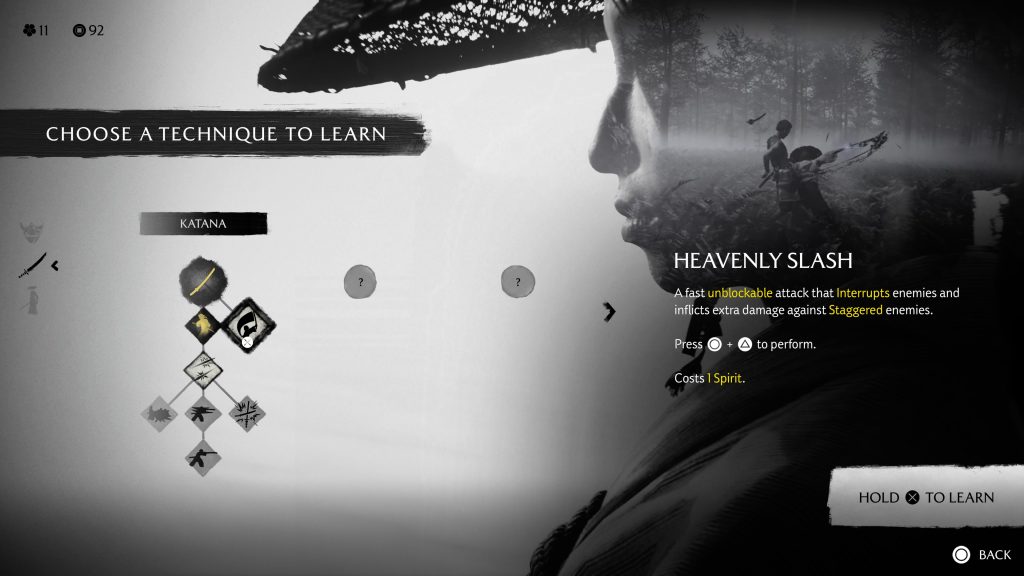
However, most skill tree building is handled at Altars — special locations scattered throughout the expansive map. When you find one, you can learn new techniques there, focusing on Melee, Revenge, and ethereal Onryō skills.
Combat in Ghost of Yōtei hones the fluid, cinematic duelling of Tsushima into a more dynamic dance of steel and strategy that make clashes with the enemy feel weighty and exhilarating. Enemies range from rugged ronin and cunning scouts to hulking bear-like warriors drawn from Ainu folklore (the game was was created with the help of Ainu scholars and consultants to ensure cultural sensitivity), each with distinct patterns that reward observation. Parry a spear thrust just right, and you’ll chain into a devastating counter. Atsu makes use not only of her Katanas, but a chained sickle, spear, and a weighty odachi blade. Variety truly is the spice of life in Ghost of Yōtei.
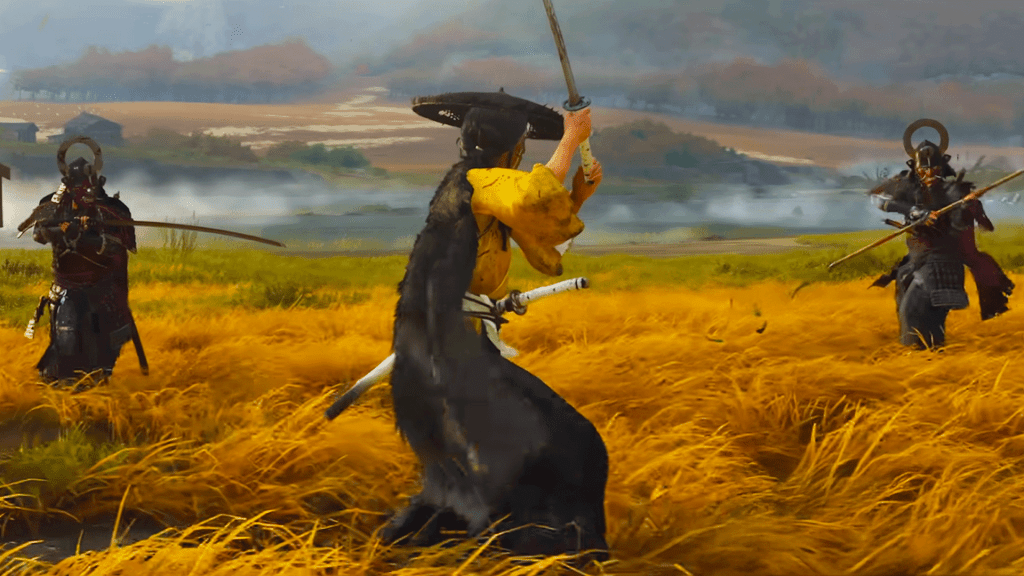
While stealth remains a core pillar, letting Atsu slink through snowy underbrush or scale frozen cliffs for ambushes, it’s in the open brawl encounters that the game really shines. So much so that you may find yourself gleefully throwing down at every knave who crosses your path. The aforementioned dual-wielded Katanas carve through groups of spear, bow and sword brandishing foe, while the new kusarigama chain-whip adds crowd-control flair, wrapping foes for pulls or trips, and disarming enemies with protective shields.
True to Sucker Punch’s player-friendly ethos, Ghost of Yōtei‘s death mechanics are merciful without being patronizing, ensuring frustration never snowballs into rage-quits. Upon respawning you’re dropped mere moments before the fatal blow, and often just a screen’s width from your aggressor, preserving momentum and letting you experiment with dodges or feints on the fly. This lack of ‘run back’ means no endless treks across tundras to try again. Even sprawling ambushes reset you within striking distance. It’s a subtle evolution from Tsushima‘s standoffs, making retries feel like natural learning loops rather than punishments. (We’re looking at you, Hollow Knight: Silksong!)
Atsu’s vitality is tied to a dual-layer system combining a physical health bar and a spirit meter, requiring careful resource management during combat. While Atsu is highly lethal, she is also fragile, forcing players to balance offensive aggression with tactical healing and defense. While Atsu’s health can be replenished by visiting one of many hot springs dotted around the map, her spirit meter is filled by defeating enemies, parrying incoming attacks, and using advanced combat techniques.
This dual-layer system can creates a tactical “risk vs reward” dilemma for the player, as going on the offensive helps build up spirit, but getting careless can quickly deplete Atsu’s finite health. Atsu must engage enemies aggressively to build up spirit reserves, which she can then spend on healing or special abilities.
Exploration rewards self-care in poetic ways, with hot springs emerging as serene oases in which to pause and reflect. Submerging Atsu not only restores her health but triggers meditative visions of her past, unlocking lore entries or minor buffs like temporary frost resistance. Foraged foods like fish or mushrooms grilled over campfires offer health and stats boosts, while drinking sake (within reason) will boost Atsu’s spirit. It’s a holistic loop: hunt, cook, soak, and reflect, blending survival sim elements with Tsushima‘s haiku moments to make downtime as restorative for the player as for Atsu.
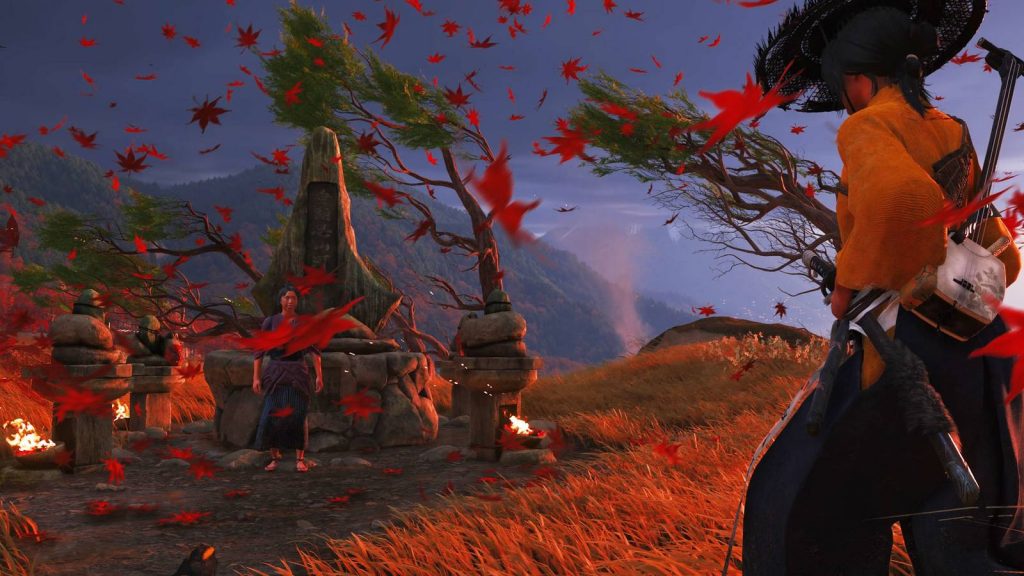
Ezo’s world bursts with striking beauty too. A vibrant yellow Ginkgo tree featuring prominently at the start of the game symbolizes Atsu’s strength through adversity. (It’s no coincidence that Atsu’s clothing is also yellow at the start of the game). Sloping meadows littered with techni-cloured wildflowers invite you to gallop your horse through them at speed, with swathes of white flowers accelerating your horse’s pace to new heights. Crimson maples, aurora-lit nights over volcanic hot springs, and mist-shrouded Ainu villages that feel alive with lantern glow and distant shamisen strains make Ezo a truly visual spectacle.
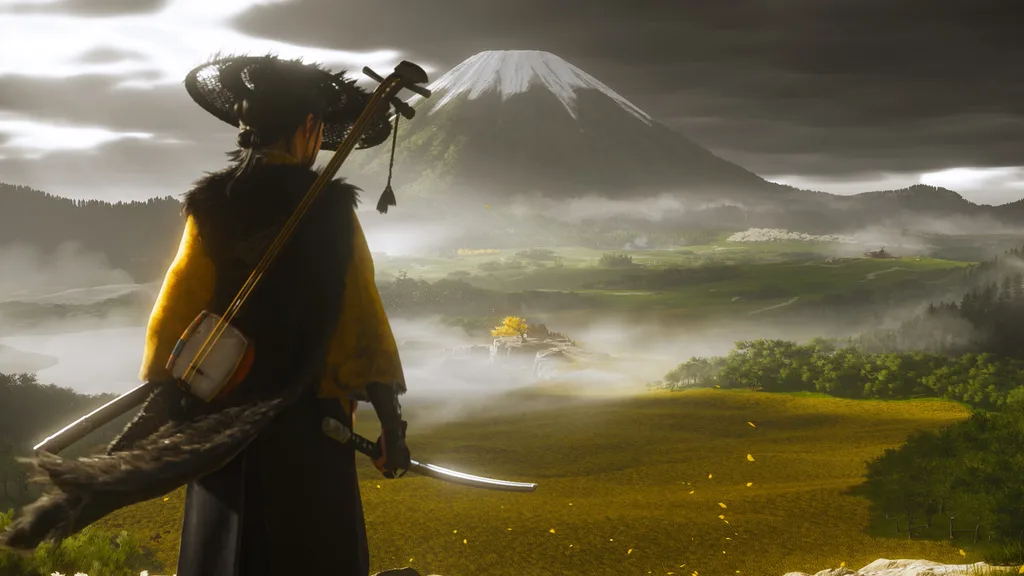
Navigation in Ghost of Yōtei feels intuitive yet immersive, with a beautifully hand-drawn map aiding exploration. Atsu can make use of a spyglass at higher elevations to locate and mark points of interest on the map including shrines, hot springs, bounties, Yōtei Six camps, collectible items and more. It’s a far cry from cluttered HUDs, encouraging organic discovery in Ezo’s vast, reactive terrain.
Ezo pulses with organic life too. From nomadic Ainu to spectral foxes leading you to hidden shrines, random encounters feel emergent rather than scripted. There is always something to do or see in Ezo. Stumble upon a beleaguered merchant fending off bandits and join the fray, or choose to antagonize the local militia if you’re spoiling for a fight. The game also incorporates a “Wolf Pack” of allies that you will meet and befriend over the course of the game who can come to your aid at specific moments.
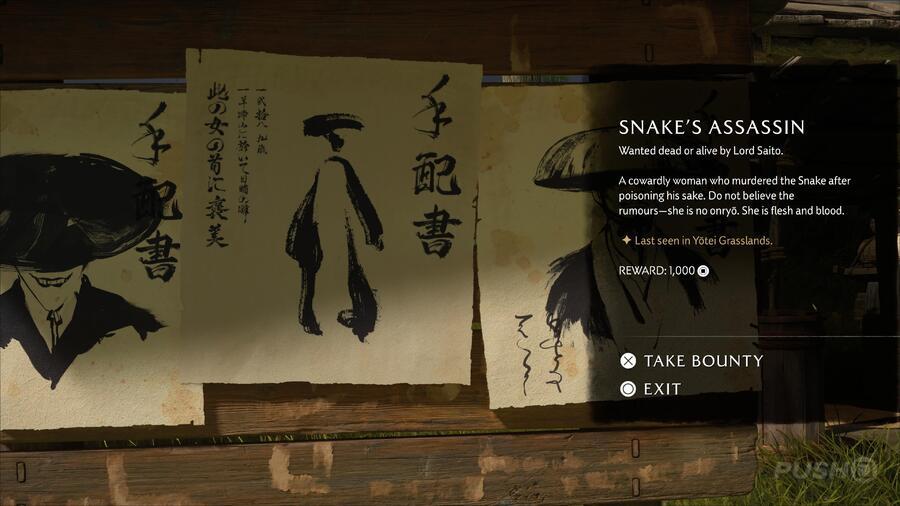
Bounties meanwhile are the economic engine in Ghost of Yōtei. Posters at outposts detail scurrilous murderers, thieves and more (you might even spot your own likeness or those of your friends among them), with hunts yielding fat purses. It’s a bustling ecosystem where side quests weave into the main revenge arc, making every detour feel purposeful and the world alive with choice.
No masterpiece is flawless, and Ghost of Yōtei stumbles in a few spots that temper its spectacularly joyful highs. The open world, while breathtaking, can feel bloated in its later hours, with repetitive bounty hunts padding playtime toward the 40-hour mark veering into tedium.
Combat, for all its poetry, occasionally falters on PS5’s haptic feedback. While parries land with satisfying thuds, group fights can devolve into chaotic button-mashing against fodder enemies, and lack Tsushima‘s tactical depth.
And while the narrative’s flashback structure is innovative, neatly avoiding story-dumping in the game’s earlier sections, the main story arc itself is straightforward to the point of simplicity. The game’s villains — the Yōtei Six, led by the cruel Lord Saito — don’t get much screen time, despite their intriguing initial introduction.
While by no means dealbreakers these minor gripes keep perfection just out of reach. In the end, Ghost of Yōtei carves its own place in Sucker Punch’s storied catalog, transforming a revenge saga into a meditation on legacy, loss, and the winds that carry us forward.
Genre: Action Adventure. Platforms: PlayStation 5. Studio: Sucker Punch Productions. Publisher: Sony Interactive Entertainment. Release Date: October 2, 2025.
Ghost of Yōtei: Ghost of Yōtei is a beautifully presented open world experience, bursting with joyful style, beauty, soul, nuance, and a generous gameplay spirit. A by-the-numbers revenge plot, coupled with a structure that refines rather than redefines the genre, leave this flawed but fierce entry in open-world gaming just a hair's breadth from perfection. – jgriffin