

Sony’s decision to end disc production in 2028 lands in the middle of the biggest consumer-rights fight gaming has ever had in Brussels. Whether that fight can actually stop the industry’s slide to all-digital is a much messier question.
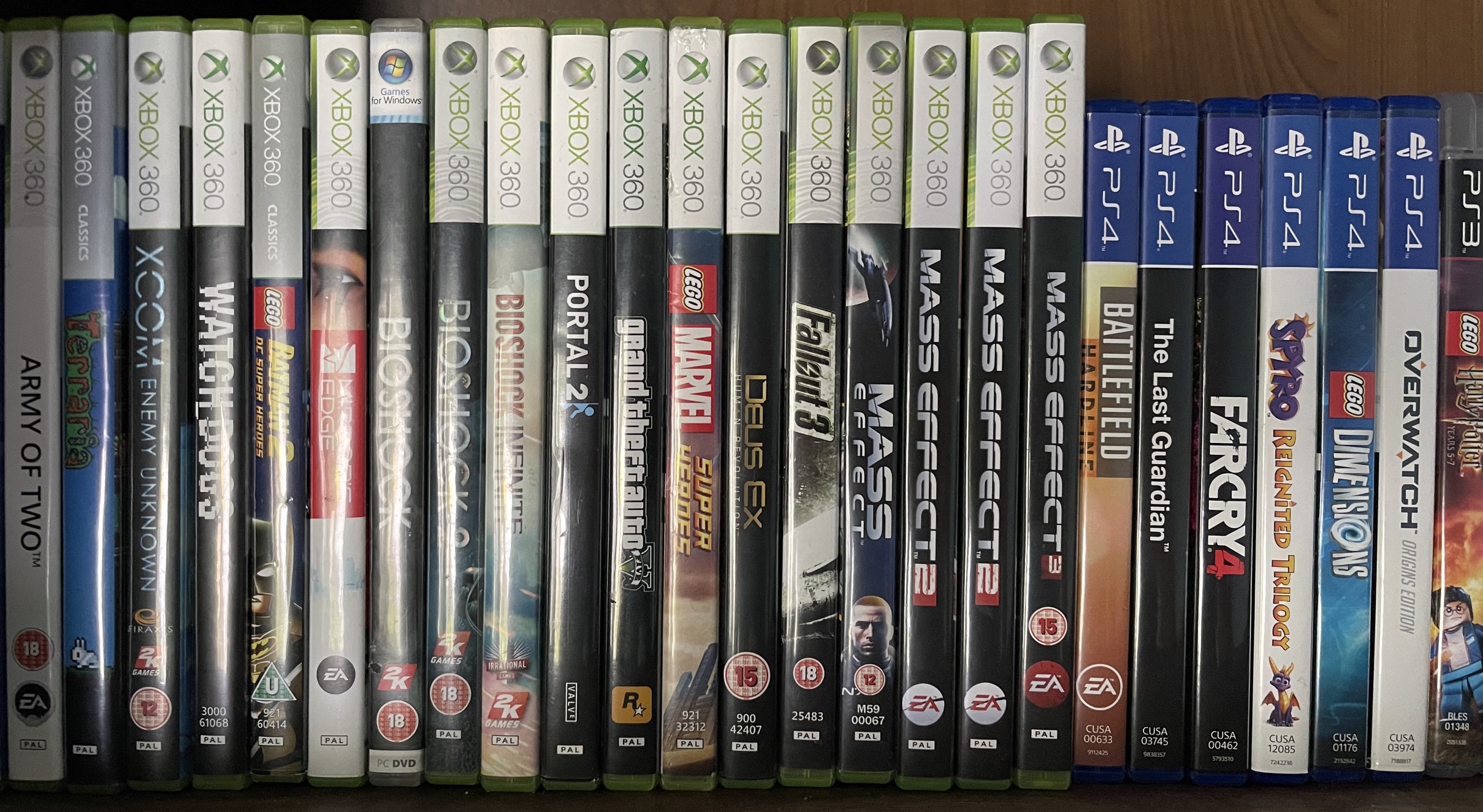
On July 1, 2026, Sony confirmed what the industry had been sliding toward for years. Starting in January 2028, no new PlayStation game will be manufactured on disc. Every new release, including Sony’s own and third party titles, will be sold only as a digital download, whether bought through the PlayStation Store or “at retailers,” in whatever box-with-a-code format that ends up meaning. Games that release before the cutoff keep their physical editions.
“This is a natural direction for Sony Interactive Entertainment to adapt to consumer trends as the general preference for digital media significantly outpaces physical discs,” said Sony in a statement. “This transition will enable us to align more closely with how most of our community prefers to access and play games today.”
Everything after doesn’t.
Sony framed it as an unremarkable extension of a trend rather than a controversial policy call. Consumer habits have shifted toward digital, and the company is merely following its customers. That’s true, as far as it goes. But the timing is not neutral. Sony is completing its exit from physical media at the exact moment the European Union is in the middle of deciding, through a citizens’ petition, a stalled lawsuit, and a not-yet-drafted law, whether “buying” a digital game should ever have meant what publishers say it means.

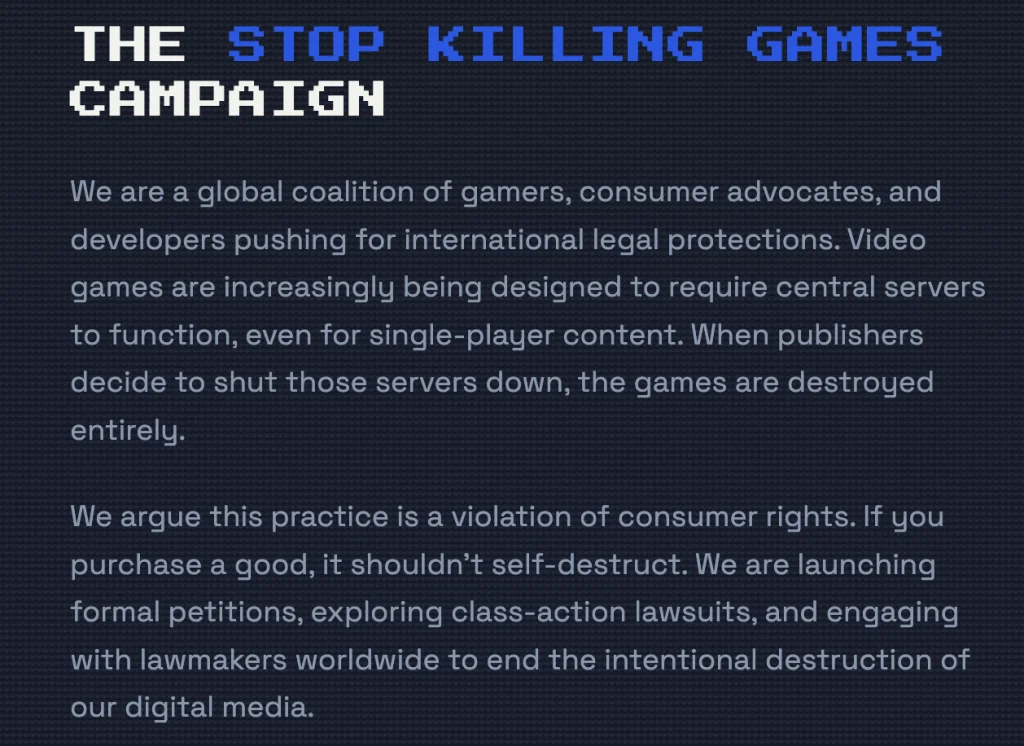
The clearest collision is a campaign called Stop Killing Games. It began after Ubisoft shut down the always-online racer The Crew in 2024, permanently erasing a decade-old purchase from customers’ libraries with no refund. The campaign turned that anger into a formal European Citizens’ Initiative via a mechanism that forces the European Commission to respond if a petition clears one million verified EU signatures. Stop Killing Games cleared it easily: 1,294,188 verified signatures, submitted on January 26, 2026, asking the Commission to require publishers to leave discontinued games in a playable state.
The Commission’s answer, delivered June 16, 2026, was no. It concluded it cannot currently impose a legal obligation forcing publishers to keep games playable after they stop being sold, citing copyright and intellectual-property concerns as the central obstacle. What it offered instead was a softer pledge to convene publishers and consumer groups by the end of 2026 to write a voluntary industry code of conduct on how games should be wound down, plus a broader effort to make sure consumers understand the rights they already have.
Predictably, that landed with campaigners as a non-answer. Within hours, Stop Killing Games said it would pursue the fight through a different, more durable channel. That channel is the EU’s forthcoming Digital Fairness Act. Unlike a citizens’ initiative, which the Commission can simply decline, a live legislative bill can be amended in Parliament. By late June 2026, 45 members of the European Parliament had already signed onto a call for legislative action on game preservation.
The Digital Fairness Act is the vehicle everyone in this fight is now watching. It’s an EU-wide consumer-protection bill aimed at dark patterns, manipulative app design, and unfair digital contract terms, but not originally written with game shutdowns in mind. The Commission is expected to formally table it sometime in the final quarter of 2026, after more than two years of fitness checks, consultations, and a public comment period that was reportedly flooded with responses from gamers demanding preservation rules.
Here’s the catch that any honest headline has to sit with: the DFA does not yet exist as a legal text. As of mid-2026 it’s still a planning document. Even under an optimistic timeline, a Q4 2026 proposal would need to survive negotiation between Parliament and the Council of the EU (a process that typically runs a year or more) before it becomes binding law. Actual enforcement dates would likely trail further behind that timeline. Some legal trackers don’t expect the rules to bite in practice until 2028 to 2030. That means the most plausible legislative rescue for physical-style game ownership arrives, at the earliest, around the same time Sony’s disc cutoff does, and quite possibly well after it.
But while Brussels drafts a possible future law, France is already testing whether existing law applies today. In March 2026, the consumer group UFC-Que Choisir sued Ubisoft over The Crew‘s shutdown, arguing the company misled buyers by treating the purchase as a revocable license rather than a good the customer actually owned, and that its terms of service amounted to an abusive contract clause. Ubisoft’s defense leans on the argument that games are ongoing services, not permanent products, and that nothing in the industry guarantees eternal support.
This isn’t UFC-Que Choisir’s first swing at this exact question. The same group sued Valve back in 2019 over whether Steam buyers could resell individual game licenses. They even initially won at trial. However Valve appealed, and France’s supreme civil court ultimately sided with them, denying the resale right. That historical nuggest matters for anyone (myself included) tempted to write a more optimistic headline. French consumer law has already tried to force game resale rights into existence once, and the industry won on appeal. The Ubisoft case is a different legal theory (deceptive practices and contract fairness, not resale) but the precedent is a stark reminder that consumer wins at the trial-court level in this space have a track record of getting reversed.
Underneath all of this sits a genuinely unresolved legal question. Does buying a digital game create anything like ownership at all? EU law does actually recognize a doctrine of “digital exhaustion.” It’s the idea, from a landmark software case (2012’s CJEU ruling in UsedSoft v. Oracle) that certain downloaded licenses can be resold once sold. But the ruling applied to business software. Games continue to occupy that awkward middle ground between “software” and “copyrighted audiovisual work,” at least in the eyes of the law, and publishers have consistently argued the resale logic that applies to a spreadsheet program doesn’t apply to a licensed, DRM-wrapped, frequently server-dependent video game. Nobody has definitively settled that in a way that survives appeal. Yet.
Industry groups, for their part, aren’t hiding their objection to any of this. A pan-European trade association representing publishers has told EU regulators that requiring things like offline patches or private-server support would be too costly for developers, and would expose companies to new legal liabilities they don’t currently carry. That’s a real trade-off, not just a talking point, and it’s part of why the Commission cited legal complexity (not just industry lobbying) as its reason for declining to legislate outright.
So, could European law actually save it?
The honest answer is probably not the way we might want it to. There’s no EU rule today (and likely none coming before Sony’s disc production actually stops) that will require Sony, Ubisoft, or anyone else to keep selling something durable and resellable. What exists instead is a live, unfinished fight on three fronts at once: a rejected petition that refuses to die, a French lawsuit testing whether existing consumer law already covers this, and a consumer-protection bill still being drafted that campaigners are trying to bend towards game preservation before it’s too late to matter.
What’s realistic is narrower and less satisfying. Some combination of a voluntary industry code of conduct, clearer point-of-sale disclosure about what a “purchase” actually buys you, and continued national court cases chipping away at the license-versus-ownership question one jurisdiction at a time.
None of that puts a physical disc back in the box.
It might, eventually though, force publishers to admit that what they’re selling is a lease, not a purchase, and for how long.
