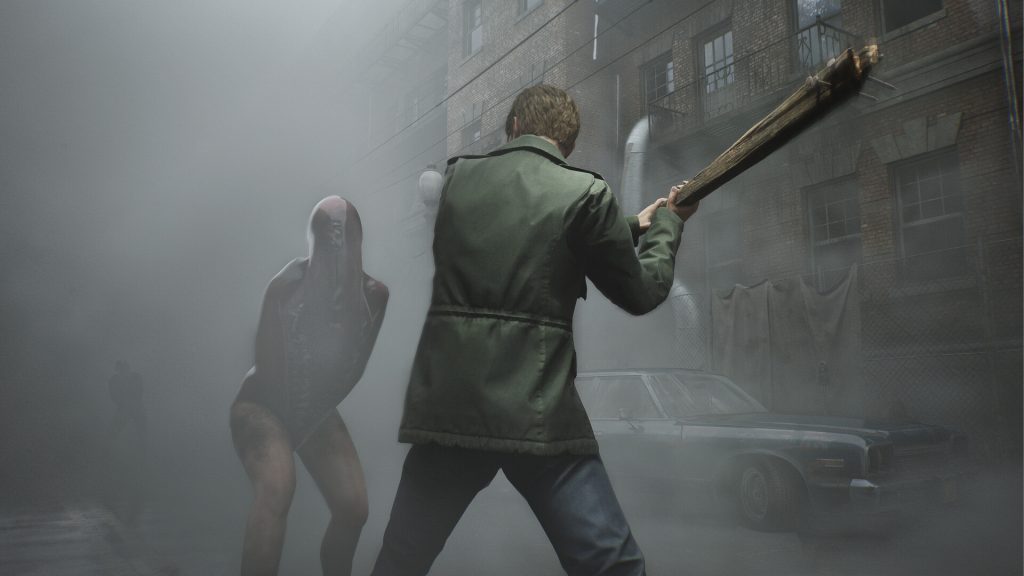
There was moment in the 2024 Silent Hill 2 remake when I realized that the team behind the game genuinely understood what made the original so unsettling. It wasn’t just the fog, or the the monsters in it, or the endless, claustrophobic corridors, but a suffocating sense that the horror was always personal, always pointed inward, and it was ultimately unescapable.
Bloober Team, the Krakow-based studio behind the project, founded on the back of games like Layers of Fear and The Medium, earned widespread acclaim for that remake, picking up Game of the Year at the Horror Game Awards and Best Game of 2024 from IGN Japan. In fact, Silent Hill 2 surpassed one million sales in its launch week alone, eventually exceeding 2.5 million units sold in its first year.
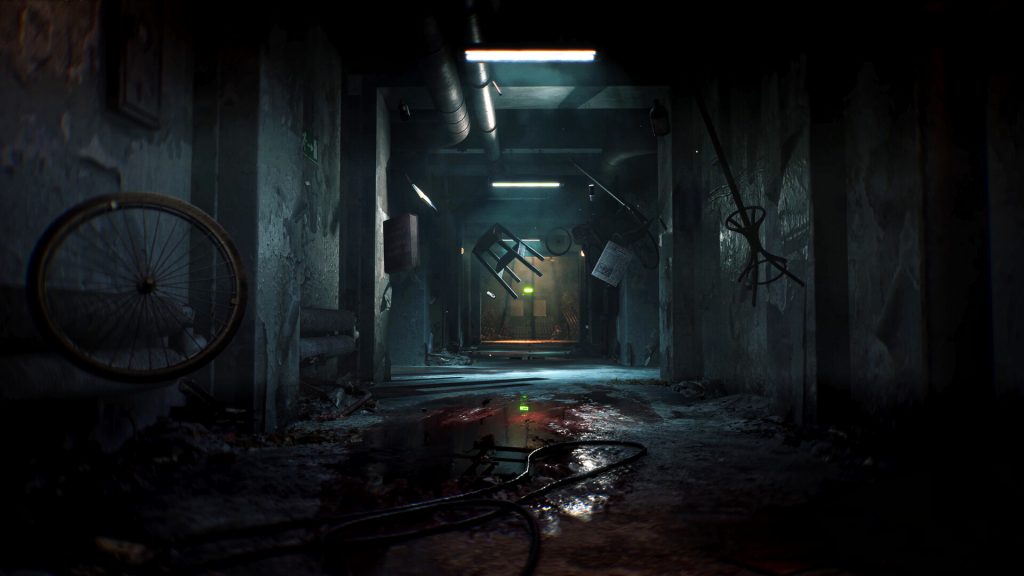
But equally as impressive was what came next. Rather than retreat into the comfort of another remake or licensed property, Bloober followed up with something entirely their own. Cronos: The New Dawn, a science fiction survival horror game developed and published entirely by the studio, launched on September 5, 2025, proving the team could generate genuine dread without leaning on established nostalgia. It was a solid survival horror, with a decent sci-fi storyline, some elements of time travel, and even a little love story thrown in for good measure. Bloober was deliberately reticent to share some of the story’s major plot points pre-launch, meaning fans were genuinely surprised by the game’s shocking ending. By November 2025, Cronos had sold 500,000 copies and earned an 88% positive rating on Steam — strong numbers for a new horror IP from a mid-size studio.
Then came Summer Game Fest 2026, and Bloober didn’t show up quietly. The studio arrived with three significant announcements in rapid succession, each pulling the studio’s ambitions in a boldly different direction. There’s a prequel horror multiplayer set in the aftermath of World War I, a psychological thriller transplanted into the Star Trek universe, and a story expansion for Cronos that flips the base game’s entire design philosophy on its head. For a studio that has spent years quietly building one of the most consistent horror catalogues in the business, this felt less like a reveal slate and more a statement of intent.
Whatever comes next, Bloober Team has earned the right to be taken seriously as one of the defining voices in horror gaming. Let’s take a deeper look at what’s coming next.
SAW: Genesis
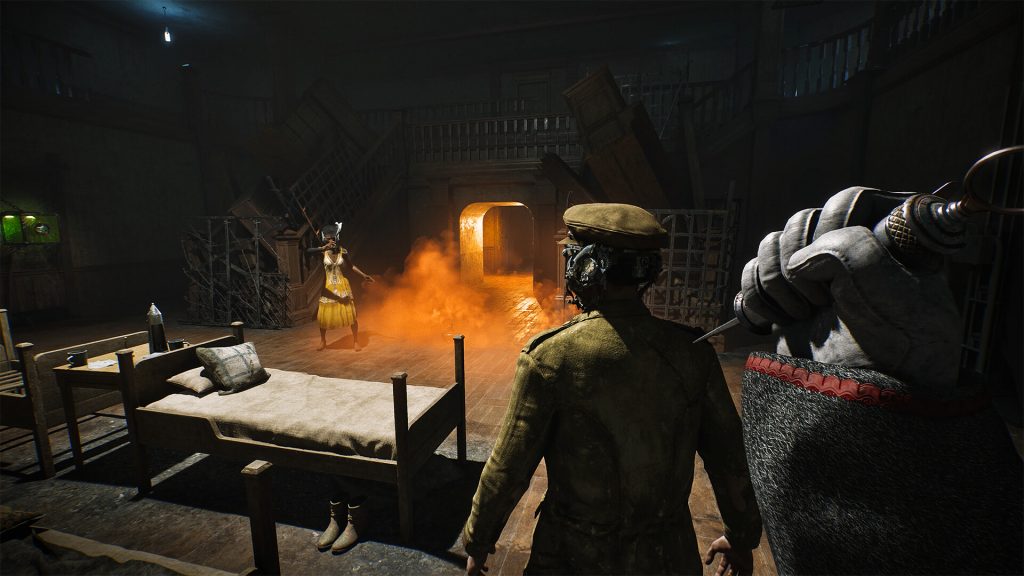
The announcement of SAW: Genesis was a theatrical (and somewhat hilarious) affair. At Summer Game Fest, Billy the Puppet wheeled out on stage to deliver the news about the future of the franchise right before the curtain dropped on one of the more unexpected reveals of the show. Lionsgate, in collaboration with Bloober Team and its co-development label Broken Mirror Games and Anshar Studios, officially unveiled SAW: Genesis, an asymmetrical multiplayer horror game featuring a storyline that precedes the events of the iconic SAW films.
The game is not, as many might have assumed, another single-player experience in the vein of the 2009 SAW game. SAW: Genesis is instead a 3v1 asymmetrical multiplayer horror game that puts the studio in direct competition with Dead by Daylight, the genre’s dominant title, with a Steam Early Access launch targeting fall 2026.
Set in the grim, shell-shocked aftermath of World War I, the game explores the origins of the Jigsaw philosophy, going back a full century before the events of the films. The central antagonist is not John Kramer but a figure known simply as the Judge. The post-WWI setting is critical to the Judge’s perspective, as his time in battle shaped his belief in the power of pain and sacrifice to set humanity on the right course. Genesis is set in a period of profound social disillusionment and moral ambiguity, providing a rich historical backdrop for the Judge’s twisted sense of justice. In the film canon, Jigsaw himself views the Judge not as a monster but as a “prophet” who originated the idea of locking victims into a path of redemption through pain.
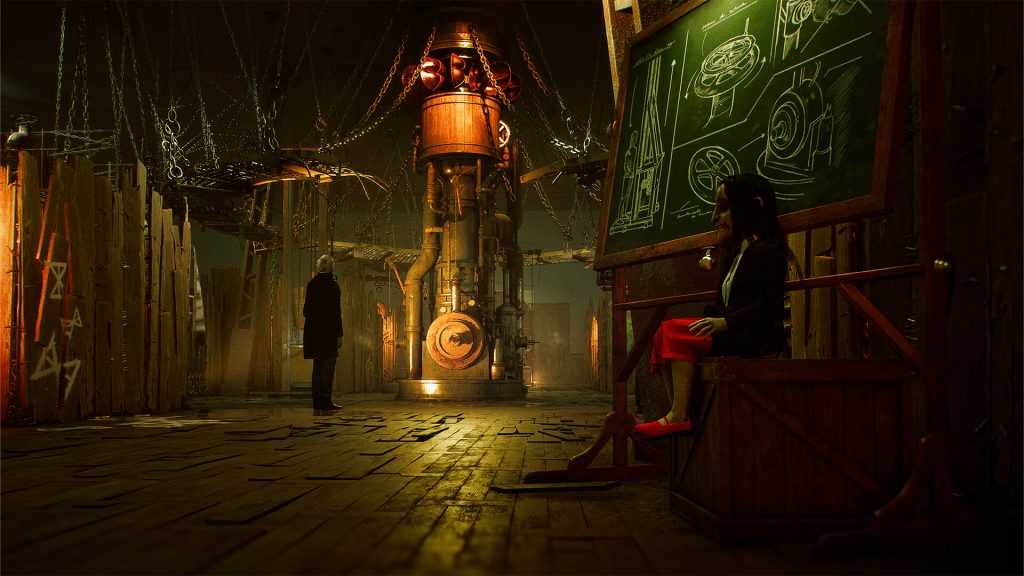
Mechanically, SAW: Genesis diverges from the Dead by Daylight template in meaningful ways. Unlike other asymmetrical multiplayer games, the Judge is physically vulnerable and cannot overpower the Accused through sheer force alone. Instead, the Judge controls the game from the shadows by using secret tunnels and noise detection, hallucinogenic gas, and paralyzing toxins, and an accomplice that can be summoned to drag the Accused into Rehabilitation Traps.
The three players on the other side of the equation have their own challenges to contend with. True to the films, survival requires permanent sacrifice. Injure your arm and it becomes harder to complete puzzles and fight back. Injure a leg meanwhile, and you’ll move more slowly, becoming easier to corner. Survival is possible, but you may not survive intact.
“Multiplayer in the SAW universe is a natural evolution of its core theme — moral choices — now amplified in a shared, unpredictable setting,”
Matches take place on procedurally generated maps to maximize replayability, and the game is planned to launch into Early Access with all core mechanics and initial content, including two locations, two Judges, and four Accused character options.
Bloober Team CEO Piotr Babieno has spoken about why multiplayer felt like a natural fit for the SAW universe. “Multiplayer in the SAW universe is a natural evolution of its core theme — moral choices — now amplified in a shared, unpredictable setting,” Babieno said. “With this ambitious game, psychological tension is driven by player interaction and consequence.”
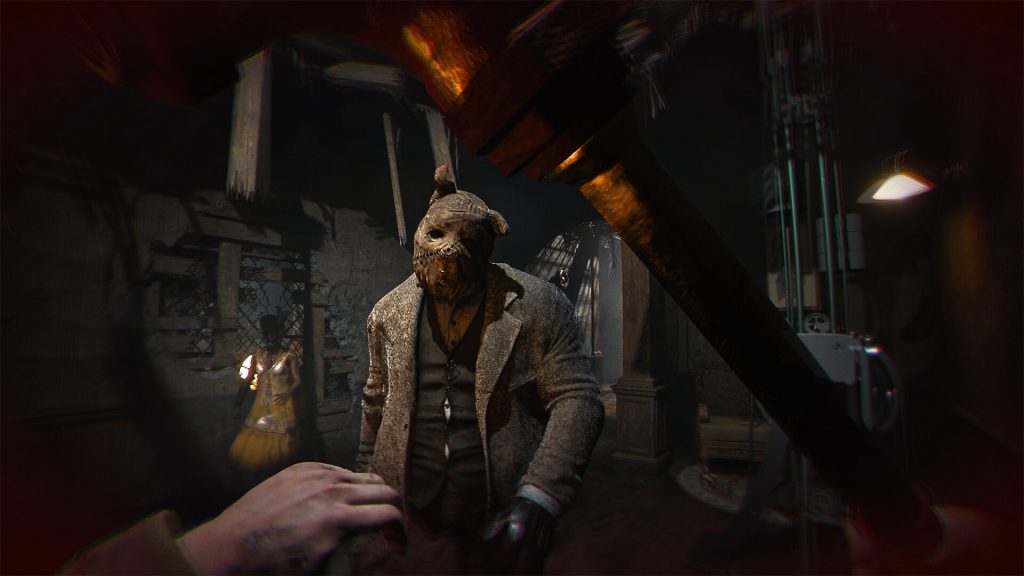
The studio is not developing this one entirely in-house. Building on an existing relationship with Lionsgate that goes back to the Blair Witch video game, Bloober is again partnering with the studio while leveraging its own expertise in crafting immersive horror experiences. Broken Mirror Games and Anshar Studios handle development, with Bloober serving as publisher. Closed alpha sign-ups are now open via Steam, ahead of the fall 2026 Early Access window.
Whether the game can carve out sustainable community against Dead by Daylight’s decade of entrenchment is an open question, but the franchise name carries genuine weight, and the design choices (particularly the procedural maps and the Judge’s shadow-based control style) suggest the team that has thought carefully about what makes this IP distinct from generic genre entries.
Star Trek: Shadow Frontier
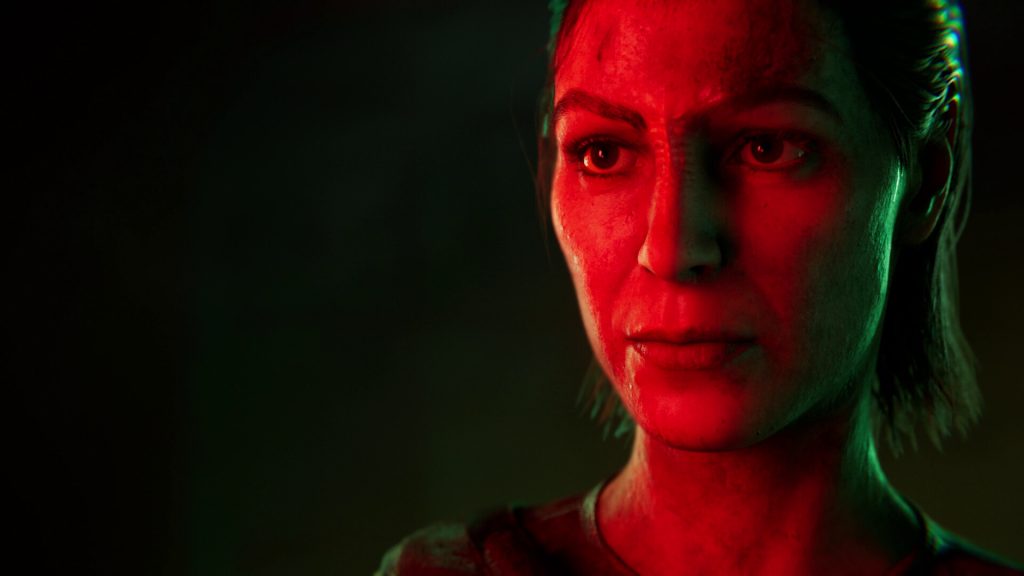
The second announcement came at IGN Live, and it landed as something close to a genuine surprise. Bloober Team and Paramount Games Studio unveiled Star Trek: Shadow Frontier, a psychological horror launching in 2027 on PlayStation 5, Xbox Series X/S, and PC. The Star Trek franchise has been adapted into games many times across its six-decade history, but never like this.
Players take control of Ro Laren, the lone wolf Bajoran officer from Star Trek: The Next Generation and Picard, once again played by Michelle Forbes. She is sent on a rescue mission to a planet that has been taken over by some kind of alien entity, but the mission quickly seems to pull her deeper into a corrupted labyrinth where memories are distorted and reality begins to unravel.
The choice of Ro Laren as the protagonist is an interesting one, and likely a deliberate fit for Bloober’s particular strengths. Ro is a Bajoran who served on the Enterprise D under Jean-Luc Picard before defecting to the Maquis. After serving time in prison, she returned to Starfleet and eventually served on Deep Space Nine as head of security (in the Star Trek novels at least — no offence to Major Kira!), with her last appearance in the television canon being in Picard, where she met her death. Ro is a character already defined by trauma, complicated loyalties, and a difficult past. It’s precisely the kind of psychological raw material Bloober has built its reputation on.
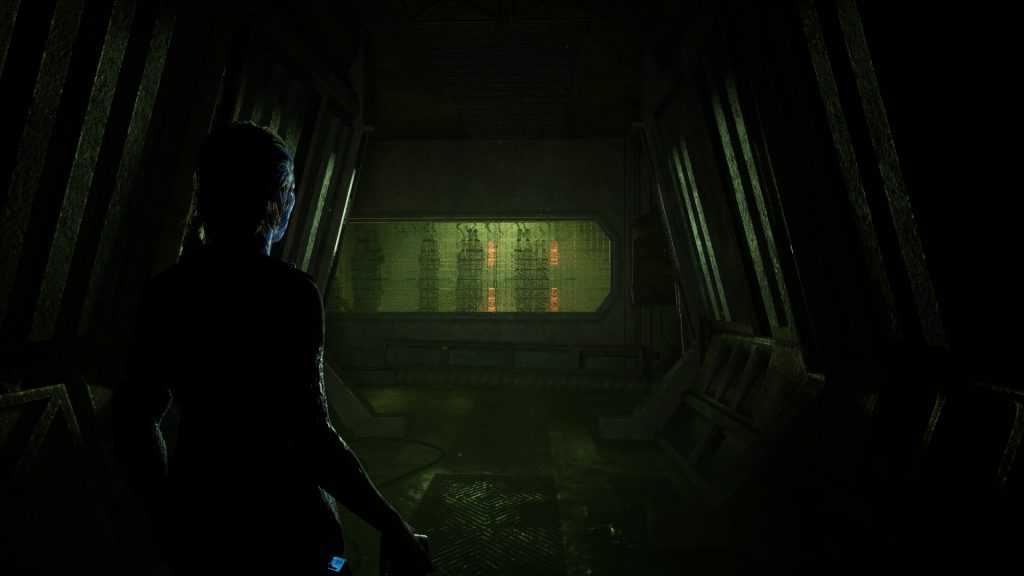
Bloober’s Michał Gembicki teased that the game will involve “a lot of dealing with the skeletons in her closet and exploring the consequences she made in the past,” while also aiming to make the character compelling even for players who arrive knowing nothing about her.
After crash-landing on the planet after responding to a distress call, Ro finds herself in what amounts to a spaceship graveyard, where the landscape is populated by survivors, twisted creatures, and an alien intelligence that threatens both her body and her mind. The planet’s hostile ecosystem constantly threatens Ro’s life, attempting to consume her consciousness and causing disturbing visions, while the local environment has been weaponized, forcing players to constantly choose between open combat and stealth.
In terms of gameplay, the game blends exploration, puzzles, combat, and cinematic sequences, and Ro will be able to use both a tricorder and a phaser to analyse her surroundings, solve problems, and deal with enemies. It is being positioned explicitly as a mature, story-driven third-person action adventure rather than a pure horror game, though Bloober’s atmospheric fingerprints are clearly visible in everything shown so far.
“a new adventure set in a beloved universe, enriched with our own signature layer of dark, psychological thriller.”
Paramount Games Studio described the project as a way to honour Star Trek while also pushing the franchise into a different kind of experience. Bloober’s CEO Piotr Babieno, for his part, has spoken about the project with evident enthusiasm. He noted that many at the studio are lifelong Star Trek fans and that the team looks forward to “combining that passion with what we do best, horror,” describing it as “a new adventure set in a beloved universe, enriched with our own signature layer of dark, psychological thriller.”
The tonal balance will be the critical thing to watch as more is revealed. Star Trek has always been built on hope, curiosity, and ethical interrogation. The Steam description for Shadow Frontier frames the game as honouring those core values of curiosity and courage, while pushing into a “mature, psychological action-adventure” that ventures beyond the edge of charted space and beyond the limits of sanity. That sounds, in principle, like something the franchise can accommodate? After all, Star Trek has always had its darker episodes. However, the execution will need care. Ro Laren’s complicated history gives the writers plenty to work with, and Bloober’s track record with character-driven psychological horror is as good as anyone’s in the business.
Shadow Frontier does not yet have a precise release date but is targeting a 2027 launch.
Cronos: Lazarus
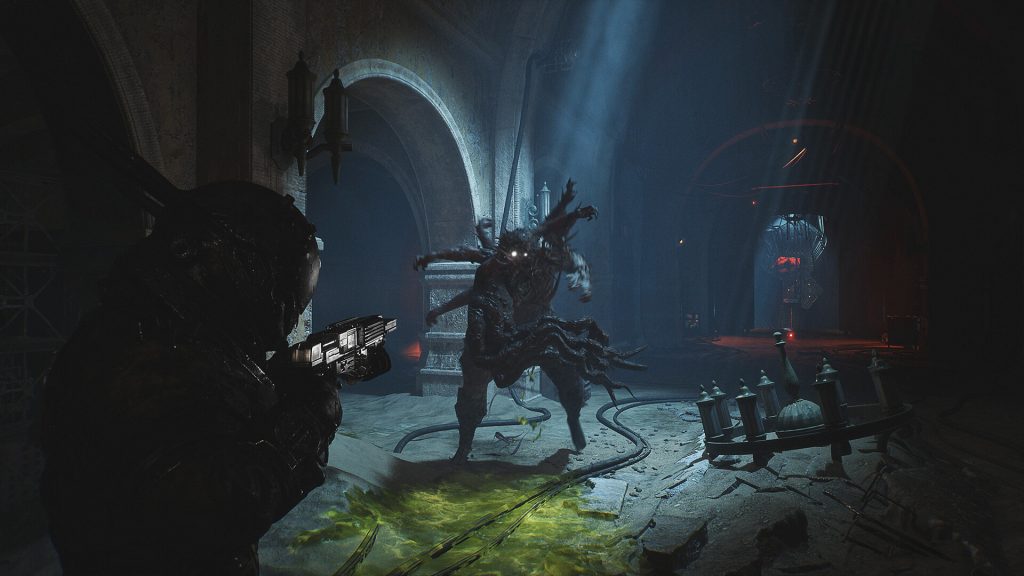
The third announcement was aimed squarely at players who already love Cronos: The New Dawn, signalling that Bloober has no intention of letting that universe go quietly just yet. Announced at Summer Game Fest 2026, Cronos: Lazarus is a story DLC for Cronos: The New Dawn that puts players in the shoes of the Warden, the enigmatic and mysterious character from the base game.
The expansion is, by design, a significant departure from what made the original work. While the main game focuses on methodical gameplay and resource management, the expansion shifts the focus to speed and aggression, and introduces a noticeable shift in gameplay concept. Plot details indicate that the protagonist, referred to as the Pathfinder (a name players will remember from the base game) is isolated from the Collective and forced to embark on a mission involving the awakening of a lost Entity, with the story charting his journey toward becoming the figure players eventually come to know as the Warden.
The DLC plays as a prequel to the base story, allowing players to control the Warden during his Pathfinder days, following his journey in his prime. His character features a unique set of skills, including decoys that allow movement through danger zones, giving Lazarus a different game feel than the base experience. The new character also features the ability to use temporary invisibility alongside those decoys, mechanics that were locked in the original.
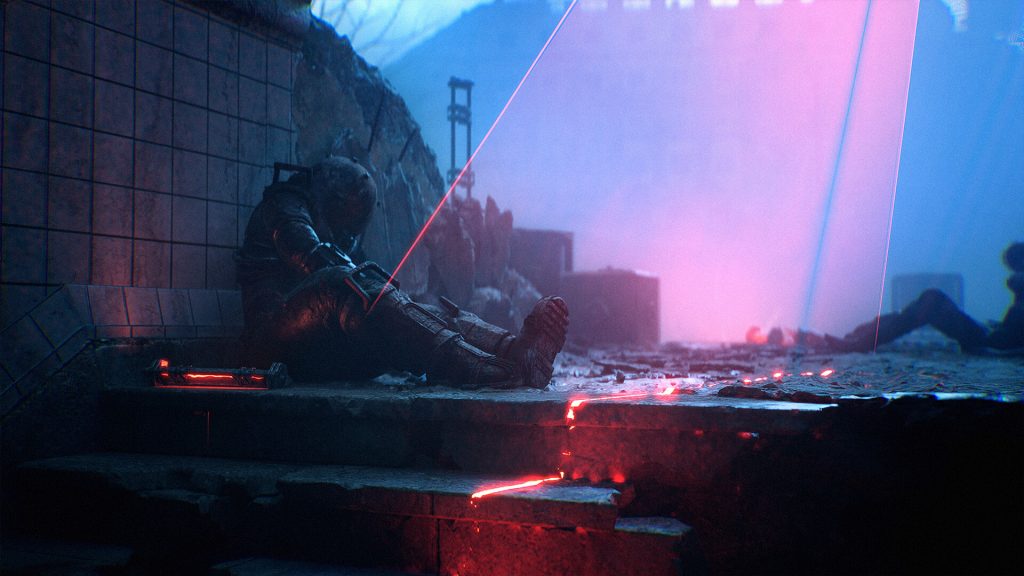
Bloober describes the result as “a faster, more aggressive take on Cronos’ survival horror formula, with combat defined by speed, pressure, and constant danger.” The primary new threat is a persistent enemy called the Tracker, whose only objective is to hunt the player down and kill them. This new adaptive enemy type reacts specifically to the player’s abilities, and the developers have promised large-scale, scripted boss battles.
Babieno has pointed to the Warden as a character who genuinely resonated with players after the base game’s release, making him a natural anchor for an origin story. “Cronos: The New Dawn is our original IP — an ambitious risk that allows us to create something truly unique,” he said in the expansion’s announcement. “We’re thrilled to expand the Cronos universe with Cronos: Lazarus.”
The expansion represents a calculated risk for the studio. The slow-burn, deliberate pacing of Cronos: The New Dawn was central to its identity, and players who came for that specific flavour of horror may find the action-heavy shift jarring. On the other hand, the Warden’s character lends itself to exactly this kind of kinetic, aggressive storytelling, and offering something genuinely different from the base game is arguably more interesting than simply producing more of the same.
Cronos: Lazarus is planned to launch in fall 2026 on PC via Steam, Epic Games Store, and GOG, as well as PlayStation 5, Xbox Series X/S, and Nintendo Switch 2.
For more on Cronos: Lazarus, Star Trek: Shadow Frontier, and SAW: Genesis stick with TV Pulse Magazine.